Wildfire Evacuation: What to Do Before Fire Reaches Your Neighborhood
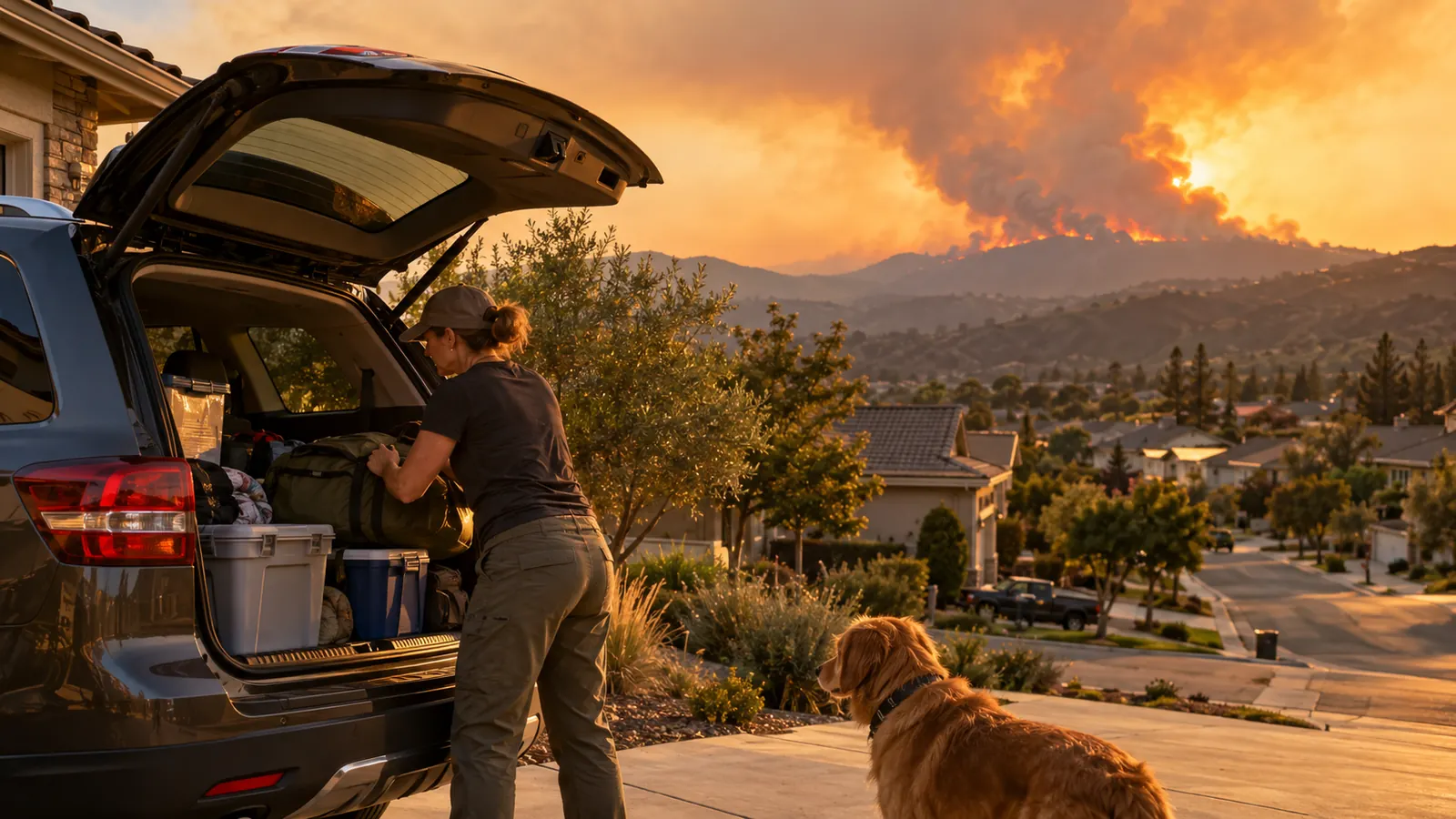
The first sign of trouble might be smoke over the ridge. It might be an evacuation alert on your phone. Or it might be nothing visible at all, just a dry, windy afternoon when a fire twenty miles away suddenly starts moving faster than anyone expected.
Wildfires punish hesitation. A family can spend the morning discussing which photographs to save, only to discover that the road they planned to take is now closed. The useful decisions are the ones made while there is still time to act calmly.
There is a place for hardening your home against embers, and it matters enormously. But when a fire is moving toward your neighborhood, the immediate job is simpler: know when to leave, know where to go, and make sure every person and animal can get there.
Know your evacuation zone, not just your street address
County boundaries and ZIP codes don't tell you whether your particular road is under an evacuation order. Many communities use mapped evacuation zones, and some separate warnings from mandatory orders. Find out which emergency management agency covers your address, whether it publishes zone maps, and how it delivers alerts.
Sign up for the local notification system. Keep Wireless Emergency Alerts enabled on your phone. During fire season, check official incident updates rather than relying on a neighbor's social media post. A photo of smoke may be real and still be several hours old.
Learn the language used locally. An evacuation warning generally means be ready to leave; an order means leave now. If you are in immediate danger, don't wait for an official message. People with limited mobility, young children, livestock, or pets may need to leave while the neighborhood is still under a warning, because loading everyone takes longer.
Two routes, two destinations, one departure decision
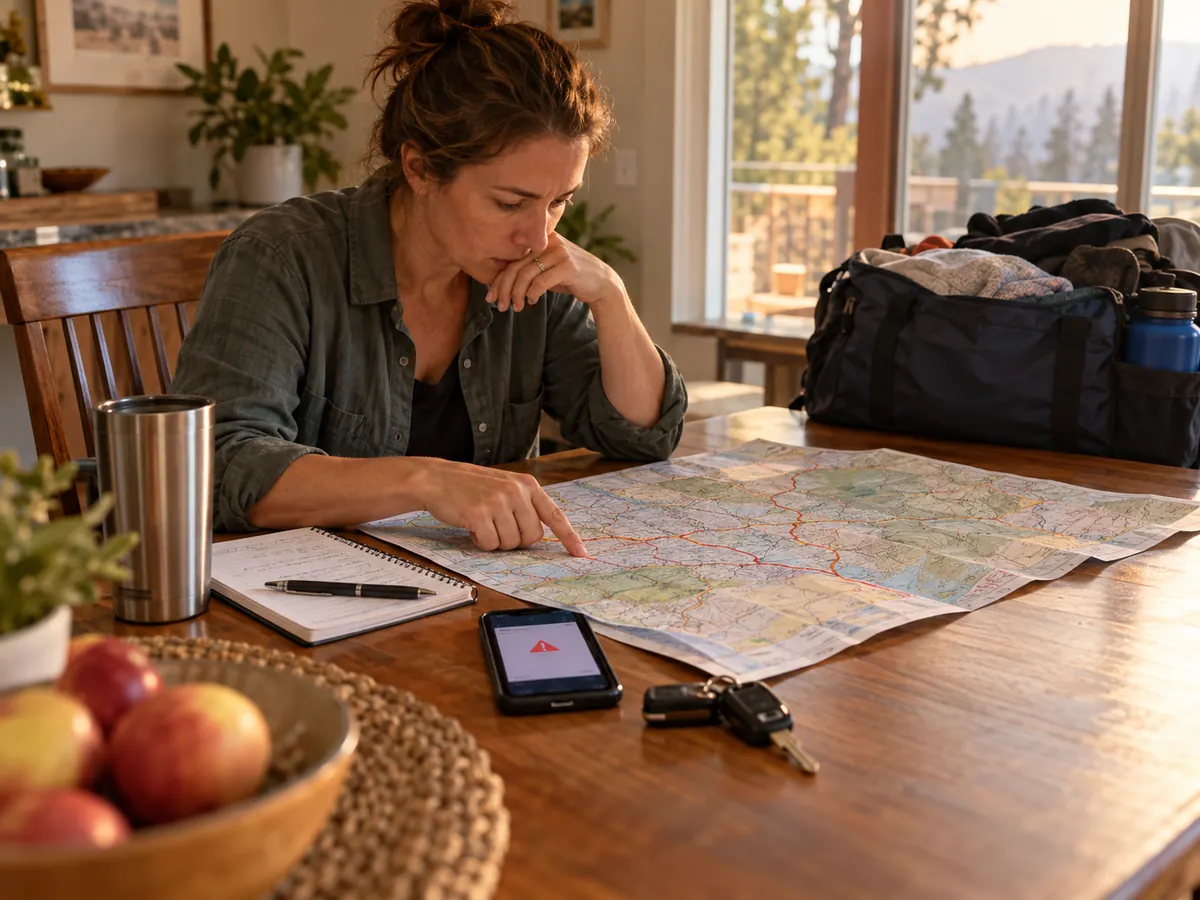
A route drawn on a map is not automatically a usable evacuation route. A road can be narrow, bordered by dry vegetation, or dependent on one bridge. Think through which roads could be closed by smoke, falling trees, traffic, or emergency crews.
Choose a primary way out and a genuinely different backup. Then choose where you would actually go: a relative's house outside the threatened area, a hotel town, or a designated shelter. If pets are coming, confirm that your destination can accommodate them. Keep a paper map in the vehicle; cell service and navigation apps are useful until they aren't.
The same habit of planning a departure before roads fail applies to getting ahead of a flood. The hazards are different, but the choice is not: once the roads become dangerous, saving a few possessions is no longer worth the delay.
If officials direct you to a particular route, follow it even if your preferred road looks shorter. Never drive around a road closure. A wildfire's path can change quickly with wind and terrain, and a clear road may lead directly into an area crews are trying to evacuate.
Prepare the car while the sky is still clear
Keep enough fuel in the vehicle that you can leave without joining a line at a gas station. If you use an electric vehicle, treat charging the same way. Waiting until the warning arrives to solve a fuel problem is gambling with your departure time.
The car should have a phone charger, water, a flashlight, basic first-aid supplies, a paper map, and any necessities for travelers with medical needs. Keep shoes with sturdy soles available. Ash, broken glass, and roadside debris are poor surfaces for sandals.
If you have a household with two vehicles, decide beforehand whether both are leaving. Taking one car can simplify coordination, but only if everyone and the animals fit safely. Never leave someone behind to retrieve a second vehicle once conditions are dangerous.
Pack for people first, paperwork second
Start with the things you cannot replace on a short notice: prescription medications, medical devices, eyeglasses, phones and charging cables, identification, keys, wallets, infant necessities, and pet leashes or carriers. Keep an up-to-date medication list and essential contact numbers on paper.
A small waterproof document pouch can hold copies of insurance information, identification, and critical records. Store digital copies securely as well. Photograph rooms and major possessions when there is no emergency, not while smoke is crossing the backyard.
Clothing, food, and toiletries matter, but they shouldn't compete with the act of leaving. A household that takes forty minutes to argue over packing is not ready, even if it owns every emergency bag on the market.
You can use a packed bug-out bag that you can actually carry as the starting point, then add the documents, medication, and pet supplies specific to your home. The bag is supposed to shorten departure, not become another project to finish at the door.
Pets and people who need extra time
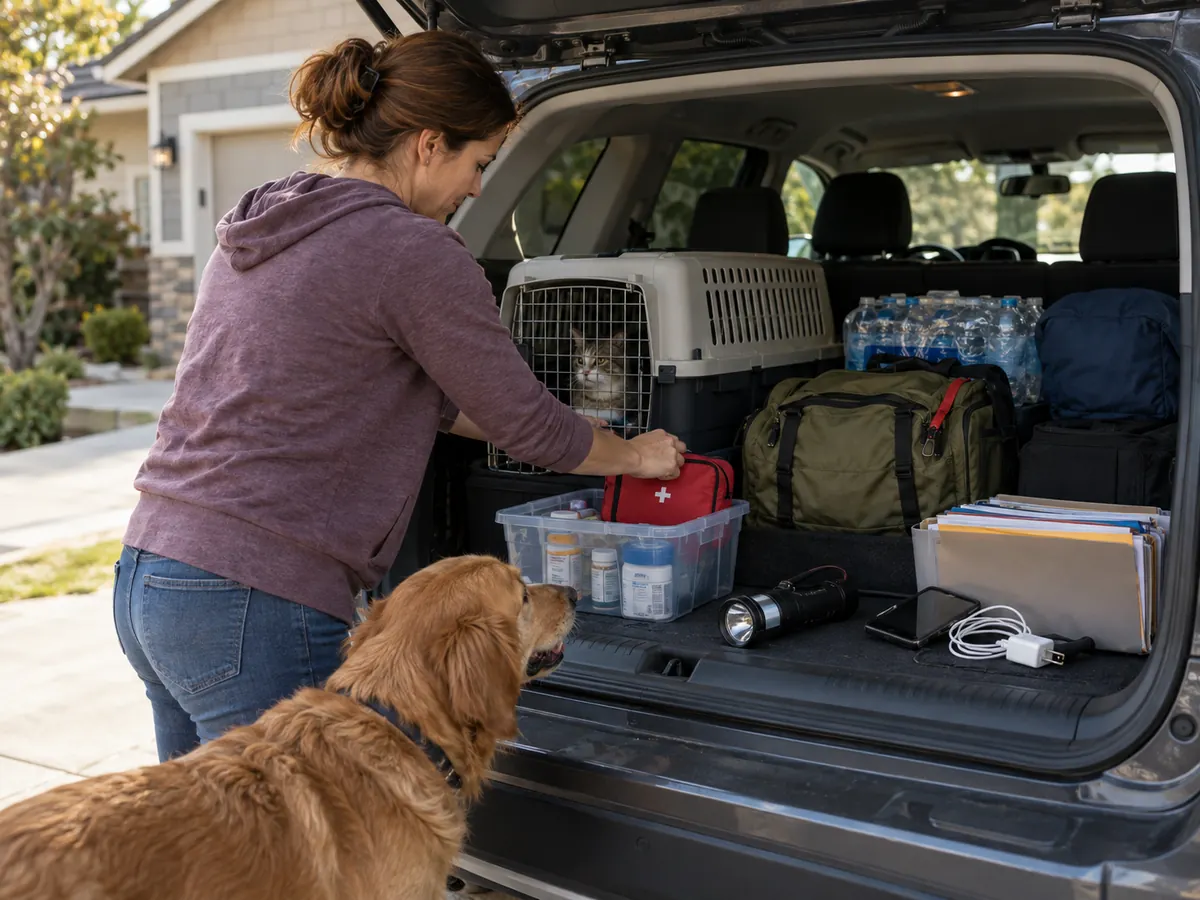
Pets are frequently the reason families delay. A frightened cat can disappear under a bed as soon as doors start opening. Keep carriers in an accessible place, practice getting animals into them, and have food, bowls, waste bags, and medication ready. Identification tags and up-to-date microchip contact details make reunification more likely if something goes wrong.
For someone using a walker, wheelchair, oxygen equipment, or refrigerated medication, work backward from the departure. How many minutes does getting into the vehicle take? Will backup power or a cooler be needed? Is the destination accessible? Who is responsible for each step?
Do not rely on a single neighbor for assistance unless that person has agreed and there is a backup plan. During an emergency, neighbors may already have left.
Make the home easier to defend, but never at the expense of leaving
Long before wildfire season, remove dead leaves from roofs, gutters, decks, and the area immediately around the house. Keep combustible furniture, firewood, and debris away from walls and openings. Check local firewise guidance for vegetation spacing, vents, fences, and building materials. Embers can ignite a home even when flames never reach the property.
When a warning comes, you may have time for small steps such as closing windows and doors, moving flammable cushions indoors, and making sure exterior access is not blocked. But these are last-minute precautions, not reasons to ignore an evacuation order.
Do not climb onto a roof, run sprinklers at the expense of an essential water supply, or stay behind to defend a house without the equipment and training required by professionals. A house is replaceable. A person is not.
When smoke is already in the area
Wildfire smoke can make driving and breathing difficult even far from the flames. Keep vehicle windows closed and set the ventilation to recirculate if smoke is present. Follow public-health advice for smoke exposure, particularly for children and people with heart or lung conditions. A properly fitted N95 respirator may help reduce exposure to fine particles, but it does not protect against poisonous gases and is not a reason to enter dangerous smoke.
If visibility is poor, slow down, use headlights as appropriate, and follow emergency instructions. Never assume the fire is far away because flames are not visible; smoke can hide the hazard, and embers may travel ahead of the main front.
If you cannot leave safely, call emergency services, tell them your exact location, and follow their instructions. There is no universal last-minute shelter strategy that makes an ordinary house safe from every wildfire.
The return is its own decision
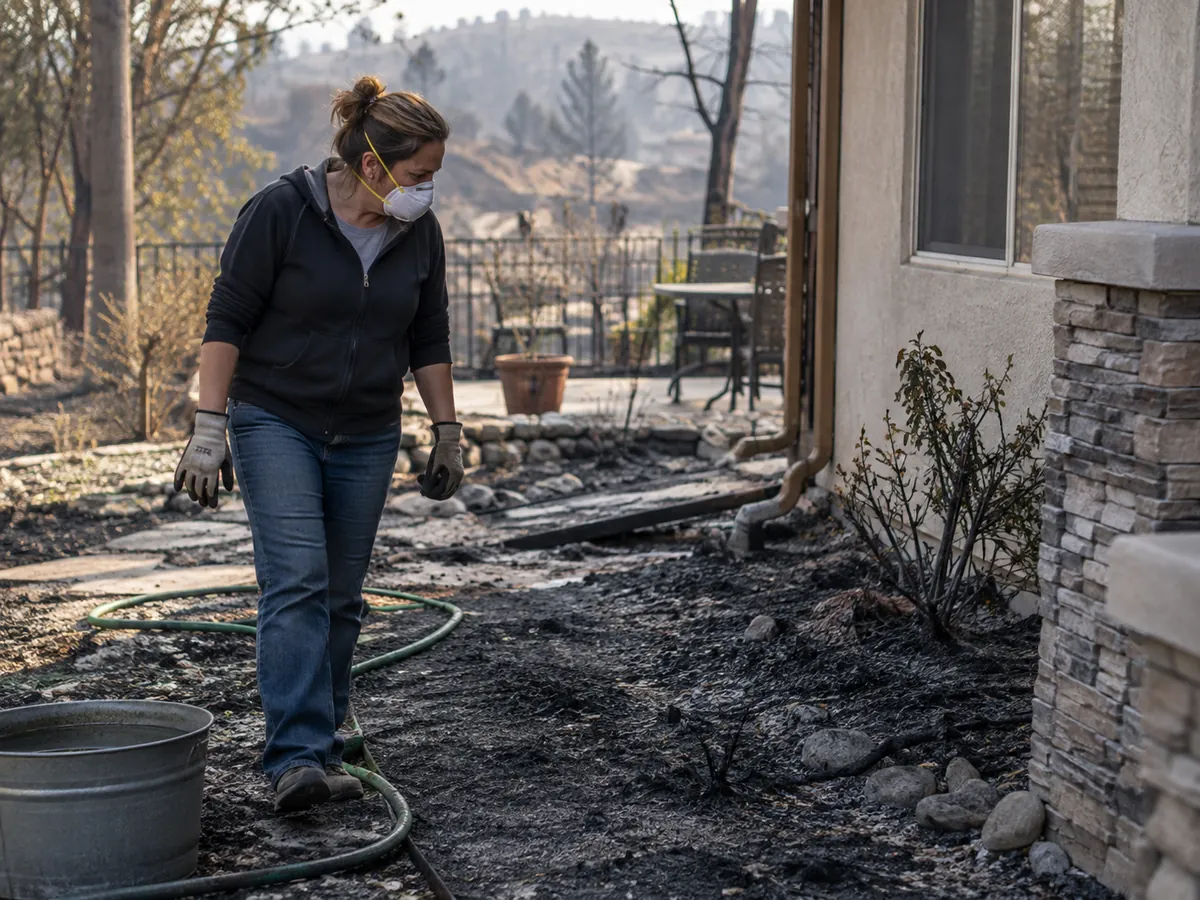
An evacuation order being lifted doesn't mean every part of the neighborhood is safe. Roads may still have fallen power lines, unstable trees, damaged gas systems, or hot debris. Return only when authorities allow it. Watch for structural damage, avoid downed wires, and do not enter a building that appears unsafe.
Document damage before cleanup when it is safe to do so. Use protective equipment appropriate to the hazards, and follow local guidance about drinking water, air quality, and disposal of ash or debris. Ash can contain harmful substances; don't dry sweep it into the air or let children play in it.
The most useful wildfire preparation isn't a dramatic pile of equipment beside the door. It's a household where everyone knows the route, the destination, the animal plan, and the moment to leave. When the warning comes, you want the only remaining job to be getting in the car.