How to Build a Bug-Out Bag You Can Actually Carry
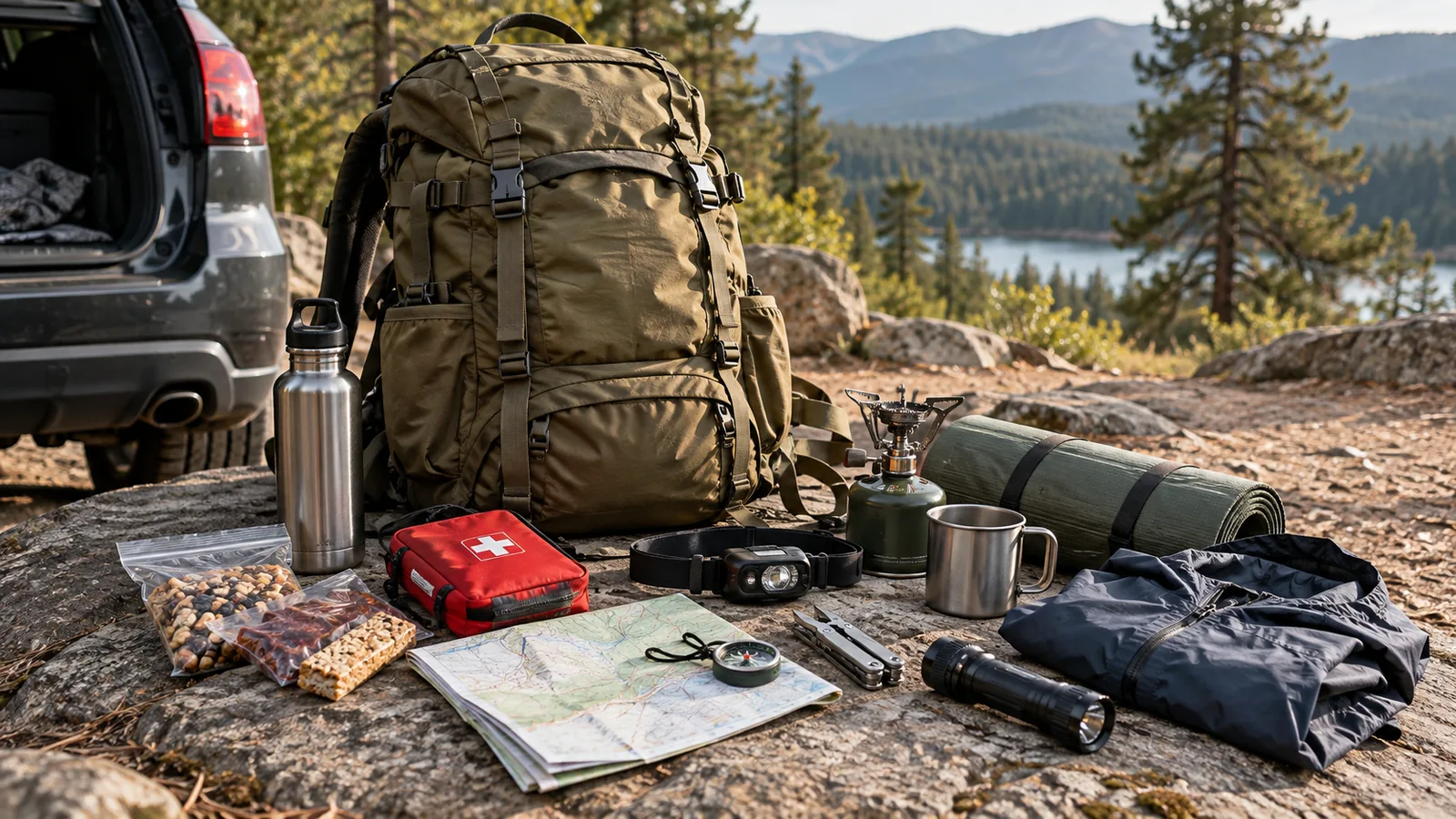
A bug-out bag can look impressive sitting on a bedroom floor. It is easy to fill one with useful-looking equipment, cinch down the straps, and feel finished. Then you pick it up and discover that your emergency plan includes carrying an awkward, uncomfortable thirty-five-pound load while trying to find a safe place for your family.
The real test of an evacuation bag is whether it helps you leave when leaving is necessary. It should support a destination and a journey, not a fantasy about living indefinitely in the woods.
Start with your actual evacuation, not a shopping list
Before buying the backpack, ask where you would go. To a relative's house? A hotel? A designated shelter? Somewhere you can reach by car? The answer changes what belongs in the bag.
A city household evacuating ahead of a flood may need documents, prescriptions, chargers, clothing and personal-care supplies more urgently than a hatchet. A family leaving during wildfire warnings may have minutes rather than hours. In both cases, the route, destination and ability to communicate matter as much as the contents of the bag.
If the vehicle is part of your evacuation plan, make sure the basics already in your car emergency kit are ready. You should not have to take apart the trunk to find a flashlight or discover that the spare tire is unusable after you have packed everyone into the car.
A useful question: if you could not take the car, would each person still be able to carry the essentials that belong to them? That is a better starting point than choosing a bag by the number of pockets.
Choose a pack that fits your body
You need enough capacity for your supplies, but extra space invites extra weight. For many adults, a well-fitted daypack or modest hiking pack is easier to live with than a huge tactical-style pack. There is no universal ideal volume. A winter evacuation, a parent carrying children's supplies, and a summer overnight stay are different problems.
Look for shoulder straps that adjust comfortably, a back panel that does not create painful pressure points, and a hip belt that actually fits if you are carrying enough weight to benefit from one. Try the bag loaded, not empty. Walking around a store with a weightless backpack is like testing work boots while sitting down.
Do not blindly use a percentage-of-body-weight rule as permission to overload the pack. Fitness, age, injuries, terrain and the need to assist another person all change what is realistic. Someone who is not accustomed to walking with a pack should begin lighter and test it safely.
Pack the supplies you would regret leaving behind
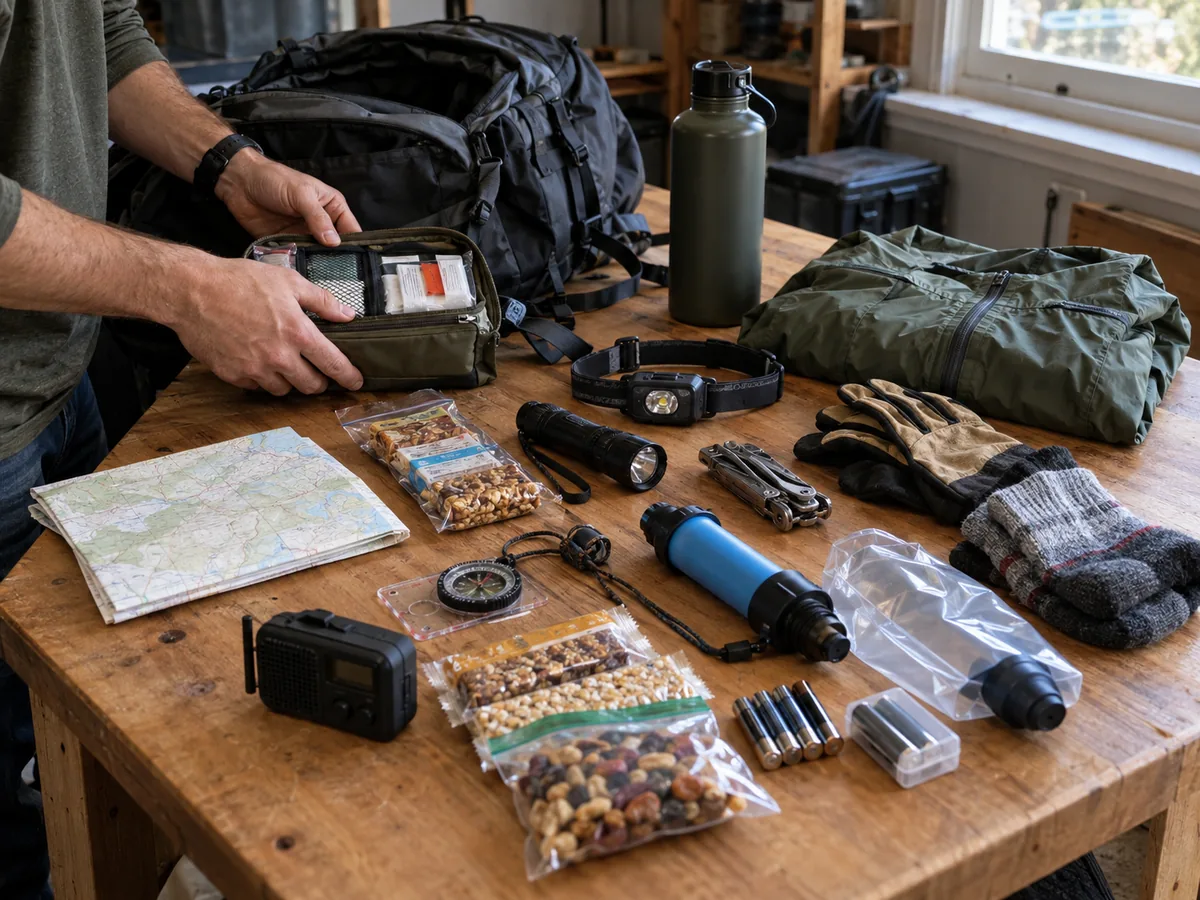
I would start with identification and copies of essential documents, prescription medicines and written medication details, a small first-aid kit, a phone charger and power bank, an appropriate flashlight, drinking water, food that requires no cooking, personal hygiene items and suitable clothing. Add cash in small denominations if useful, important keys, and a paper contact sheet.
Documents should be protected from water. Sensitive copies need thoughtful handling rather than being left unprotected in a bag that might be stolen. Keep essential medicines in accordance with their specific storage instructions, and rotate anything with a limited shelf life. If your household includes infants, pets, or someone with medical equipment, assign their essentials explicitly instead of assuming somebody else packed them.
You do not need to replicate everything in your house. A compact first-aid kit and essential medications belong in the bag; a full garage workshop does not. Likewise, a multi-tool can be useful, but it should not take priority over something as ordinary as dry socks or glasses.
For water, carry an amount suited to the route and conditions, remembering that liquid is heavy. A liter weighs approximately a kilogram before you count the bottle. If your evacuation route requires access to additional water, plan around reliable sources and safe treatment rather than an unverified stream on a map. Household water container design matters at home, while carry weight and leak resistance matter much more in the bag.
How you pack changes how the weight feels
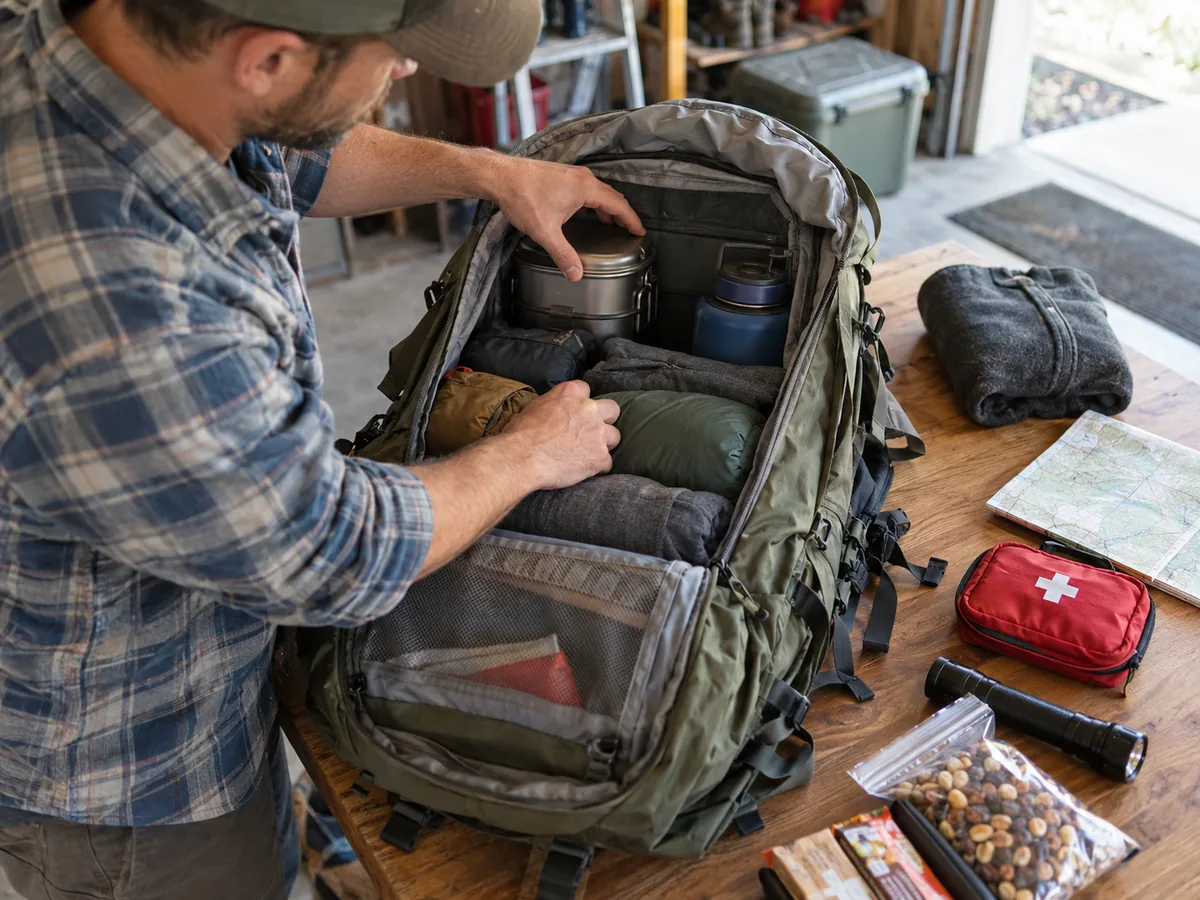
Set dense, heavier items near the middle of your back, not dangling far behind you. Keep soft items arranged so they do not create hard pressure points. Put items you may need immediately, like rain protection, medicine, a light and contact information, somewhere accessible without unpacking everything.
Separate wet or dirty items from clean clothing. Use simple waterproof bags or liners where appropriate. A leaking bottle can turn carefully prepared clothing into a miserable surprise. Loose objects attached to the outside of a pack can snag on doorways, brush or seat belts; secure them properly.
For a family, do not put every critical item in one adult's bag. If you become separated, someone else may have the only phone cable, the child's medicine or the contact sheet. Duplicate a few small necessities where that reduces the risk of losing access to them.
Test the loaded bag before calling it finished
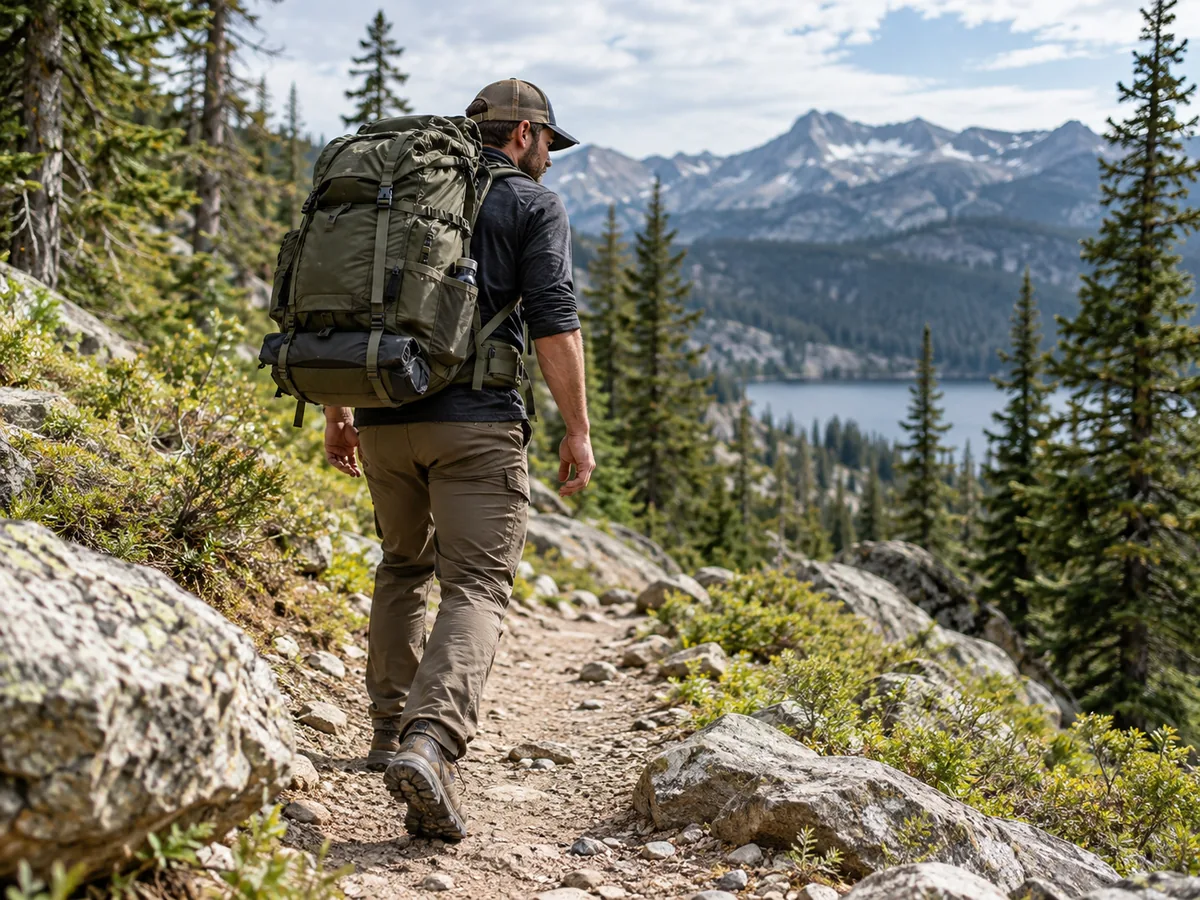
Once the pack is ready, weigh it and walk with it. Start with a short, safe walk, not an ambitious overnight trek. Climb stairs if that reflects your actual situation. Sit down, stand up, and see whether the straps slip or the pack rubs your shoulders. Check whether you can reach water without setting everything on the ground.
After the walk, unpack and notice what never should have gone in. The extra knife, duplicate cooking pot or oversized gadget may seem less important after you have carried it for half an hour. Replace heavy items only when the alternative still does the job. Do not trade away essential medication or weather protection to reach an arbitrary weight target.
This matters particularly for people with limited mobility. Some households need wheeled luggage, a different carry method, a smaller personal kit, or a plan for assistance. A usable evacuation system is better than a fashionable backpack nobody can carry.
Keep it ready without letting it become forgotten
A packed bag changes over time even when nobody touches it. Batteries discharge. Clothing no longer fits children. Food ages. Medicine requirements change. Phone charging cables become obsolete. The destination that made sense last year may no longer be available.
Check the bag twice a year, and after any trip that uses its contents. Try the clothes, recharge the power bank, replace expired or damaged supplies and verify the written contact information. Put the bag where you can grab it without climbing over storage boxes. If it stays in a vehicle, account for heat-sensitive items that should not be stored there continuously.
Keep the evacuation decision separate from the bag. If authorities order you to leave, go. If flooding threatens the route, leaving earlier may matter more than grabbing one more piece of gear. The pack is there to make a sound decision easier, not to delay it.
There is one test worth repeating: put on your shoes, grab the packed bag, and walk to the door. If you cannot do that quickly and comfortably, something in the system needs to change. That is what a practical bug-out bag is for.