How to Prepare for a Flood Before Water Reaches Your Home
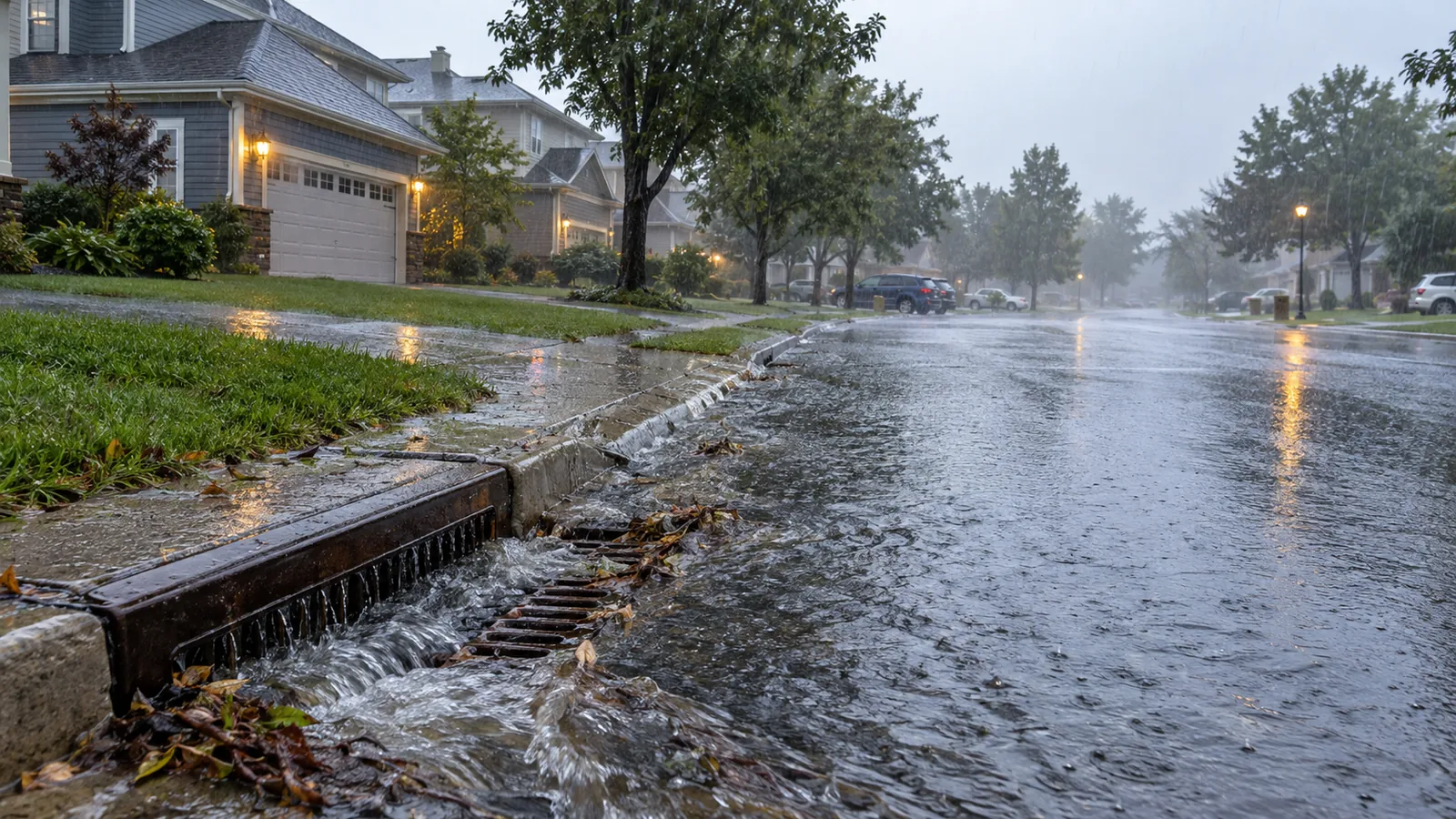
A flooded road doesn't have to look dramatic to change your plans. Sometimes the first sign is a drainage ditch spilling onto the street. Sometimes a familiar underpass is closed, or rain is coming down so hard that you can't see where the pavement ends. By then, the decision you should have made an hour earlier may no longer be yours to make.
Flood preparation has two jobs. One is protecting what you reasonably can. The other, far more important, is getting everyone out of danger while the roads are still usable. People get those jobs backward when they spend precious time moving furniture while the only safe route out is disappearing.
Know what kind of flood can reach your address
Living outside a mapped high-risk flood zone doesn't make a home immune. A creek can jump its banks, a culvert can clog, a neighborhood street can act like a channel, or a storm can drop more rain than the local drainage system can handle. Flash flooding can develop quickly and far from a major river.
Look at your local flood maps, but also think about the streets you actually use. Does your road cross a low-water bridge? Is the route to school lower than the house? Does a nearby intersection routinely collect water? A good plan treats the journey out of your neighborhood as part of the home's risk.
Learn where local emergency management posts warnings and which weather alerts your phone receives. A flood watch means conditions are favorable; a flood warning means flooding is occurring or expected. A flash flood warning deserves immediate attention. Follow instructions from local authorities rather than waiting for the weather to look alarming from your window.
Choose where you will go while the roads are dry
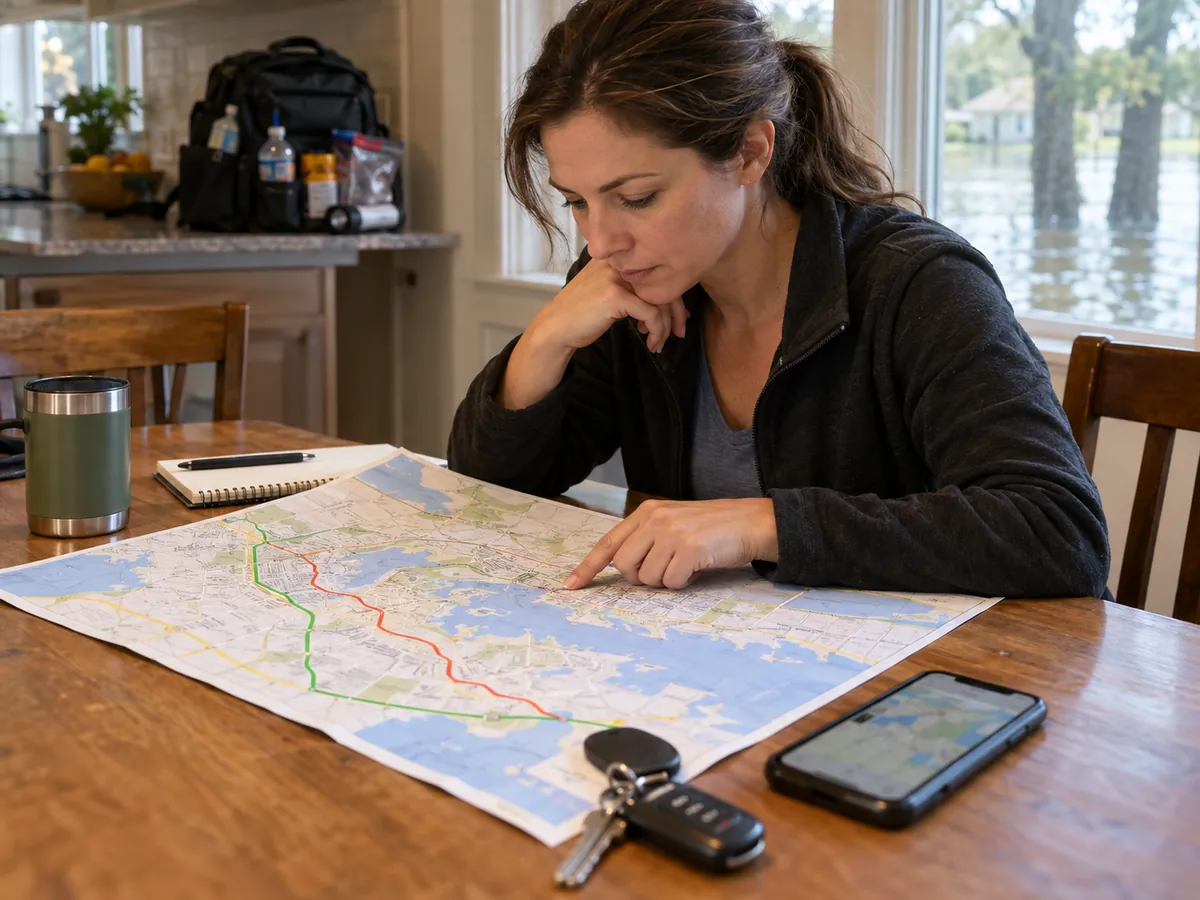
The phrase “we'll leave if it gets bad” is not a plan. Decide which relative, hotel area, or community shelter you would use. Then choose a primary route and another route that avoids low crossings. The second route must be genuinely different; two roads that meet at the same low bridge aren't two options.
Keep the car fueled enough that an urgent departure isn't dependent on an open gas station. Make sure the driver knows the destination without relying entirely on navigation apps. Put medication, identification, insurance information, chargers, eyeglasses, and pet supplies on a short grab list rather than trying to remember everything under pressure.
Households that already use a 72-hour emergency plan have a head start, but flooding adds a specific question: how long will the routes remain passable? If officials recommend evacuation, leave promptly. Do not wait to see water at the front door.
Protect the house in the order that matters
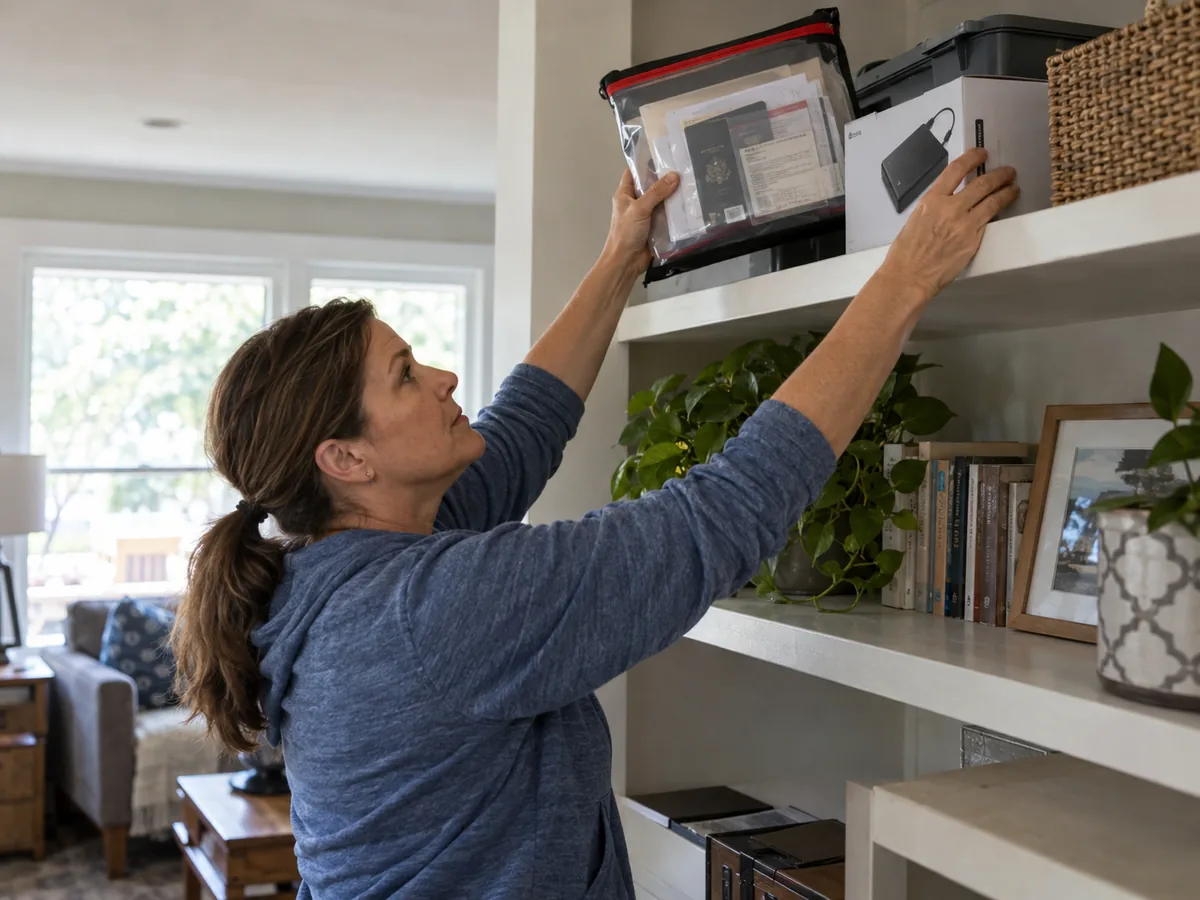
Before a storm, photograph the rooms and important belongings. Record serial numbers or receipts for major items when practical. Store copies of key documents securely online and in a waterproof grab-and-go pouch. Standard homeowners insurance usually excludes flood damage, so check whether you need separate flood coverage well before storm season. New flood policies may have waiting periods.
Clear leaves and debris from gutters and drainage inlets you can reach safely during normal weather. Consider elevating vulnerable possessions and appliances where appropriate, using backflow protection where your plumbing system requires it, and protecting important records from water. A sump pump needs electricity, which is why backup power may matter in some homes.
Sandbags can help redirect shallow, limited water in some situations. They cannot turn an ordinary house into a watertight structure, and placing them should never delay evacuation. If water is already moving rapidly, stop working outside.
Electrical and gas shutoffs are worth locating before an emergency. Learn the proper procedure from the utility or qualified professional. Turn off utilities only when officials advise it and it is safe to reach the controls. Never step into standing water to get to an electrical panel. And don't try to restore gas service yourself after it has been turned off by the utility.
What to do when the alert arrives
Stop treating the weather as background noise. Charge phones, check official updates, gather the people in the house, and confirm that your transportation is available. If someone needs mobility assistance, oxygen, refrigerated medicine, or a wheelchair-accessible ride, their departure may take longer. Build that extra time into your decision.
Move essential items up from the floor only if there is enough time. Put pets in carriers or on leashes before loading the vehicle. Tell your out-of-area contact where you're going. Leave the address and destination in a short message instead of assuming everybody will know.
A flash flood is not the moment for a sightseeing drive. Do not go looking for the swollen creek or pull over to photograph a washed-out bridge. Even where the road appears intact, the water can hide missing pavement and powerful currents.
Never gamble with water over a road
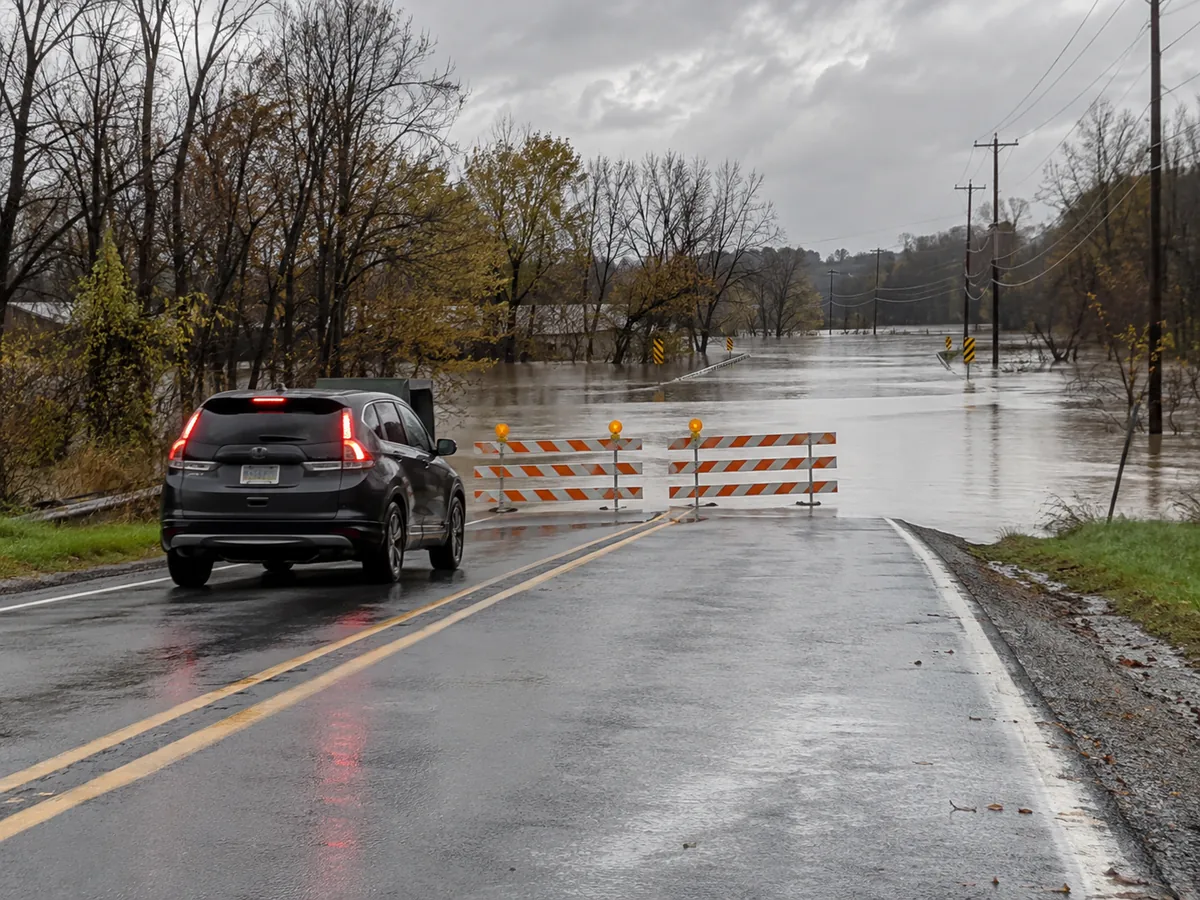
The water may look shallow. That is exactly why people drive into it.
Road markings disappear under muddy runoff, and a small-looking flow can conceal deep water or a damaged roadbed. Fast-moving water can knock adults down and sweep vehicles away. Turn around rather than trying to guess its depth. The same rule applies on foot: don't walk, swim, or drive through floodwater. It's not a matter of having a larger vehicle or better tires.
Do not move barricades or drive around them. A closed route is closed even if other drivers are doing it. If you're already trapped and water is rising, call emergency services if possible and follow their instructions. The safest action depends on whether you're in a building, a vehicle, or moving water; there is no single trick that works in every situation.
If you cannot leave, think upward, not inward
If floodwater reaches the house, move to a higher level and seek help. Avoid rooms where rising water could trap you. A closed attic without roof access can become a dead end. If moving to the roof is necessary, signal rescuers and follow emergency guidance.
Stay away from electrical outlets, appliances, and panels near water. Floodwater may contain sewage, chemicals, fuel, sharp debris, and displaced animals. Keep children and pets well clear of it. Don't operate generators inside the house or garage; fuel-burning engines produce deadly carbon monoxide, even with the garage door open.
If your tap water or stored supplies might have contacted floodwater, treat that as a separate drinking-water problem. Some contaminants cannot be removed by ordinary boiling or camping filters. The important distinction between biological contamination and chemicals in making emergency water safe to drink becomes crucial after a flood, when clear-looking water may still be unsafe.
Coming home is a second emergency decision
Wait until authorities say it's safe to return. A house that is still standing may have structural damage, contaminated water, exposed wiring, or unstable floors. Approach cautiously and stay out if you see sagging structures, damaged foundations, or a strong smell of gas. A licensed professional may need to inspect electrical, gas, or structural systems before use.
Photograph damage before discarding property where it is safe to do so, and contact your insurer about documentation. Wear appropriate protective equipment when clearing debris. Flood cleanup can involve contaminated materials, mold, sharp objects, and difficult lifting. Don't start demolition or restoration just because the standing water has drained away.
Throw out food that touched floodwater, including many foods in containers that might otherwise seem sealed. Follow food safety and local health guidance for cleaning, water use, and disposal. Keep children out of damaged rooms while cleaning is underway.
Make the plan on an ordinary day
Choose a primary destination and two genuinely different routes. Photograph documents and possessions. Walk the property and note where water would travel, which belongings are low, and which utilities could become inaccessible. Decide which person is responsible for pets, medicine, phones, and the car.
Then set a clear household rule about leaving: when officials order evacuation, when the only safe route is at risk, or when a vulnerable family member cannot safely remain. You can replace most things in a flooded room. You cannot recover the hour when the road was still dry.