How to Survive 72 Hours Without Electricity or Running Water
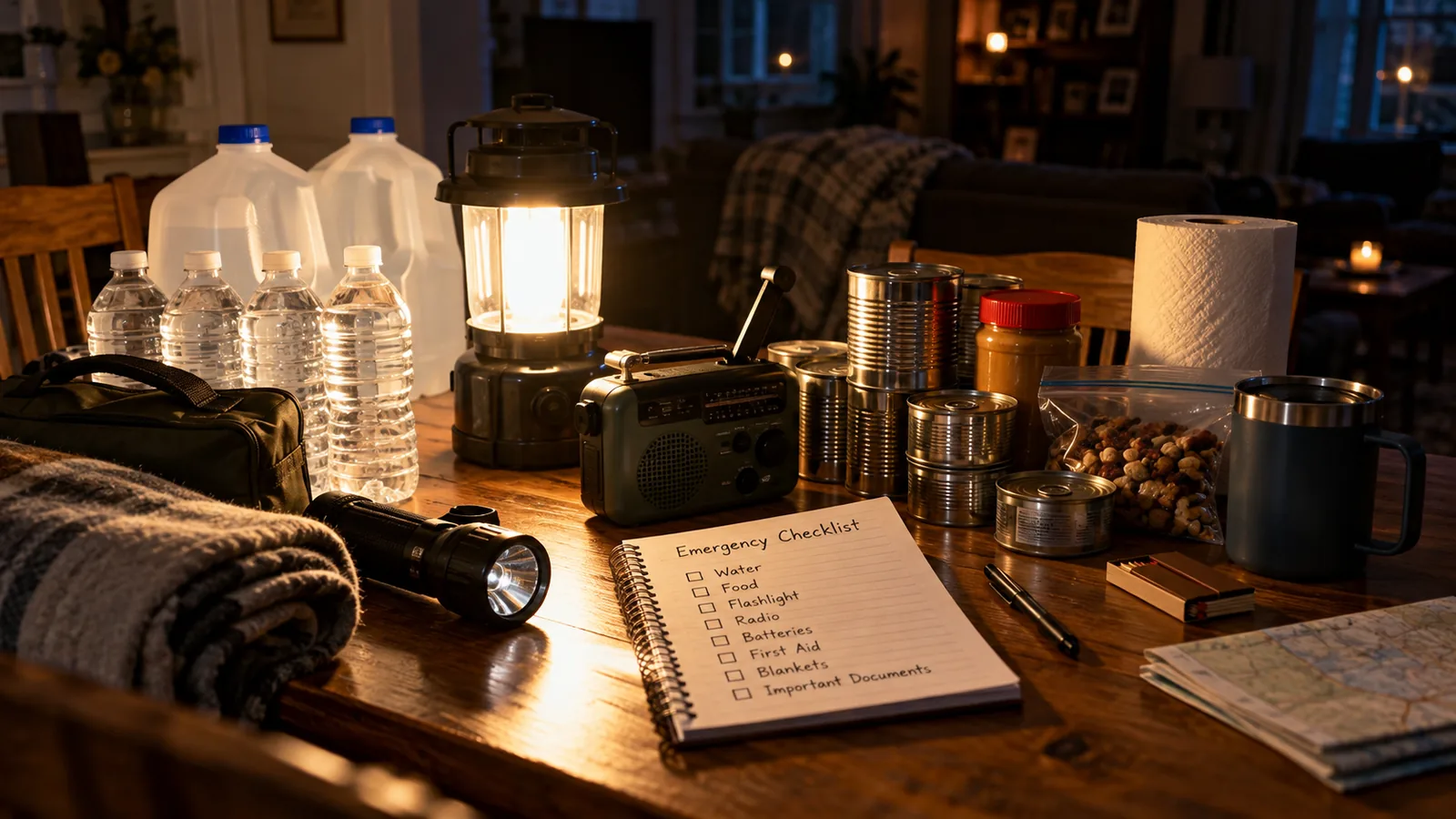
A blackout is inconvenient for the first few minutes. Losing the taps at the same time changes the problem. You can't wash your hands as usual, flush every toilet without thinking, or assume dinner will be easy. A phone at 18 percent battery suddenly matters more than a television that won't turn on.
For most households, the first 72 hours are not about wilderness survival. They're about deciding which familiar routines still work, which don't, and how to avoid using up the supplies you need tomorrow.
There are two plans to make before any outage: what stays usable inside your house, and what would make you leave. If flooding threatens, officials order evacuation, temperatures become dangerous, or someone relies on essential powered medical equipment, remaining home may be the wrong choice.
The first hour is for finding out what actually failed
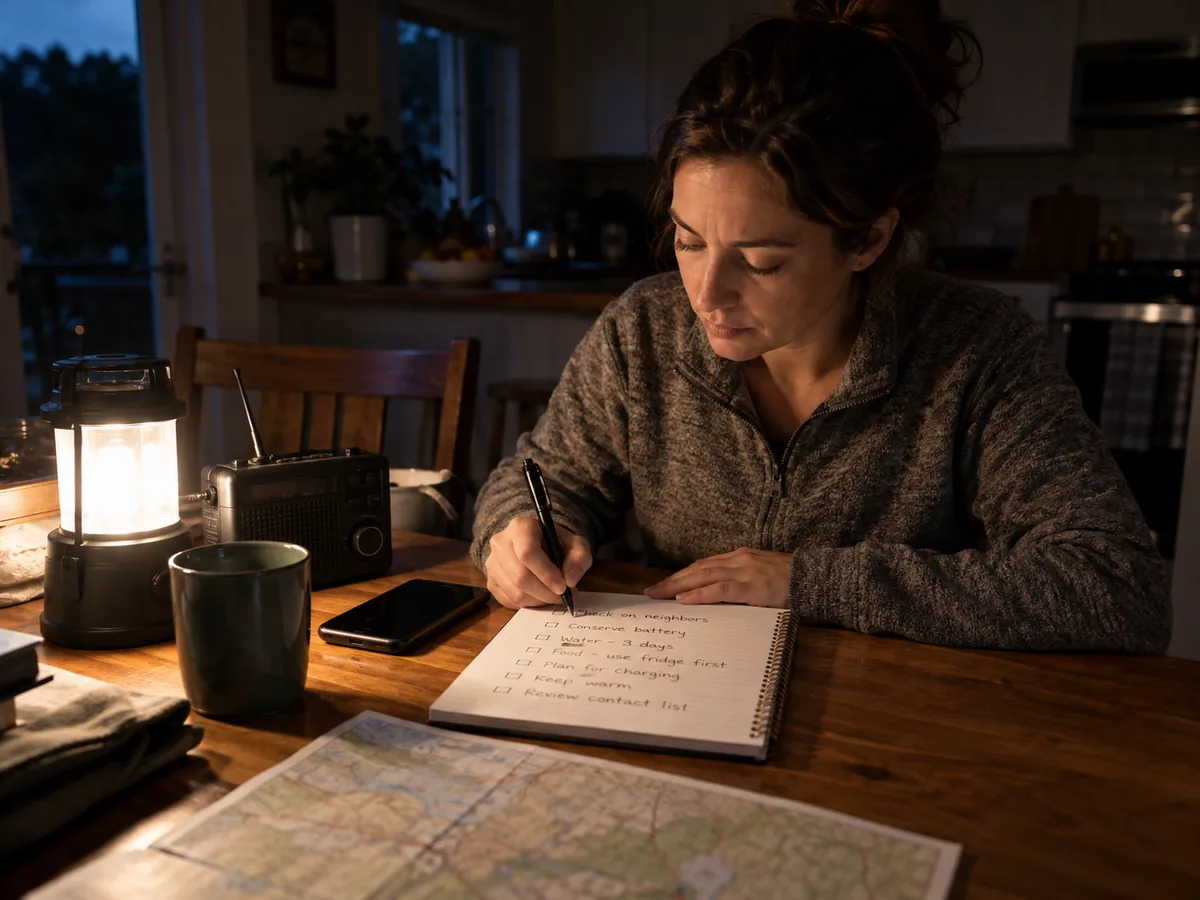
A house with no lights is not necessarily a house with no safe drinking water. A house with water in the pipes may still be under a boil-water advisory. Treat those as separate questions.
Check for utility messages using an official utility website or text alerts if service is available. A battery-powered radio is useful when internet and cell service are unreliable. Look outside only from a safe location. Downed power lines and floodwater are reasons to stay away, not problems to investigate.
Find the flashlights first. Use battery lanterns rather than open flames whenever you can. Keep one light in the bathroom and one where everybody gathers. Decide which doors and windows should stay shut for temperature control, and which rooms you will use if the house becomes very hot or cold.
Write down three contacts: a nearby person, somebody outside the affected area, and the local emergency or utility information source. If your family is separated, a short message saying where you are and whether you are safe can be more useful than repeated calls that run batteries down.
If you smell gas, leave and contact the gas utility or emergency services from a safe location. Don't operate switches or try to find the leak.
Water disappears from ordinary tasks surprisingly fast
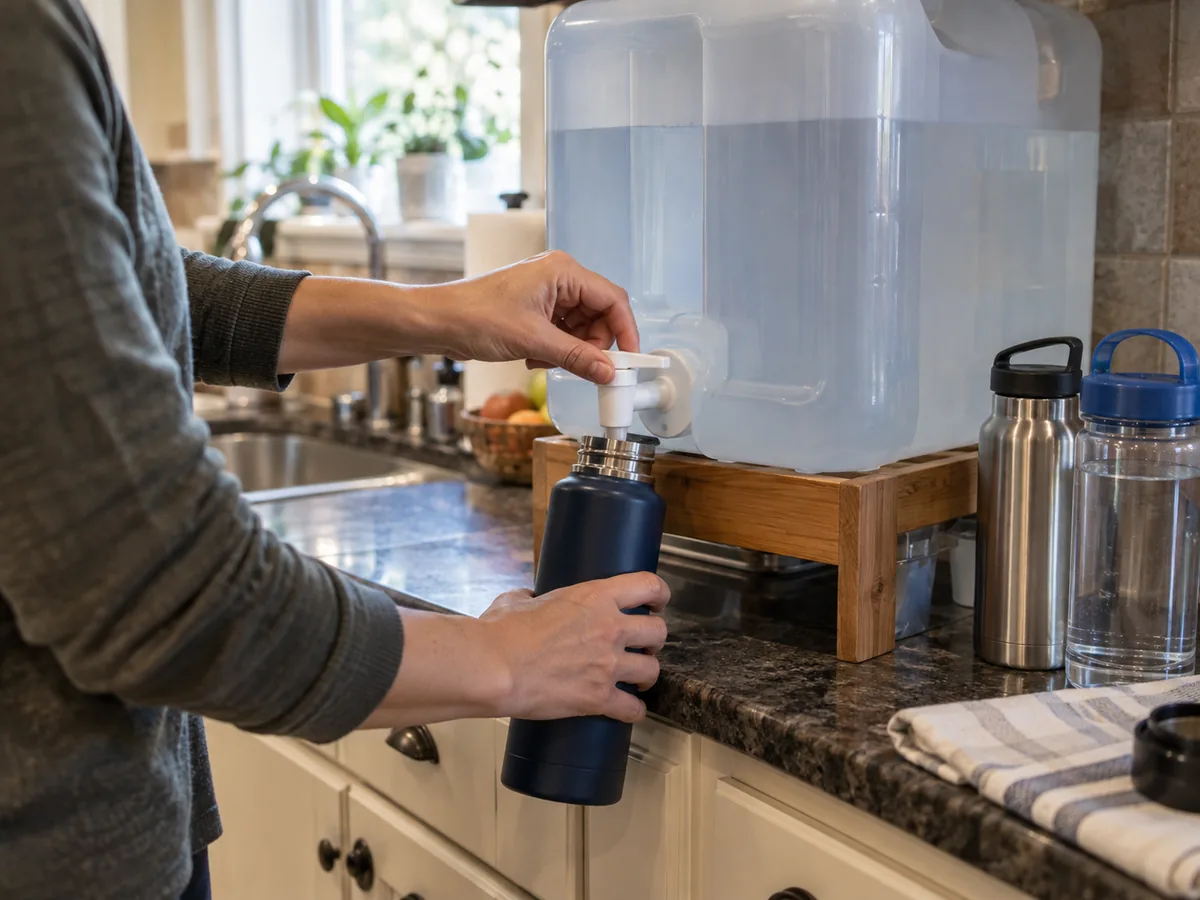
Use one gallon per person per day as a basic emergency planning starting point for drinking and essential sanitation. For four people over three days that means at least twelve gallons. Hot weather, illness, pregnancy, pets, and individual medical needs can increase that amount. It is a minimum planning figure, not a promise that twelve gallons will cover every household activity.
Keep drinking water separate from water reserved for cleaning or flushing. Mark containers so nobody confuses them. Food-grade storage containers are preferable for household drinking water. If an emergency notice says the supply may be contaminated, follow local instructions about whether boiling or another treatment is appropriate; boiling does not remove chemical contamination.
The easiest way to waste stored drinking water is to use it the same way you use unlimited tap water. Put a small pitcher or bottle at the handwashing station. Measure what you pour into a pot. Keep an extra container available for pets and medication needs.
If the taps are dry, do not assume the toilet will flush normally. Some gravity-fed toilets can be manually flushed with a bucket when the sewer system is functioning, but that's not a universal answer. A sewer backup, floodwater in the system, or instructions not to flush call for a separate emergency toilet plan. Don't pour water into a fixture that is backing up.
For a detailed look at container shapes and dispensing, see our water storage comparison.
Keep food cold first; decide what to cook second
The refrigerator is a deadline you can manage only if you know when the outage started. Keep its door closed. An unopened refrigerator generally holds food at a safe temperature for about four hours. A full freezer can hold its temperature for around 48 hours, or around 24 hours if half full, provided it stays closed. These are general estimates, not a substitute for food thermometers.
Perishable food that rises above safe refrigeration temperatures for too long may need to be discarded. Don't taste questionable food to decide. If there has been flooding, do not eat food that contacted floodwater.
Write the outage start time on paper. If you have a refrigerator thermometer, use it to guide decisions rather than relying on how cold a package feels. A cooler with ice may help if you can maintain safe temperatures. Our refrigerator backup power guide explains how to assess a battery power station before relying on one.
For meals, start with food that needs little water, little cooking, and no refrigeration: peanut butter, crackers, canned beans, canned fish or meat, fruit packed in juice, and ready-to-eat foods your family actually eats. Check that you have a manual can opener. Dried rice may be cheap to store, but it costs both water and fuel to cook. During a short outage, a can of ready-to-eat food can be the better choice.
Never use a charcoal grill, camp stove, or gasoline generator indoors, in a garage, or beside an open window. Carbon monoxide can kill without warning. Generators belong outdoors, at least twenty feet from doors, windows, and vents, with exhaust directed away from the house. Never backfeed a house through a wall outlet.
Nights are easier when everybody knows the plan
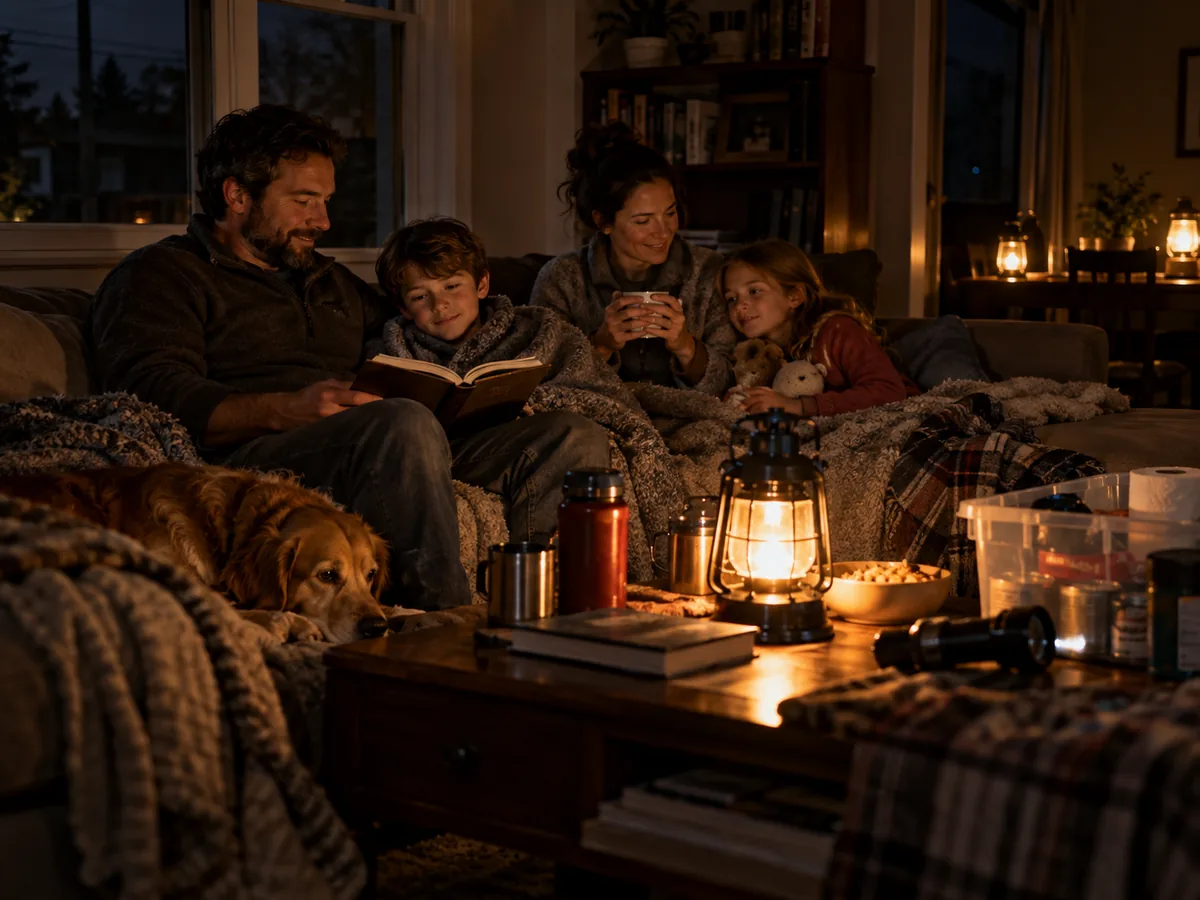
Darkness is when small oversights become frustrating. You need to locate medication, reach the bathroom, and keep children and older relatives from tripping over extension cords or bags. Clear the walking paths before sunset.
Put shoes, a flashlight, and a phone near each sleeping area. Keep prescription medicine and important medical equipment accessible. If someone uses electricity-dependent medical equipment, contact their clinician and utility about the backup plan well before an emergency. A consumer power bank is not automatically an appropriate substitute for medical-grade backup power.
In cold weather, wear layers and gather in a smaller room if safe, but don't improvise indoor heaters from grills, camp stoves, ovens, or candles. In summer, a closed home can become dangerous even if the family is sitting quietly. If indoor temperatures are rising and a cooling center or another safe location is available, moving may be the safest decision. Fans alone aren't reliable protection in extreme heat.
Children may handle an outage better when they have something ordinary to do. A deck of cards, a book, and a consistent bedtime can help. None of those replace the critical supplies. They make it easier to use those supplies carefully instead of reacting to every inconvenience.
What changes after the first day
By the second morning, inventory matters more than buying more equipment. Count how much water remains. Check food and medication needs. Charge devices when power is briefly available. Update a family member outside the area. Find out whether the utility expects restoration soon or whether you should prepare to relocate.
Some emergencies create a sanitation problem before a food problem. Have heavy-duty bags, toilet paper, soap, and a plan for waste that follows local disposal rules. Keep human waste away from drinking water, food preparation, and children's play areas. Use soap and safe water whenever possible; hand sanitizer is useful but not a complete replacement when hands are visibly dirty.
If your neighborhood has no water service, utilities are compromised, or floodwater is approaching, don't let the fact that you've invested in emergency supplies persuade you to stay. Preparedness should give you choices, including the choice to leave early.
Before the next outage, run a modest household exercise. For one evening, don't use the kitchen tap or mains-powered lights. Find the manual can opener, count the drinking water, test the radio, and see whether the bathroom plan makes sense. The things you struggle to find are the first things worth fixing.