Will a Portable Power Station Keep Your Refrigerator Running?
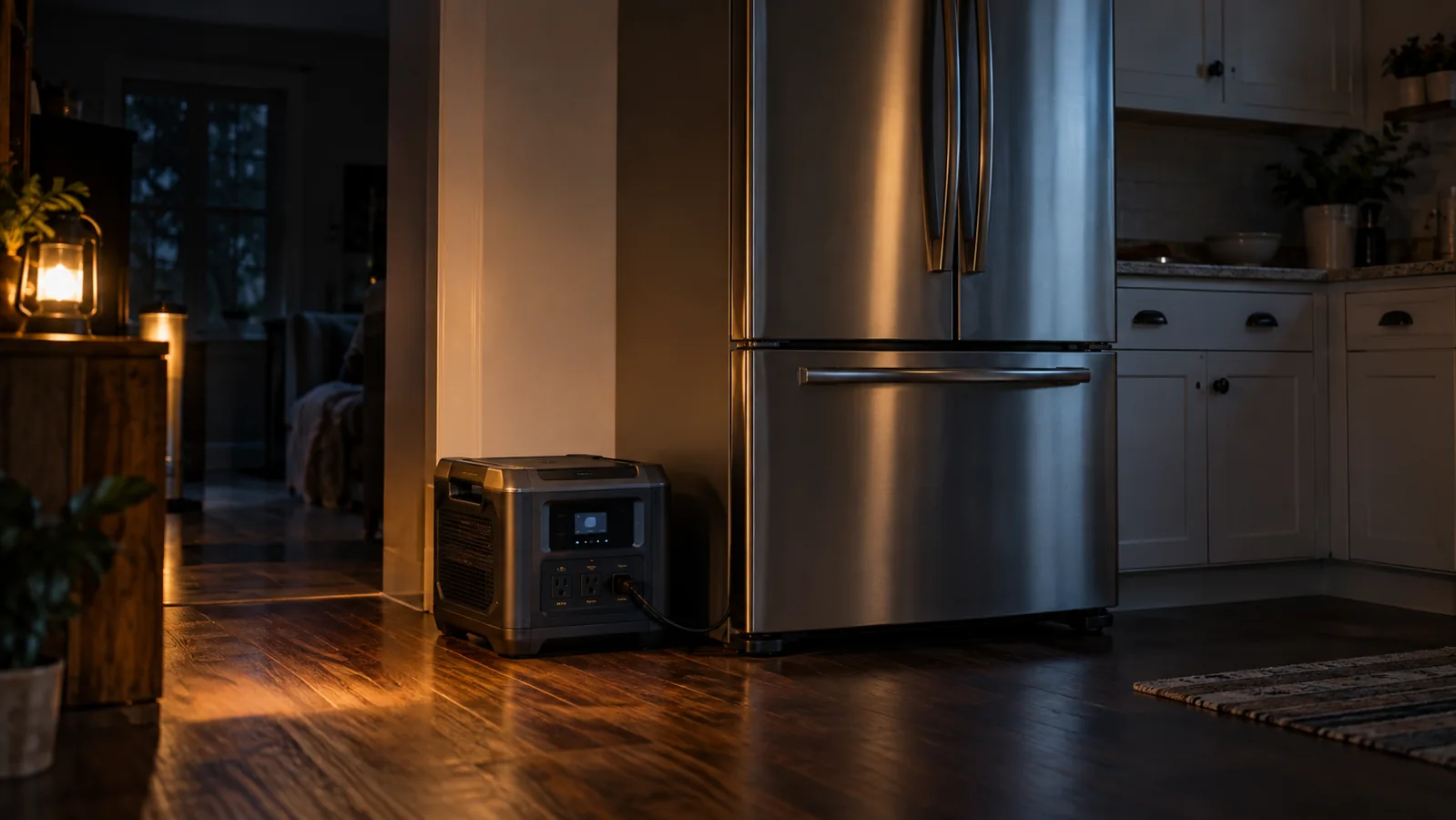
The number printed in large type on a portable power station is usually the one people notice first. A thousand watt-hours sounds substantial. A refrigerator doesn't seem like a particularly demanding appliance, either. It hums away in the corner without attracting much attention.
Put those two together and it's easy to imagine buying one battery and keeping the refrigerator running through a long outage.
That assumption can get expensive.
A refrigerator uses power unevenly. Its compressor starts, runs for a while, then shuts off. It runs more often when the kitchen is hot, the doors get opened, or warm groceries have just been put away. Two refrigerators of similar size can behave differently. Even the same refrigerator will behave differently in January and August.
So when a battery manufacturer says a unit can power a refrigerator, there's a missing piece: for how long, under your conditions?
Read the small number on the refrigerator first
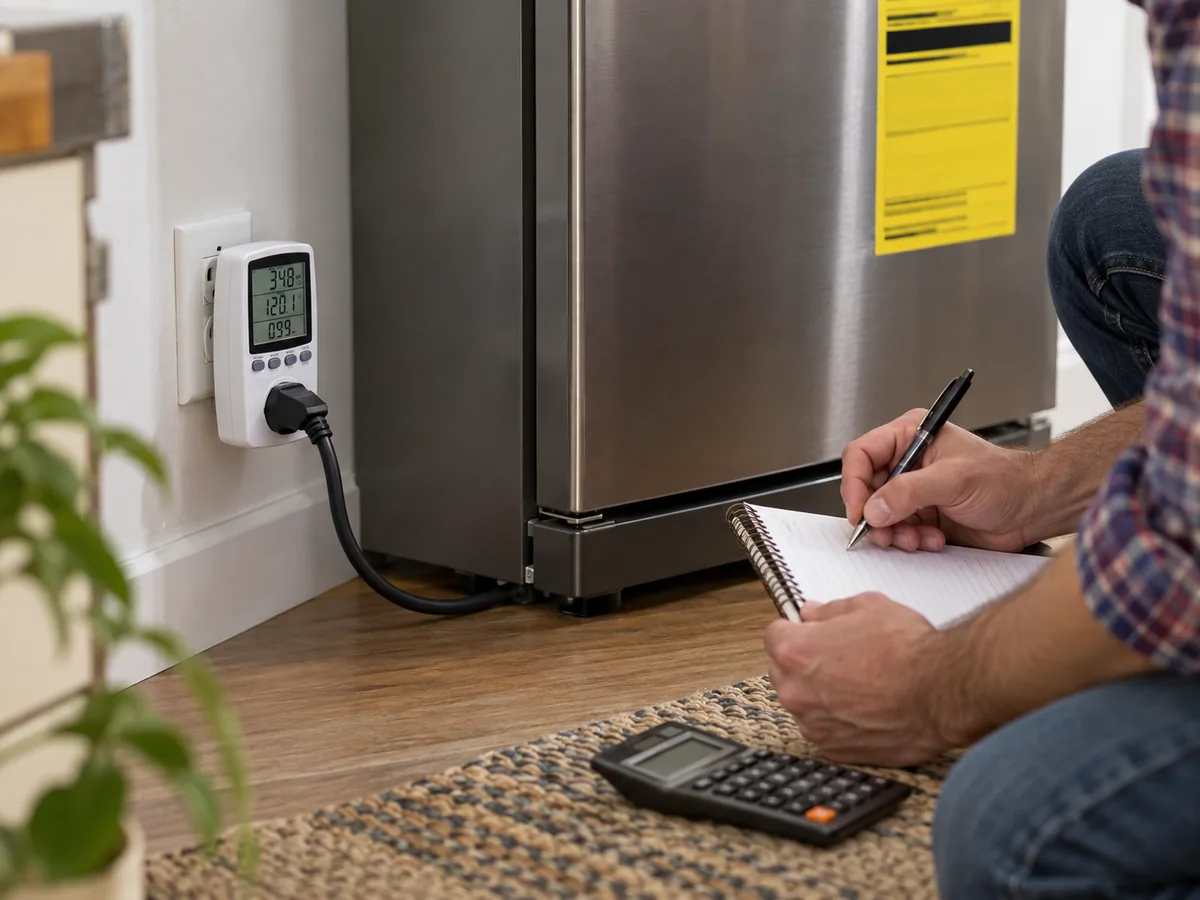
Find the yellow EnergyGuide label if you still have it, or look up the exact model's annual electricity consumption. Many manufacturers publish it with the specifications.
Imagine a refrigerator rated at 400 kilowatt-hours per year. Divide that by 365 and you get about 1.1 kilowatt-hours per day, or 1,100 watt-hours. That's the approximate energy it uses over an average day under the label's test assumptions. The kitchen in your house may be warmer. The doors may be opened more often. The refrigerator may be older or in need of maintenance.
Still, that figure immediately tells you something useful. A battery advertised as holding 1,000 watt-hours doesn't contain unlimited refrigerator power. Even before conversion losses, its capacity is in the neighborhood of one typical day's consumption for that example refrigerator.
It may last longer if your appliance uses less energy, and much less time if the refrigerator is working hard. The energy rating is a starting estimate, not a runtime promise.
A plug-in electricity meter can give you a better answer. Use one rated for your refrigerator's electrical load, let it record a normal day or two, and note the kilowatt-hours consumed. That measurement captures the actual appliance in its actual location. It also reveals something that a quick glance at running watts cannot: how much electricity the compressor uses over time.
If a meter says your refrigerator consumed 0.8 kWh during a normal 24-hour period, that's 800 watt-hours before accounting for losses in a battery's AC inverter. If it consumed 1.6 kWh, the same battery will have a much harder time reaching the next day.
No product comparison can replace that one measurement.
The battery's two numbers do different jobs
Take the Jackery Explorer 1000 v2. Jackery lists a 1,070Wh lithium iron phosphate battery, 1,500W continuous AC output, and a 3,000W peak surge rating. The unit weighs about 23.8 pounds.
Those specifications answer two separate questions.
The 1,500W output tells you the sustained AC load the power station is designed to support. The surge figure helps with the brief extra demand when a motor starts. The 1,070Wh capacity describes stored energy, which is what ultimately limits runtime.
A power station can have enough wattage to start a refrigerator yet run out of stored energy hours later. It can also have plenty of stored energy but fail to start a particular motor if its inverter can't handle the startup demand.
The EcoFlow DELTA 2 illustrates why comparing the large wattage numbers alone is a poor method. It offers 1,024Wh of storage, 1,800W continuous AC output and a 2,700W advertised surge rating. Its inverter output is higher than the Jackery's continuous rating, while its listed storage capacity is slightly smaller.
For a refrigerator that both units can start, the extra continuous wattage may not gain you much runtime. Energy capacity, inverter efficiency and the refrigerator's daily consumption become more relevant.
That doesn't make one better than the other. They're examples of how the specifications serve different purposes. I haven't tested either unit with a refrigerator, and I wouldn't rank their real-world endurance from the spec sheets alone.
There's another drain that rarely makes it into cheerful runtime estimates. The power station itself uses electricity to keep the AC inverter operating. Conversion from the battery's DC power to household AC also consumes energy. The number of watt-hours printed on the case is not the same as the amount of usable electricity your refrigerator will receive.
When you're reading an online claim that a particular battery will run a fridge for twenty hours, check whether the estimate assumes a continuously running compressor, an average cycling load, or a manufacturer-selected test appliance. Without that context, the number doesn't tell you very much.
Moving the refrigerator is the wrong first move
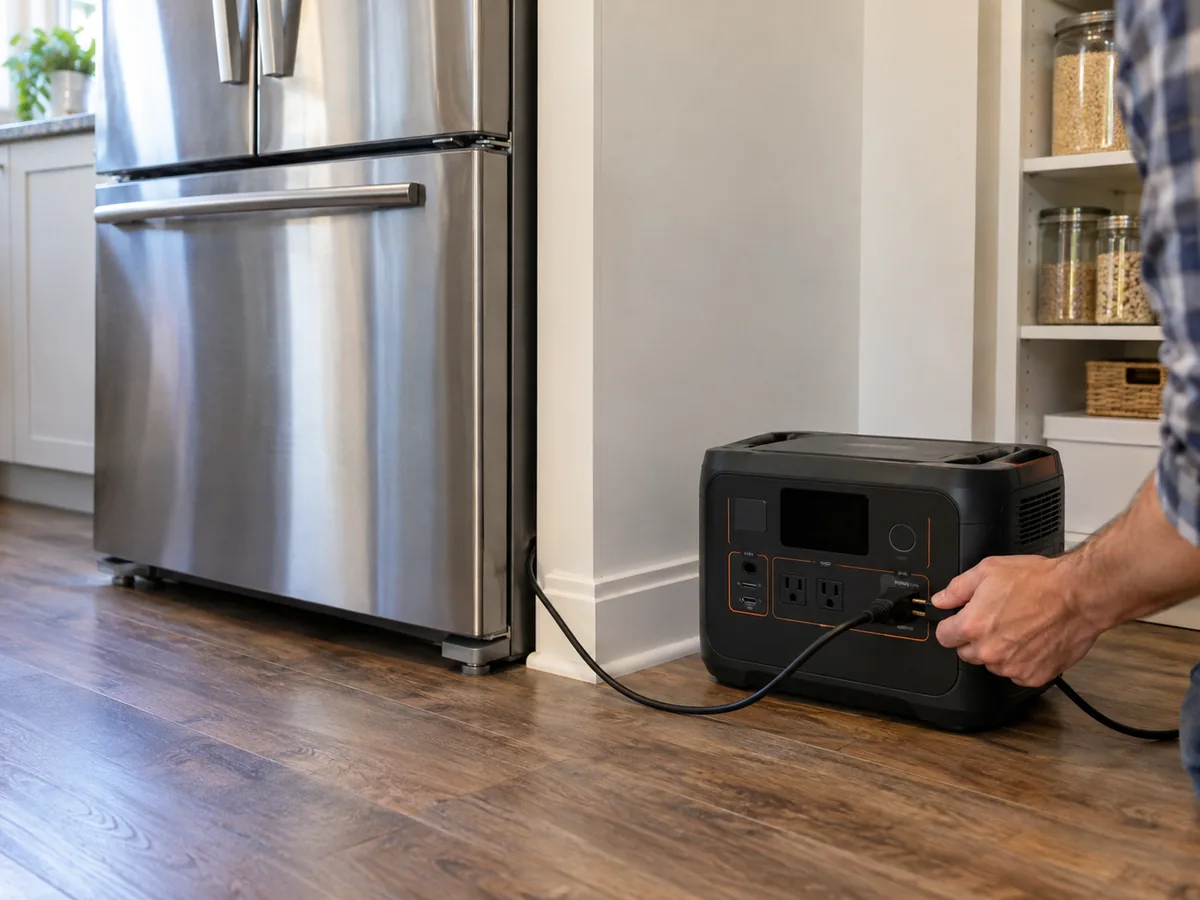
The refrigerator stays plugged into the wall on an ordinary day. During an outage, it may be across the kitchen from the battery or too far away for the refrigerator's own cord to reach.
Now you've got a cord problem.
Do not improvise a connection by backfeeding an outlet or running a homemade cord into household wiring. If you want to power built-in circuits, an electrician should design and install an approved transfer arrangement. For a refrigerator powered directly by a portable battery, follow the battery and appliance manuals, including their instructions about extension cords, load ratings and ventilation.
Plan the location before the outage. Batteries need clearance around their vents, protection from water, and a place they won't be knocked over or turned into a tripping hazard. A refrigerator may need enough room to pull its plug out and move it to the backup supply without dragging the appliance across the floor.
Test the arrangement with the battery fully charged while utility power is available. Let the refrigerator run through several compressor cycles. Watch the battery's display, confirm the compressor restarts successfully, and check how quickly capacity drops.
A five-minute demonstration in a store won't tell you whether the arrangement gets through the night.
You might not need to run it continuously

People understandably hate the thought of throwing away a refrigerator full of groceries. But a power outage doesn't require you to energize every appliance immediately.
An unopened refrigerator can keep food cold for about four hours under standard food-safety guidance. A full freezer, with its door closed, can hold its temperature for approximately 48 hours; a half-full freezer is closer to 24 hours. Those are planning guidelines, not permission to ignore a thermometer or extend safe storage when food has become too warm.
A simple appliance thermometer is cheap compared with a spoiled refrigerator full of food. It lets you make a decision based on temperature rather than the length of time the electricity has been out.
For a short interruption, leaving the doors closed may be the best use of your time. If the outage is likely to last, the choice becomes whether to run the refrigerator from a battery, move food to an ice-filled cooler, or use another safe source of power. Food must stay within safe temperatures; briefly switching power on after food has become unsafe won't reverse that.
A freezer full of frozen food has an advantage over a refrigerator full of leftovers because it holds its temperature longer. That could change which appliance deserves backup power first, depending on what you have stored.
If you choose a gasoline generator for a longer outage, the safety requirements are different from those of an indoor battery. Run a fuel-powered generator outside, at least 20 feet from doors, windows and vents, with working carbon monoxide alarms in the home. Never use one in a garage, even with the door open. Follow the generator's electrical safety instructions and never feed power into household wiring without an approved transfer setup.
Buy based on the outage you want to cover
A battery intended to keep food cold until morning has a different job from a system expected to run for three days.
If your measured refrigerator demand is 800Wh per day, a roughly 1kWh battery may be useful for an overnight outage, depending on conversion losses and compressor behavior. A 72-hour outage is a different calculation. Three days at that consumption is 2,400Wh delivered to the appliance, before losses, and you'd need some way to replenish what the battery has used.
Solar panels can recharge a compatible power station, but a panel's rated wattage is not what it produces from sunrise to sunset. Weather, shade, season and charging limits all affect the amount that reaches the battery. A system that works well during a sunny afternoon may produce very little during the same storm that knocked out the grid.
I would choose the refrigerator's role in the plan before choosing the power station: short backup during a common outage, overnight support, or part of a larger multi-day system with reliable recharging. Then I'd compare the energy requirement with actual usable battery capacity and confirm that the inverter can start the compressor.
If you already own a power station, skip the hypothetical runtime charts for a moment. Find a safe time to test it with the refrigerator you have. Run the refrigerator through normal cycles, check the battery's remaining charge, and keep a thermometer inside.
The reading after a few hours will tell you more than the largest number on the battery's box.