Water Storage Containers Compared: What Their Designs Really Mean
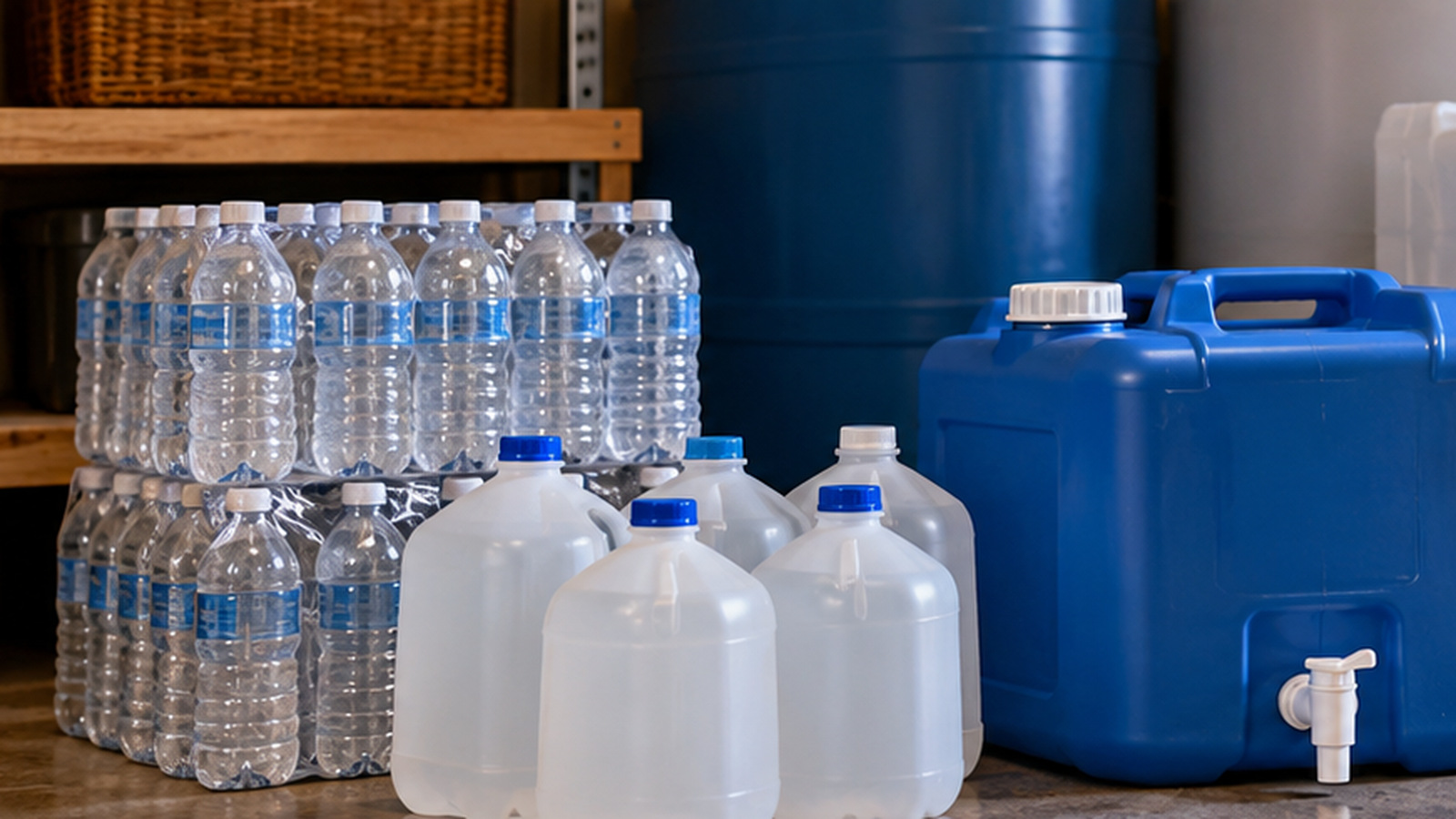
A seven-gallon water container seems like a sensible thing to keep in the house. It doesn't take up much floor space, it has a handle, and seven gallons sounds like a good deal more than a case of bottled water.
The trouble begins when you need something out of it.
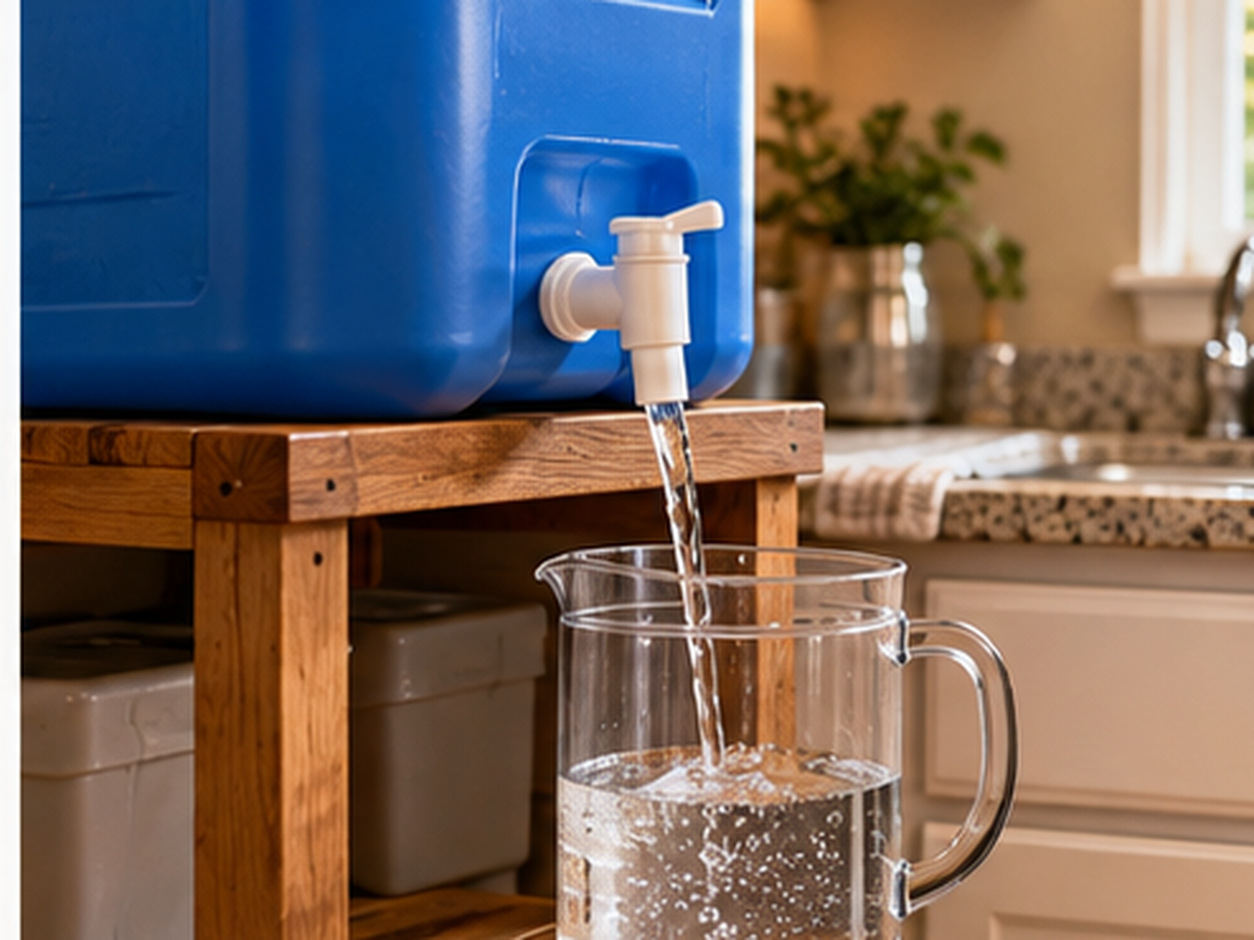
The popular Reliance Aqua-Tainer has a reversible spigot. That's clever for storage: the spigot is protected when you're carrying the container, then turned around for dispensing. It also means you need enough clearance under the spigot to put a glass or pitcher there. Set the container flat on the floor and the arrangement becomes awkward. Put it on a table and you have to deal with a load of about sixty pounds. Its published capacity is seven gallons and the empty container weighs around two pounds.
You can work around this with a low, solid stand. It is worth thinking about the stand before buying six containers.
There are other ways to store water, and they aren't interchangeable. A Scepter military-style water can has a different approach to handling and pouring. WaterBrick sells low, interlocking containers designed to fit into spaces that would be inconvenient for tall jugs. A grocery-store case of sealed bottles avoids the dispenser question entirely. Those differences sound minor until you're choosing where to put fifty gallons in a house that wasn't built with a water-storage room.
Three containers, three very different jobs
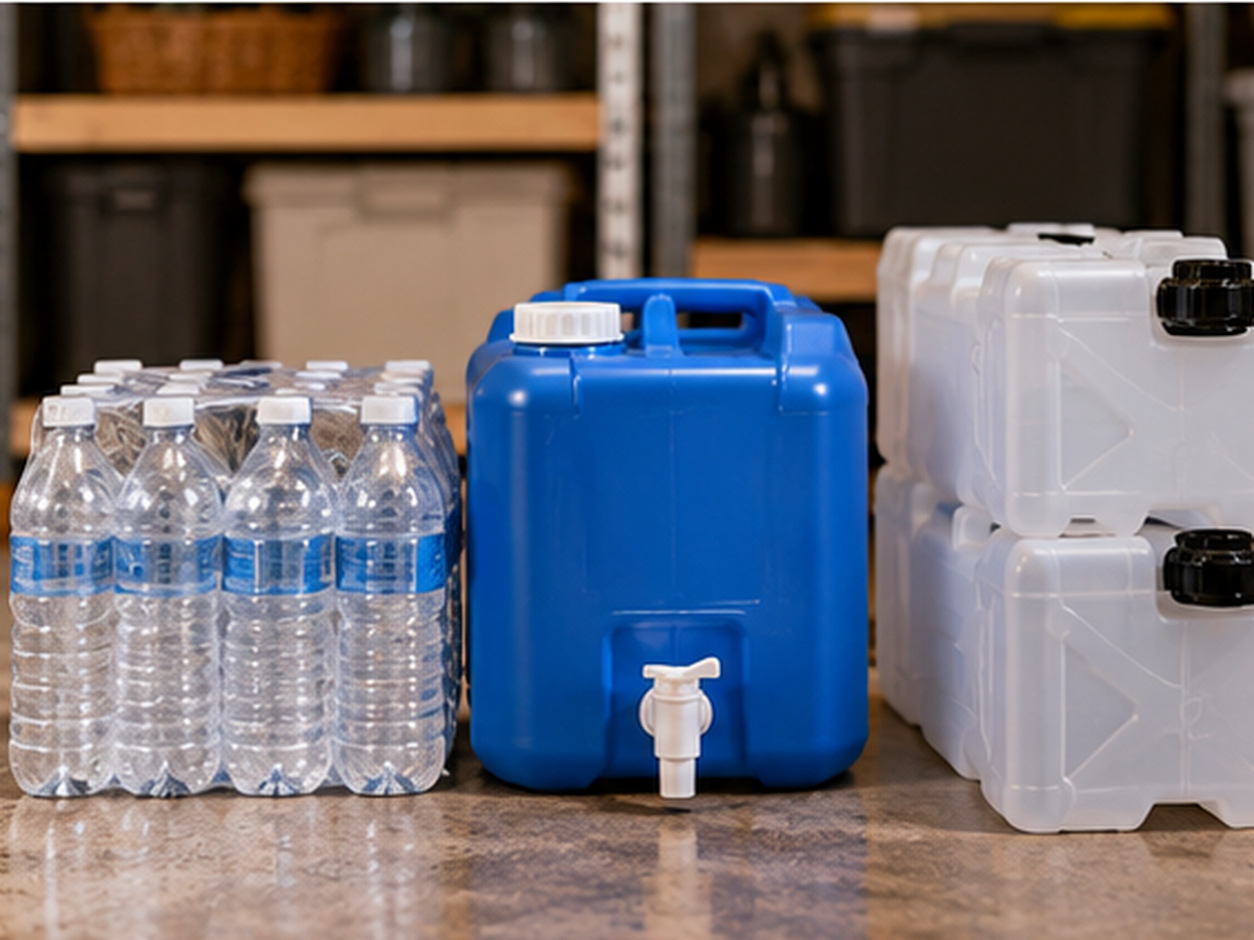
The Reliance Aqua-Tainer, seven gallons, is a reasonable candidate for water you expect to leave in one place and dispense through a spigot. REI lists it at 11.5 by 12 by 16 inches, with a reversible on/off spigot, vent cap, and polyethylene body. The ability to dispense without tilting a heavy container is its main attraction for home storage.
There's a limitation hiding in the specification: the retailer says the containers can be stacked when empty. That's different from a container designed to form a loaded stack. It would be a mistake to look at that rectangular shape and assume you can build a tall wall of full Aqua-Tainers. If you plan to keep several, give each a stable place where the tap is accessible.
The Scepter five-gallon military water container takes a different route. Its manufacturer describes a food-grade, impact-resistant, BPA-free container and offers a dedicated water-dispensing spout as a separate accessory. This is a design for carrying water and pouring or dispensing it with compatible equipment. A five-gallon fill is about forty-two pounds of water. That is lighter than seven gallons but still a lot for someone with an injured shoulder or limited grip strength.
I'd look closely at the complete arrangement before ordering: the exact water-can model, cap, any separate spout, and the place where the can will be used. Scepter also makes fuel cans. They may look similar in photographs. Make certain the product you're purchasing is the drinking-water version.
The 3.5-gallon WaterBrick gives up capacity in exchange for a shallower, stackable shape. WaterBrick says its containers interlock and can fit under beds or in closets. The company markets them for transporting water as well as building a modular reserve. Water alone in a 3.5-gallon container weighs about twenty-nine pounds. That's more manageable than a seven-gallon jug, but a full stack is not light, and you still need to follow the maker's stacking instructions and keep the base stable.
A stack of WaterBricks solves a storage-footprint problem. It doesn't automatically solve the pouring problem. Think about where you'll take an individual brick when it's time to use it, and whether an optional spigot or dispensing accessory belongs in your setup.
These are not three versions of the same product. One is a gravity dispenser, one is a portable water can, and one is a modular storage block. Choosing between them by price per gallon alone ignores the reason the designs differ.
What I would skip: buying any of them in bulk without first filling one and seeing how the household uses it. That simple trial tells you more about the cap, handle, and dispensing arrangement than a dozen promotional photographs.
Put the drinking water where people will drink it
If the water is strictly for an emergency at home, I like keeping some commercially sealed bottled water within easy reach. A case of twenty-four standard 16.9-ounce bottles is about 3.17 gallons. You can grab a bottle without lifting a big container or reaching into the reserve with a cup.
The downside is the mountain of packaging and the amount of shelf or floor space a long reserve consumes. But cases are easy to buy in stages. You can start with a known quantity instead of purchasing a pump, rack, and containers before you have a place to put them.
For cooking, gallon containers are easier to pour than individual bottles. Those two sizes work together. If you want a larger reserve behind them, a five- or seven-gallon container can take that job.
A household with limited lifting ability should probably favor smaller containers even if that increases the container count. It is hard to imagine a worse emergency-water arrangement than one where the only person able to move the water is away at work.
The scale becomes apparent when you calculate a real supply. The usual baseline is one gallon per person each day for drinking and essential needs. Four people need twelve gallons for three days. A two-week reserve is fifty-six gallons. Water weighs around 8.34 pounds per gallon, which puts the two-week quantity at roughly 467 pounds before containers or shelving. Hot weather, medical needs, and pets can call for more.
At that point I'd sketch the storage space, not the shopping list. How many cases can fit on the pantry floor? Is there a spot for a dispenser where you can put a pitcher underneath? Does the household need water in more than one location? And what happens if one container leaks?
A full fifty-five-gallon drum can be useful where a permanent storage system has been planned, but it doesn't belong on every beginner's shopping list. Water alone in that drum weighs about 459 pounds. Unless you have a sensible way to fill, support, and draw from it, capacity is all you've purchased.
The problems that don't appear on the product page
A container's shape is only one part of the decision. Storage temperature and maintenance matter too.
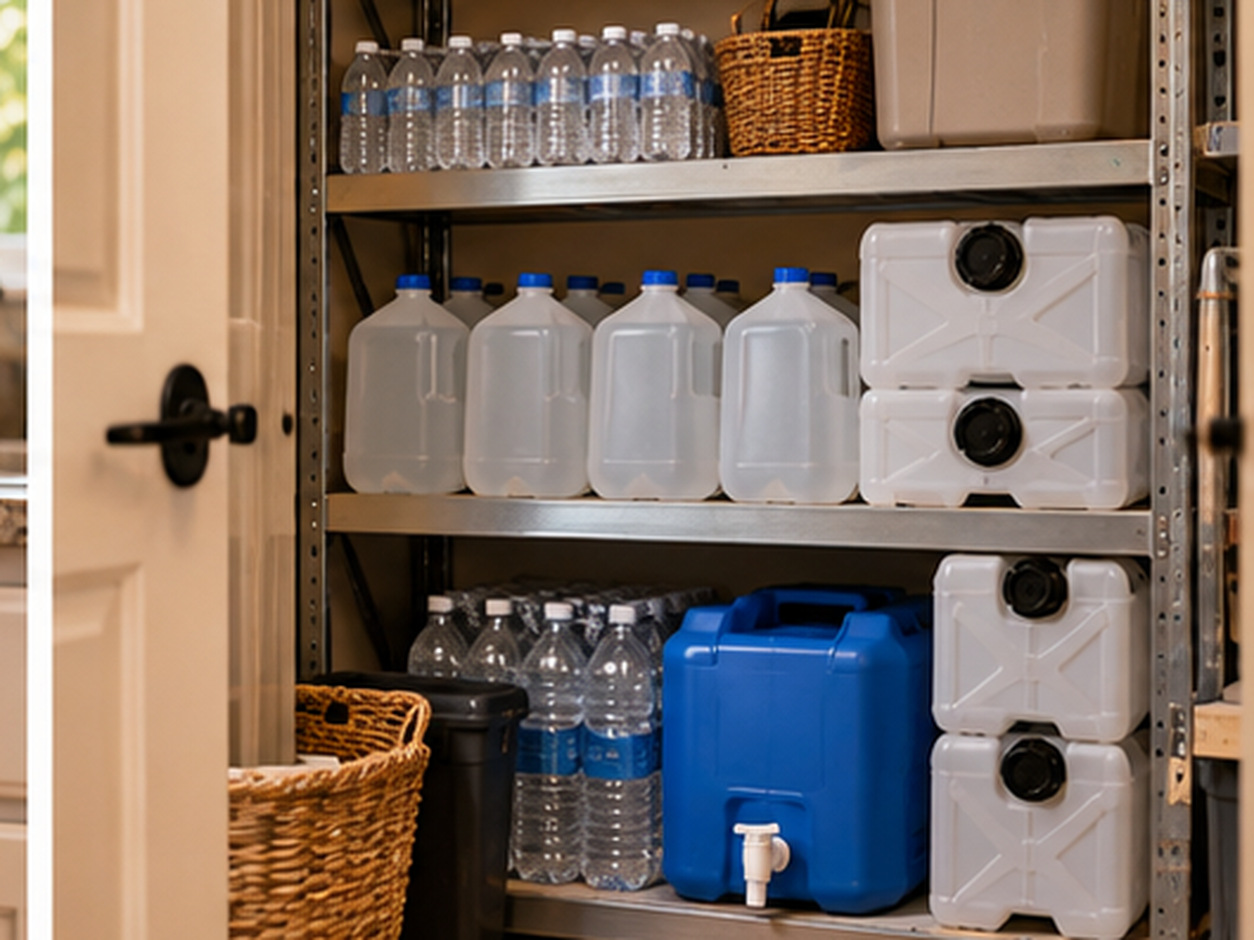
A garage may have the most spare floor space, but in a hot climate it can be a poor place for drinking water that will sit for months. Choose a cool indoor location when possible, out of direct sun and away from gasoline, pesticides, and cleaning chemicals. Avoid loading flimsy shelving with heavy containers, and don't store one where a slow leak would quietly damage flooring or furniture.
Refillable containers need to be intended for potable water. Don't reuse containers that held fuel or toxic chemicals. Clean and sanitize them following suitable drinking-water storage instructions before filling. Date the contents and replace home-filled stored water every six months under current public-health guidance. A clean spigot, scoop, or pitcher helps prevent contaminating the supply while drawing from it.
Commercially sealed bottled water is simpler to maintain. Observe the package's storage directions and printed date.
One other purchasing trap is confusing storage with treatment. A filter's ability to remove bacteria or parasites doesn't establish that it can remove chemical contamination. In a water emergency, a boil-water advisory and a do-not-drink advisory mean different things. A home water reserve should begin with safe drinking water rather than assuming every future source can be treated with the gear you happen to own.
The most helpful test doesn't require an emergency. Take the container you're thinking of relying on, fill it, put it in the spot you've chosen, and dispense enough for a pot of water. You'll find out if the faucet clears the pitcher, whether the cap is convenient, and if anyone in the house needs help lifting it.
That information is worth getting before ordering the second one.