Stranded in Your Car: What to Do Before You Decide to Walk
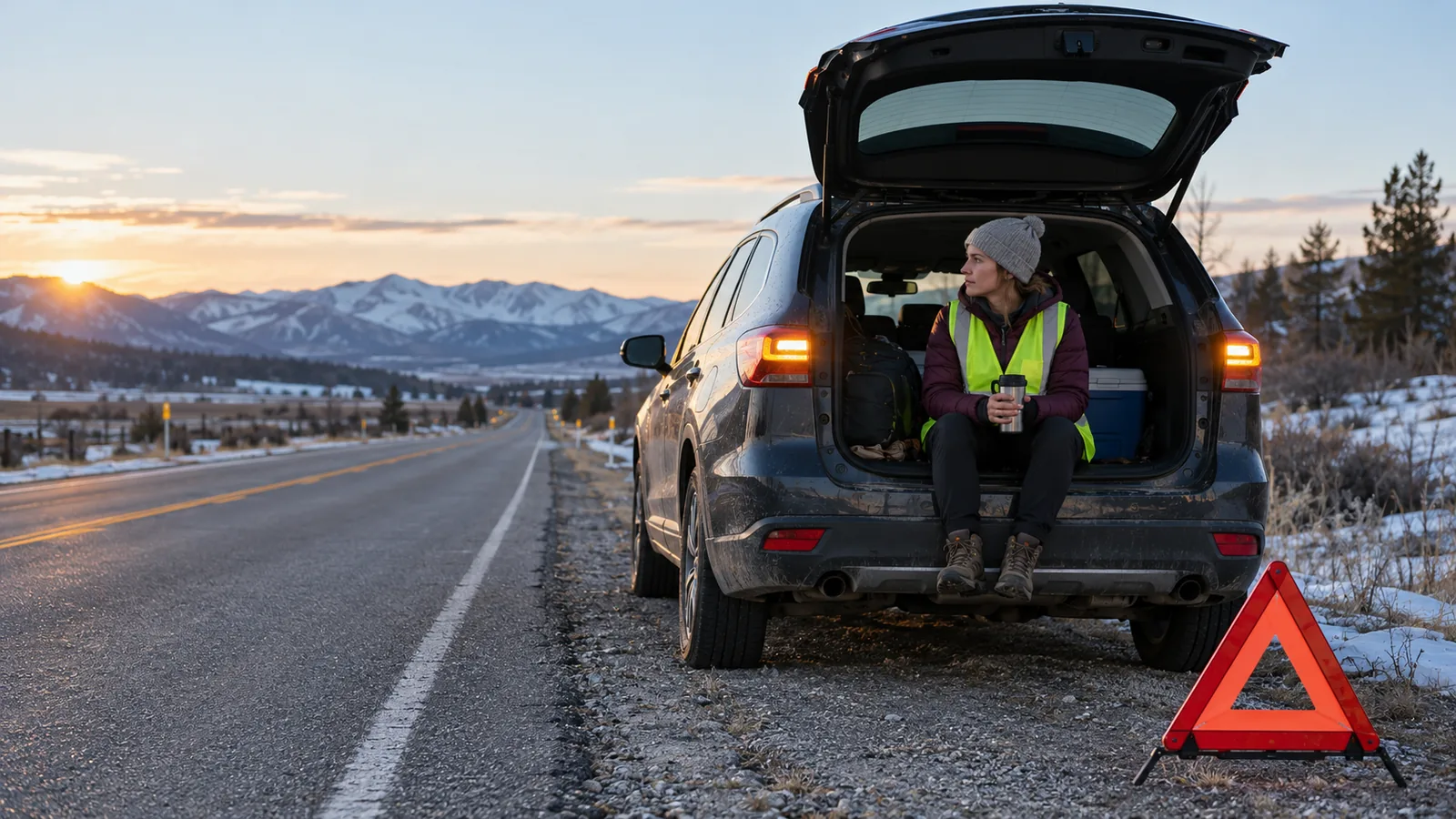
A stopped car has a way of making a short distance feel enormous. The gas station was only a few exits back. The house is twelve miles away. Your phone shows one bar. Walking suddenly sounds like the fastest way to get the situation under control.
Sometimes it is. Often it is not.
What makes a roadside problem dangerous is rarely the dead battery or flat tire alone. It is where you stopped, how exposed you are to traffic or weather, whether anybody knows your location, and what happens if you choose to leave your best shelter behind.
The first decision is not which tool to pull from the trunk. It is whether you and everyone with you are safe where the vehicle has stopped.
Get out of traffic before doing anything else
If the car still moves and it is safe to do so, get well away from travel lanes. A breakdown on a quiet neighborhood street is different from stopping beside high-speed traffic. On a narrow shoulder, the space where you would normally change a tire may put your back inches from passing vehicles.
Turn on the hazard lights. If you have reached a safe parking position, assess the surroundings before opening doors. Exit on the side away from moving traffic when that can be done safely. Follow local emergency-service advice and road signs; some roads have barriers or areas where staying in the vehicle is more dangerous than moving to a protected place.
If smoke, fire, rising floodwater, or another immediate hazard threatens the car, leaving it may be necessary. Don't remain in a vehicle that is actively becoming unsafe just because general winter advice says to stay put.
Do not attempt to drive through water covering the road. Water depth and current are difficult to judge, and even shallow moving water can carry a vehicle away. A stalled car in floodwater calls for a different response from a car that simply will not start.
Tell someone where you are, not just what happened
“Car broke down” is a description, not a location.
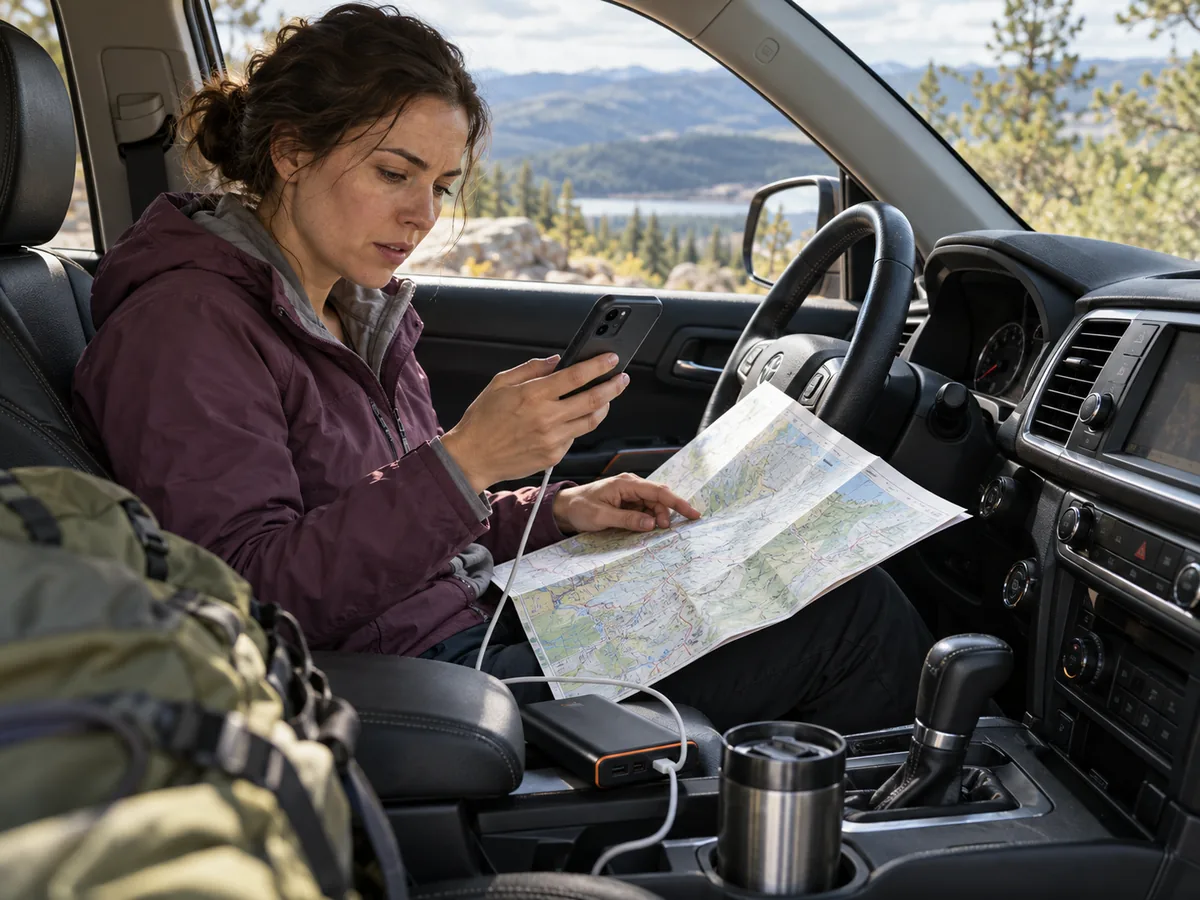
Send your exact location if your phone allows it, along with the highway, direction of travel, nearest exit or mile marker, and any obvious landmark. Tell the person whether you're safely off the road, how many passengers are with you, and whether anyone needs medical attention.
If you contact roadside assistance, make sure they understand the precise location and whether you are on a shoulder or in a parking area. If there's danger from traffic, weather, or a medical emergency, call emergency services rather than treating it as an ordinary tow request.
Use texts when a call will not connect. Send one concise message to a contact who knows what to do with it, then avoid burning through the phone battery making the same unsuccessful call repeatedly.
A paper contact list and charging cable are small things to carry, but they matter once a phone stops being reliable. A thoughtfully maintained vehicle emergency kit earns its place because it supports these first decisions, not because the trunk looks impressive when you open it.
Should you stay with the car?
If the car is safely located, conditions outside are dangerous, and help is expected, the vehicle is often the better shelter. It is easier for rescuers to spot than a person wandering into unfamiliar countryside. It gives you protection from wind, precipitation, and some sun, and it keeps your supplies in one place.
That does not mean “always stay in the car.” In extreme heat, a parked vehicle can become dangerously hot, even with windows partly open. If you can safely reach a shaded, cooler location away from traffic, that may be better. Never leave a child, older passenger who needs supervision, or a pet inside a hot car. If someone shows signs of heat stroke, call emergency services immediately and begin cooling them.
In a winter storm, walking away can be much worse than waiting. Visibility can collapse, exposed skin can become painfully cold, and familiar landmarks disappear. National Weather Service advice generally favors remaining with the vehicle when stranded in a snowstorm, provided the vehicle itself is in a safe location.
The point is to compare risks: the hazard around the car, the conditions inside it, the distance to a genuinely safe destination, and whether anyone knows where you're going. A distant cluster of lights is not a plan if the road between you and those lights is unsafe.
Cold weather changes how you use the engine
A running engine can supply heat, but it can also produce carbon monoxide, a gas you cannot see or smell. Snow, mud, or debris around the exhaust pipe can trap exhaust underneath or inside the vehicle.
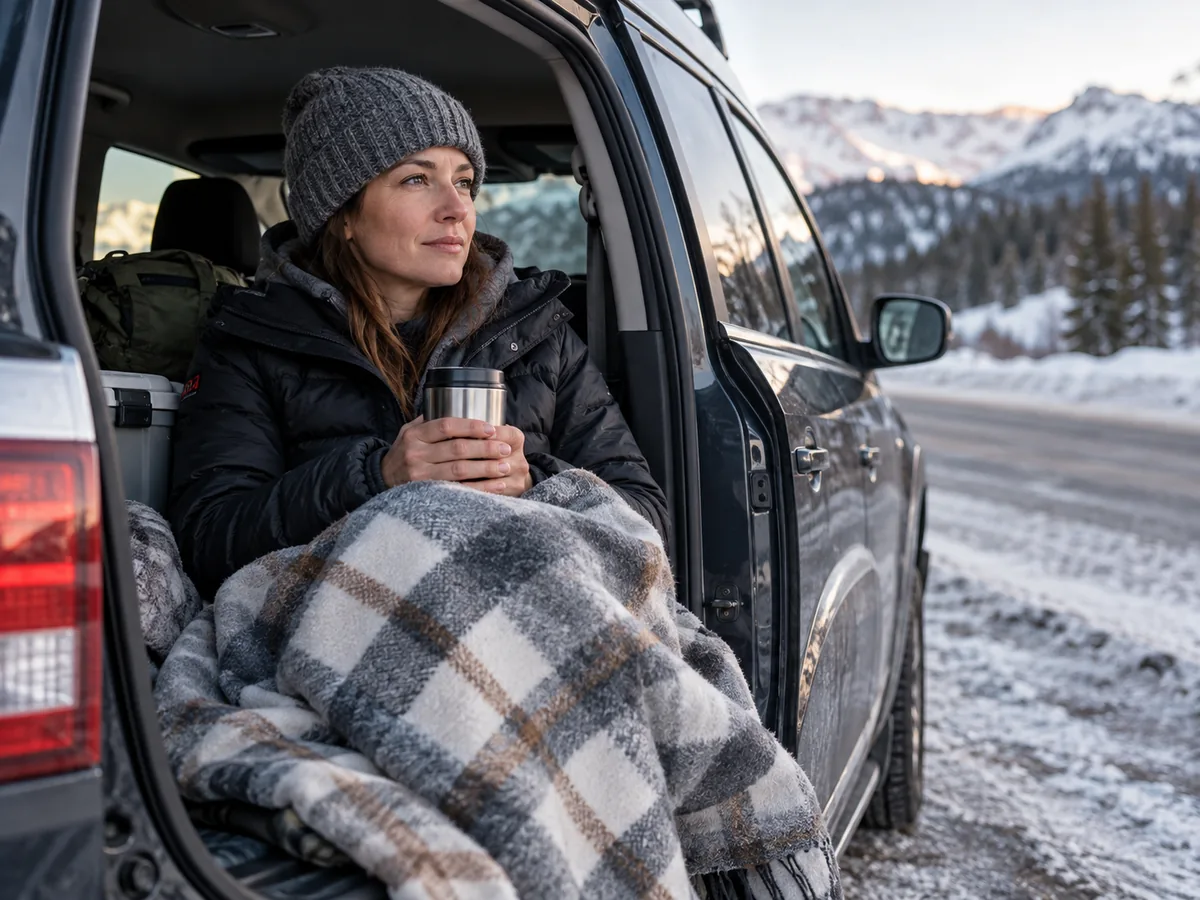
If stranded in snow, check that the tailpipe is clear before running the engine, and keep checking as conditions change. The National Weather Service commonly recommends operating the heater for about ten minutes per hour, slightly opening a window for ventilation, and conserving fuel. Those steps reduce risk but cannot guarantee safety if the exhaust system is damaged or exhaust is entering the cabin. If anyone develops headache, dizziness, weakness, or nausea while the engine is running, shut it off, move to fresh air safely, and seek emergency help.
Wear layers, cover your head and hands, and keep clothing dry. Use blankets or sleeping bags to reduce heat loss. Stretch and move your limbs periodically without working up a sweat. In severe cold, damp clothing makes things worse.
If winter driving is common for you, the difference between a thin throw blanket and suitable insulating clothing is significant. The same principle of layered warmth applies during a winter power outage at home, when conserving the heat you already have can be more useful than improvising a dangerous heating source.
Never use a camping stove, charcoal burner, or fuel heater inside the car to warm up. The risk of fire and carbon monoxide poisoning is not worth it.
Heat calls for a very different plan
A car stopped on a Texas highway in August can turn into an oven. Shade matters. So does airflow and knowing whether the vehicle's air conditioner still operates safely. Do not count on a dashboard fan or cracking the windows to make a vehicle safe in extreme heat.
When you can leave the car safely, a shaded place well away from moving traffic may be preferable. Drink available safe water, loosen heavy clothing, and reduce exertion. Keep a close eye on passengers who are very young, older, pregnant, or dealing with illness or disability.
An engine that overheated deserves particular caution. Do not remove a hot radiator cap. Scalding coolant can erupt under pressure. Wait for proper cooling and follow the owner's manual or professional advice. A car that just overheated may not be able to run its air conditioning or idle safely, so plan around that reality rather than assuming you can wait inside with the engine on.
If someone becomes confused, faints, has a seizure, or has a very high body temperature with other signs of heat stroke, treat it as an emergency. Call 911 and begin rapid cooling while waiting for responders.
Your emergency gear should solve the likely problem
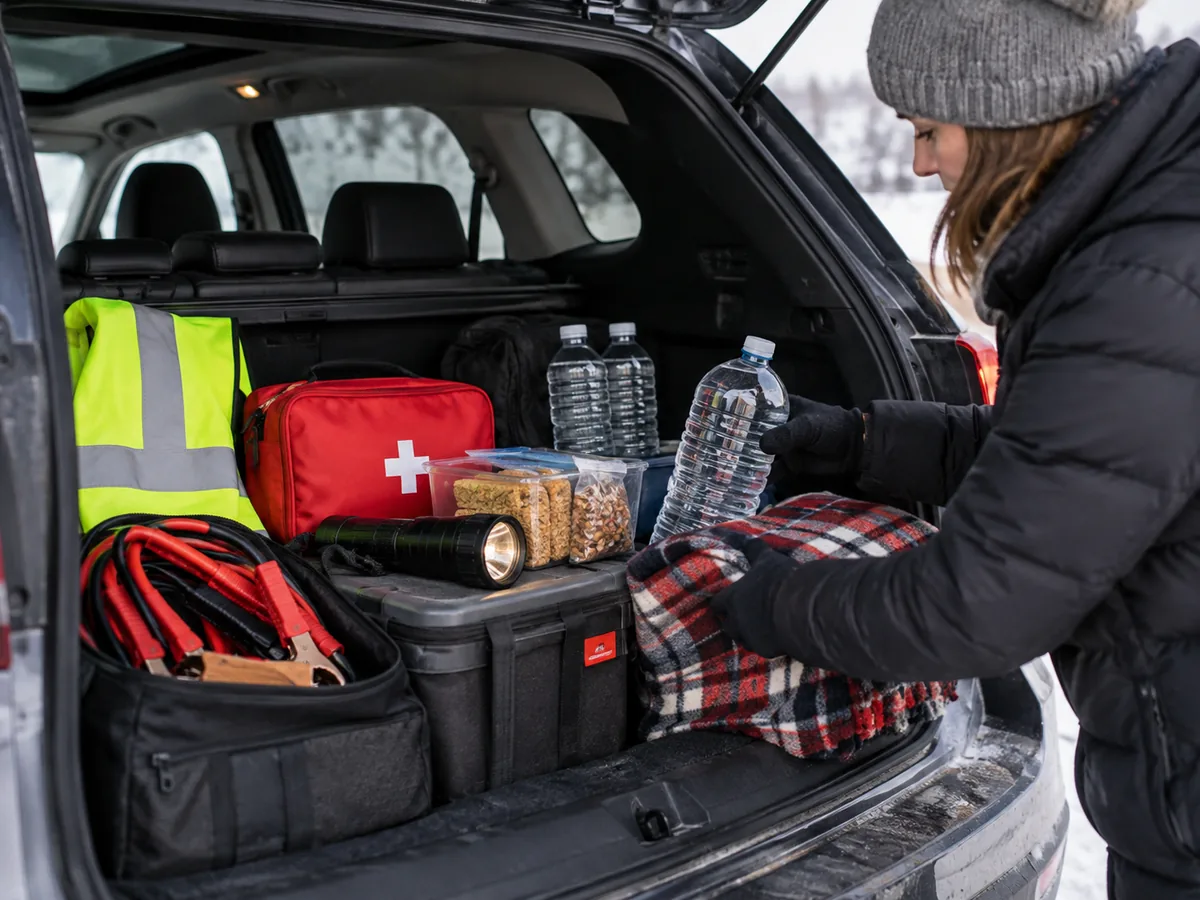
A reasonable roadside kit includes a working flashlight, reflective vest, appropriate warning devices, tire equipment that fits your vehicle, a charged phone-power option, drinking water, basic first aid, and the contacts needed to request help.
The list becomes more useful when you can reach it. Put the flashlight and vest in a place you can get to without leaning into traffic. Keep the spare-tire tools together. Know whether your vehicle even has a spare, because many newer ones do not.
Practice taking out the jack and lug wrench while the car is parked safely at home. Learn the designated lifting points. If the tire fails beside fast traffic or on unstable ground, do not attempt a roadside change simply because you own the tools.
In remote areas, add supplies for the climate and the possibility of an extended wait. More drinking water for hot conditions, insulating clothing for cold conditions, a paper map, and an agreed check-in plan are often more useful than decorative survival equipment.
When walking actually makes sense
There are situations where remaining at the vehicle would expose you to fire, floodwater, dangerous heat, unstable ground, or traffic. In those cases, the immediate goal is reaching a safer place, not necessarily walking all the way to the nearest town.
A nearby occupied building, staffed rest area, or protected location might be reachable on foot. Before leaving, consider visibility, traffic, terrain, temperature, your passengers' abilities, and whether you have communicated your decision. If help is already on the way, moving without telling anyone can make you harder to find.
In open country, distance is deceptive. An apparently short walk across sunlit ground may involve private property, drainage ditches, fences, deep snow, or stretches without water or shelter. Darkness makes familiar routes more difficult. Don't trade a secure waiting place for a guess.
The preparation that takes ten minutes
Pull up a map and identify the stretches of your regular drive with poor cell coverage, long gaps between services, steep grades, or flood-prone crossings. Check the tire equipment and flashlight. Verify the power bank is charged and its cable fits your phone. Put a bottle of drinking water where it won't roll under the pedals.
Then agree on one rule with someone you trust: if your plans change or you expect to arrive much later than usual, send your location and a brief update. That small habit turns a missing arrival into a problem somebody can act on.
A stranded driver doesn't need to know fifty wilderness tricks. They need to recognize the immediate hazard, make themselves findable, manage heat or cold, and resist the urge to turn a controllable breakdown into a dangerous walk.