The Car Emergency Kit That Still Works After a Texas Summer
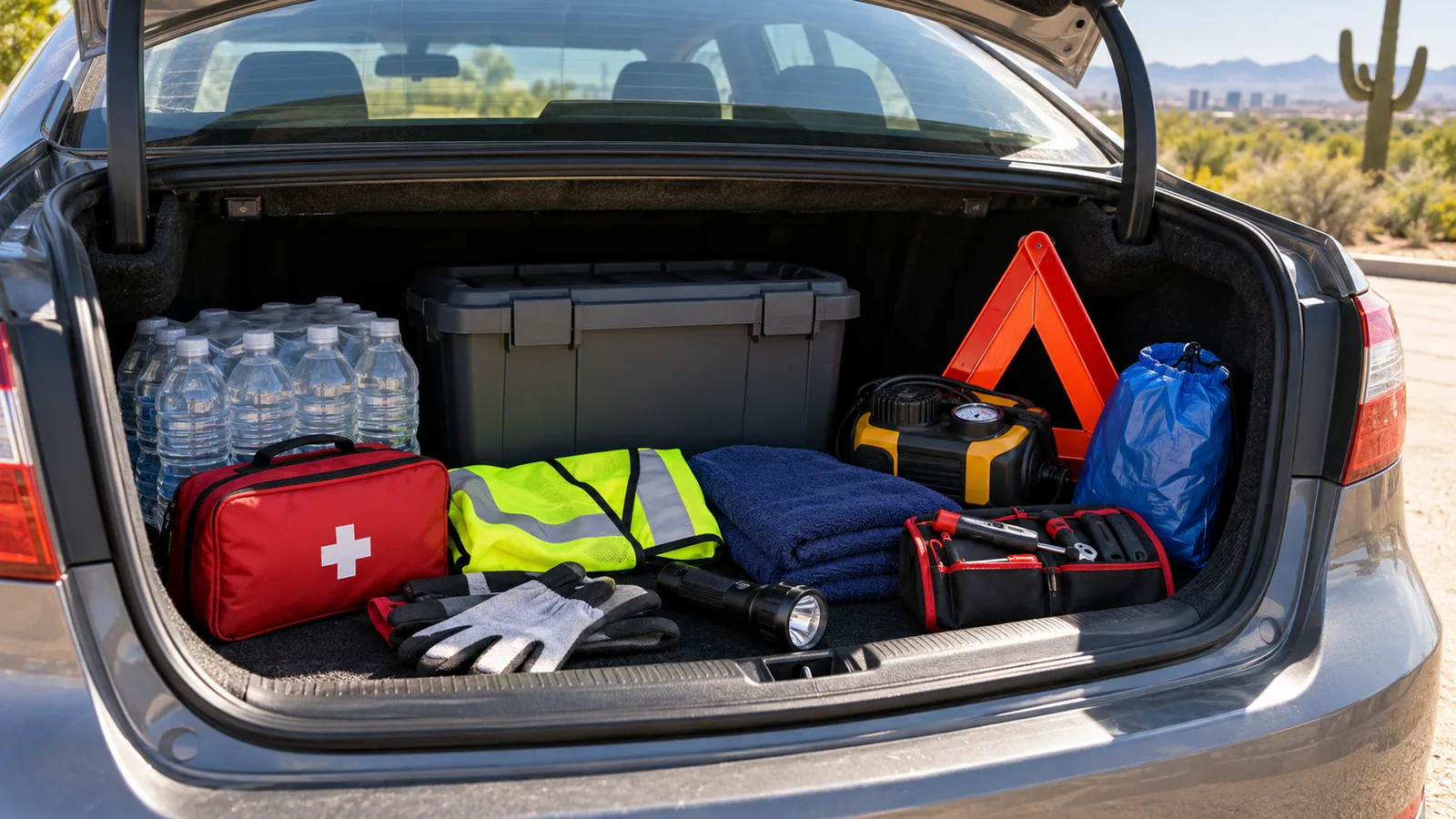
A car emergency kit has a storage problem that rarely gets much attention: the car itself.
Leave a toolbox in the trunk through a Texas summer and it will probably be fine. Leave an inexpensive flashlight, a packet of snack bars, a lithium jump starter, and a bottle of sunscreen in the same place for months, and you have four different sets of storage instructions to worry about.
That doesn't mean you should empty the trunk every afternoon. It means the usual advice to buy a premade kit and forget about it is a poor fit for a car that spends much of its life parked in the sun.
I'd build the kit in two parts. The first lives in the vehicle: durable tools and roadside equipment that are ready whenever you need them. The second gets checked, replaced, or carried with you because heat and time change how dependable it is.
Give the trunk the jobs it's good at
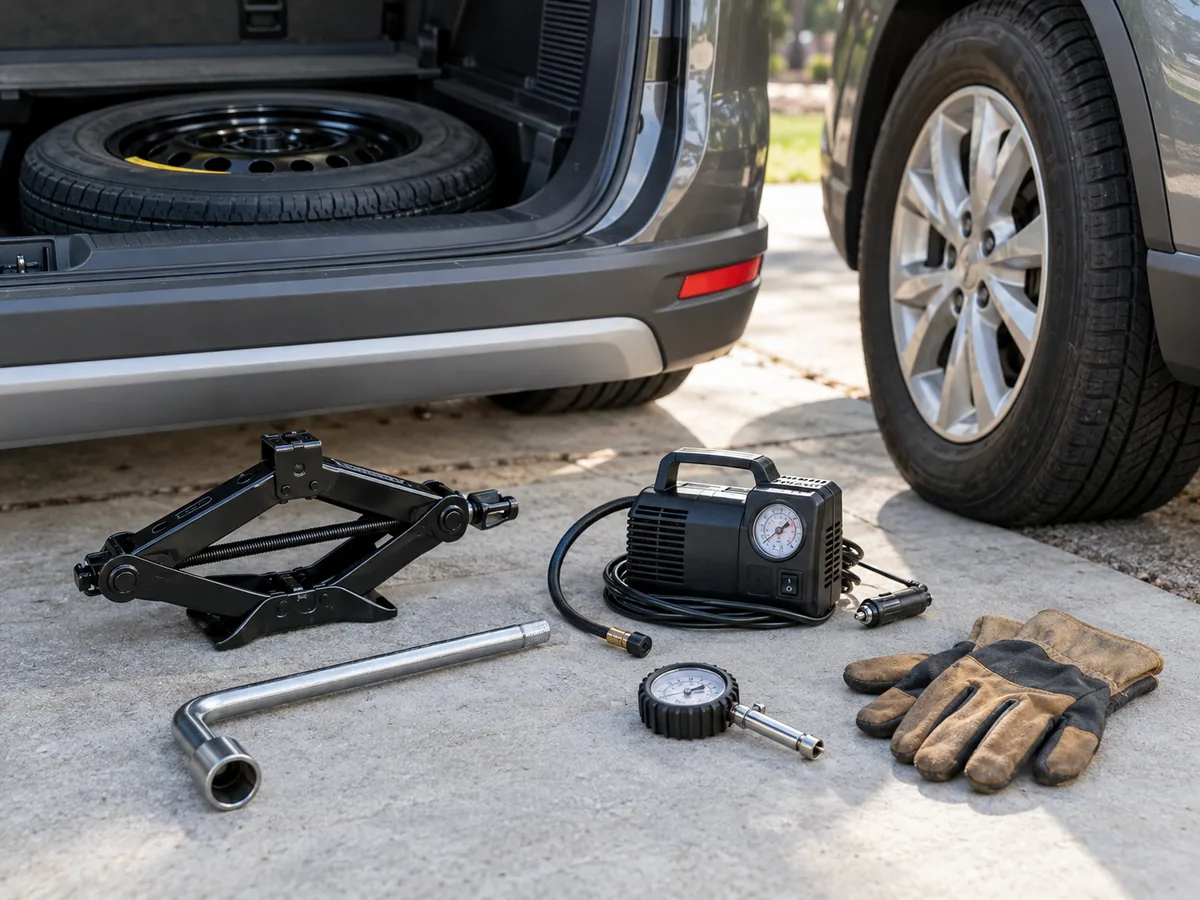
A flat tire is a more likely roadside problem than having to spend three nights in the woods. Start by figuring out what your own vehicle can do about one.
Look under the cargo floor. Does it have a spare tire, jack, and lug wrench? Some newer cars come with a sealant-and-compressor kit instead. If there's a spare, check its pressure and condition. A spare that's been sitting unnoticed for years may be too low to help when the road tire fails. If your car has a locking wheel nut, know where the key is.
A small 12-volt tire inflator can earn its space. Check the power connection before buying. Some plug into a vehicle's 12-volt accessory socket; others clamp to the battery. Those aren't interchangeable arrangements, and some vehicles limit what their accessory sockets can supply. Compare the inflator's current draw with the vehicle's instructions.
A tire inflator won't repair a cut sidewall or make a badly damaged tire safe. It's useful for correcting low pressure and, in some cases, dealing with a slow leak long enough to reach professional help, if the tire is safe to inflate. Don't keep driving on a damaged tire because the compressor can put air back into it.
A flashlight, work gloves, a reflective vest, and a warning triangle belong with that equipment. They are easy to overlook until you're on the shoulder at night. Store the vest and flashlight where you can reach them before you open the trunk, if possible. Warning devices should be used only when you can deploy them safely. Never step into moving traffic to put a triangle in the perfect spot.
The other permanent supplies can be simple: a basic first-aid kit, a rain poncho, a small towel, a pen, and a paper copy of roadside-assistance details. An emergency kit is much more useful when you know where everything is. A tidy container is worthwhile if it stops the tire gauge from disappearing beneath grocery bags.
None of this requires an expensive tactical bag.
The jump starter that quietly goes flat
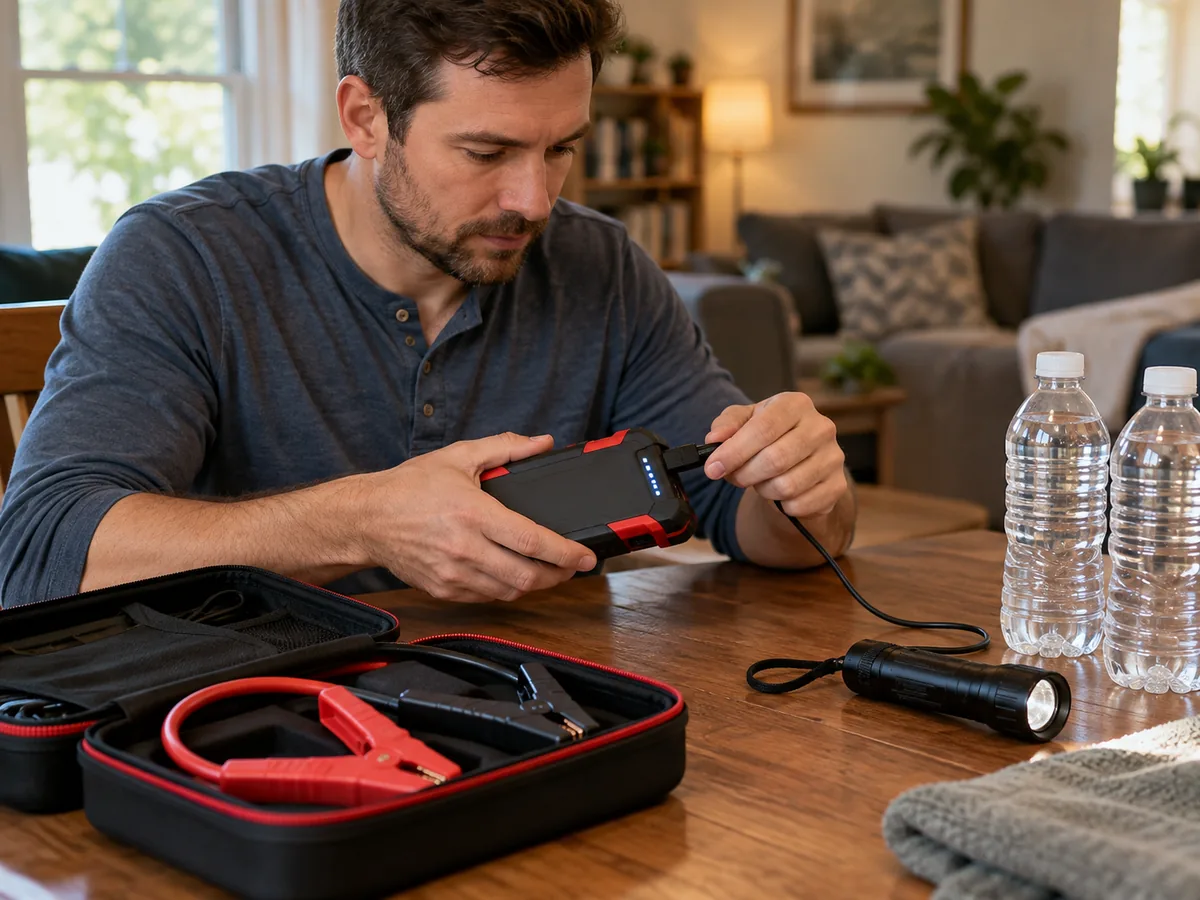
Portable jump starters are convenient. Unlike jumper cables, they don't require a second vehicle. But a jump pack that has been in the trunk since last summer may not be ready when the starter battery dies.
A rechargeable jump starter has a battery of its own. Its instructions specify charging, storage, and operating conditions. Heat can accelerate degradation, and the device may self-discharge while sitting unused. A large advertised peak-amp number doesn't tell you how much charge it will retain after months in a hot car.
Buy one rated for your vehicle, including engine type and size, then read its storage temperature limits. If those limits are likely to be exceeded inside your parked vehicle, don't treat permanent trunk storage as a safe assumption. Keep it somewhere suitable and bring it when needed. Check its charge on a schedule and follow the manufacturer's directions for clamps, polarity, and vehicle compatibility.
Ordinary jumper cables avoid the internal-battery problem. They have their own drawback: you need another vehicle and somebody who can help safely. For that reason, choosing between cables and a jump pack isn't simply a comparison of convenience. It's also a comparison of maintenance obligations.
The same issue affects rechargeable flashlights and power banks. Battery manufacturers warn that very warm storage can reduce performance or contribute to leakage or other failures. A light that uses replaceable cells may be easier to inspect, but those batteries are not immune to heat either. Check them, don't store loose cells against metal tools, and replace anything leaking or damaged.
Water, medicine, and food don't belong on autopilot
You should carry drinking water in the car. The question is how you manage it.
A couple of sealed bottles are useful during a breakdown, and extra water matters when passengers may be waiting in summer heat. But the cabin and trunk can become far hotter than the outside air. Follow the water packaging's storage directions, inspect bottles, and rotate them. For long drives, bring fresh drinking water from indoors rather than counting on a dusty package that's been rolling around since last year.
Food is similar. Shelf-stable doesn't automatically mean car-trunk-stable. Chocolate melts, oily snacks can turn rancid, and food left in a hot vehicle may deteriorate faster than the date printed on the wrapper suggests. Choose packaged food with appropriate storage instructions and replace it routinely. The less heat-tolerant the food, the less sense it makes as a permanent part of the car kit.
Medication deserves more care. Some prescription medicines, insulin products, inhalers, and medical devices have storage limits. Heat can damage them, and the packaging or pharmacist's advice should guide the plan. Don't leave essential medication in a parked car simply because it is listed on a generic emergency-kit checklist. If you need medicine while traveling, use the storage method recommended for that exact product.
For a driver who routinely travels with children, older passengers, or pets, the water plan changes. Pack for the people in the car, not merely the number of seats. On a summer roadside, heat exposure can become urgent. Get to a safe, cooler location and contact emergency services if someone shows signs of heat illness.
There is also one bit of car advice worth questioning: a compact emergency blanket is useful for cold exposure, but it isn't a substitute for shade and cooling during high heat. Reflective material may have uses, yet wrapping someone up in it on a scorching roadside is not a sensible default response.
Keep the safety gear where you can reach it
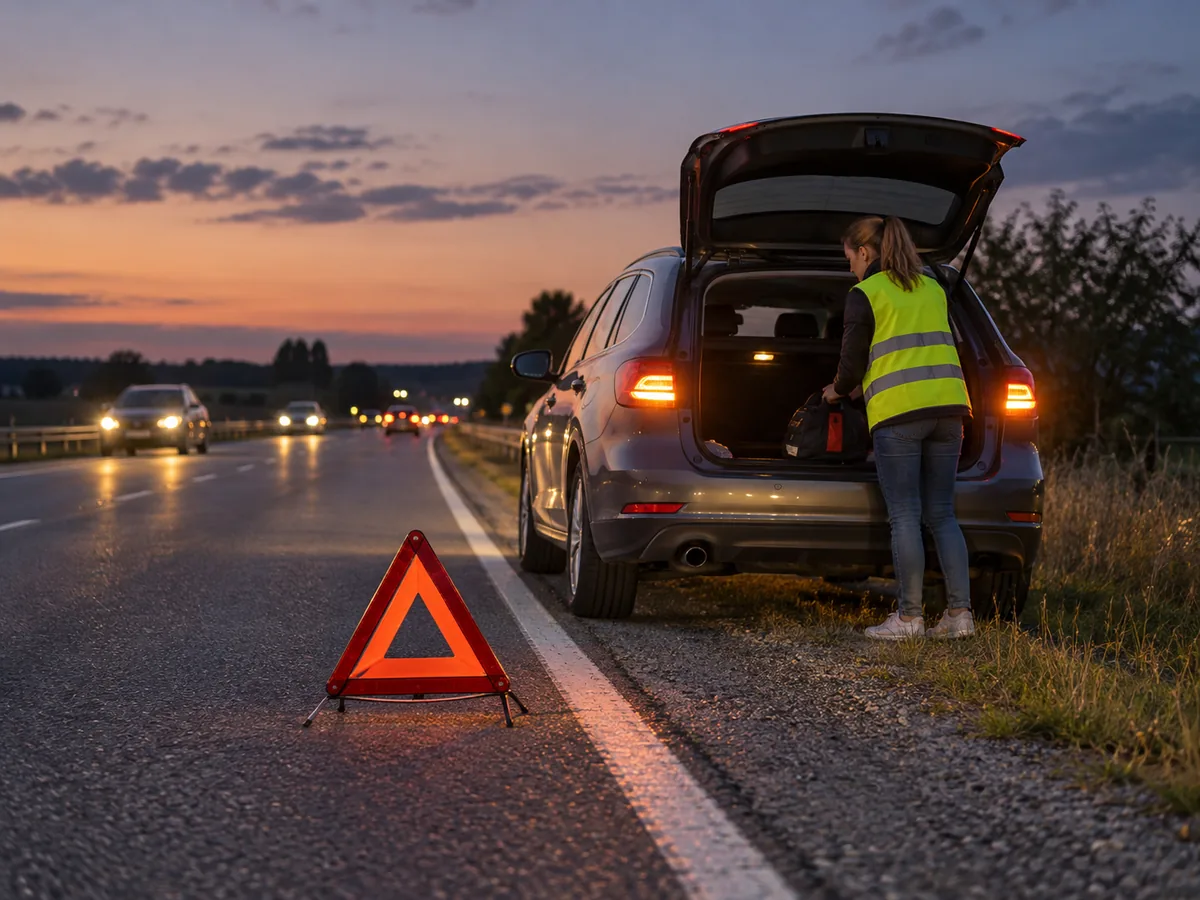
Imagine the trunk is packed for a weekend trip. The jack, warning triangle, and gloves are underneath two suitcases, a cooler, and a folding chair.
You own the gear. Reaching it safely is another matter.
Decide where the first-response items will live. A compact flashlight and high-visibility vest can be stored in the cabin. The phone charging cable can stay near the seat. Warning triangles and tools can be secured in the trunk so they don't become loose projectiles during sudden braking.
Your first move after a breakdown is to get the vehicle into the safest position available, not to unpack every tool. If you cannot stop away from traffic, prioritize occupant safety and call for assistance. On a fast road, changing a tire inches from moving vehicles is a job to leave to professionals.
Make sure your roadside-assistance number is available even if your phone has poor signal or a dead battery. A paper note takes almost no room. A car charger helps when the vehicle's electrical system is still working; a charged portable bank can help when it isn't.
For travel in unfamiliar country, downloading maps ahead of time costs nothing. And if someone else drives your car, show them where the kit is. The best packed trunk in the world doesn't help much if the other driver doesn't know it exists.
What I would check twice a year
There's no need to turn vehicle preparedness into a weekend hobby. Set two reminders, one before hot weather and another before winter, and inspect what you're carrying.
Pull out the first-aid kit and check the contents and dates. Test the flashlight. Verify the jump starter's charge and the manufacturer's storage guidance. Look at the spare tire and inflator. Replace tired food and water. Confirm the warning devices, gloves, and rain gear are still there. Check phone cables for damage, and make sure the charging connector fits the phone you use now.
Then adapt it to where you're driving. A daily commute near town and an isolated highway trip have different demands. A longer remote drive calls for more drinking water, attention to fuel range, communication limitations, and weather. Cold months bring their own additions, including warm clothing and traction gear where appropriate.
I would spend money first on the things that solve common, foreseeable problems for my vehicle: tire equipment that fits, a working light, a way to signal for help, a method of charging a phone, and drinking water that gets refreshed. After that, the kit can grow with the routes you travel.
Before your next drive, open the trunk and try to find the flashlight without moving anything else. If it takes five minutes, rearrange the kit.