How to Stay Cool During a Summer Power Outage Without Air Conditioning
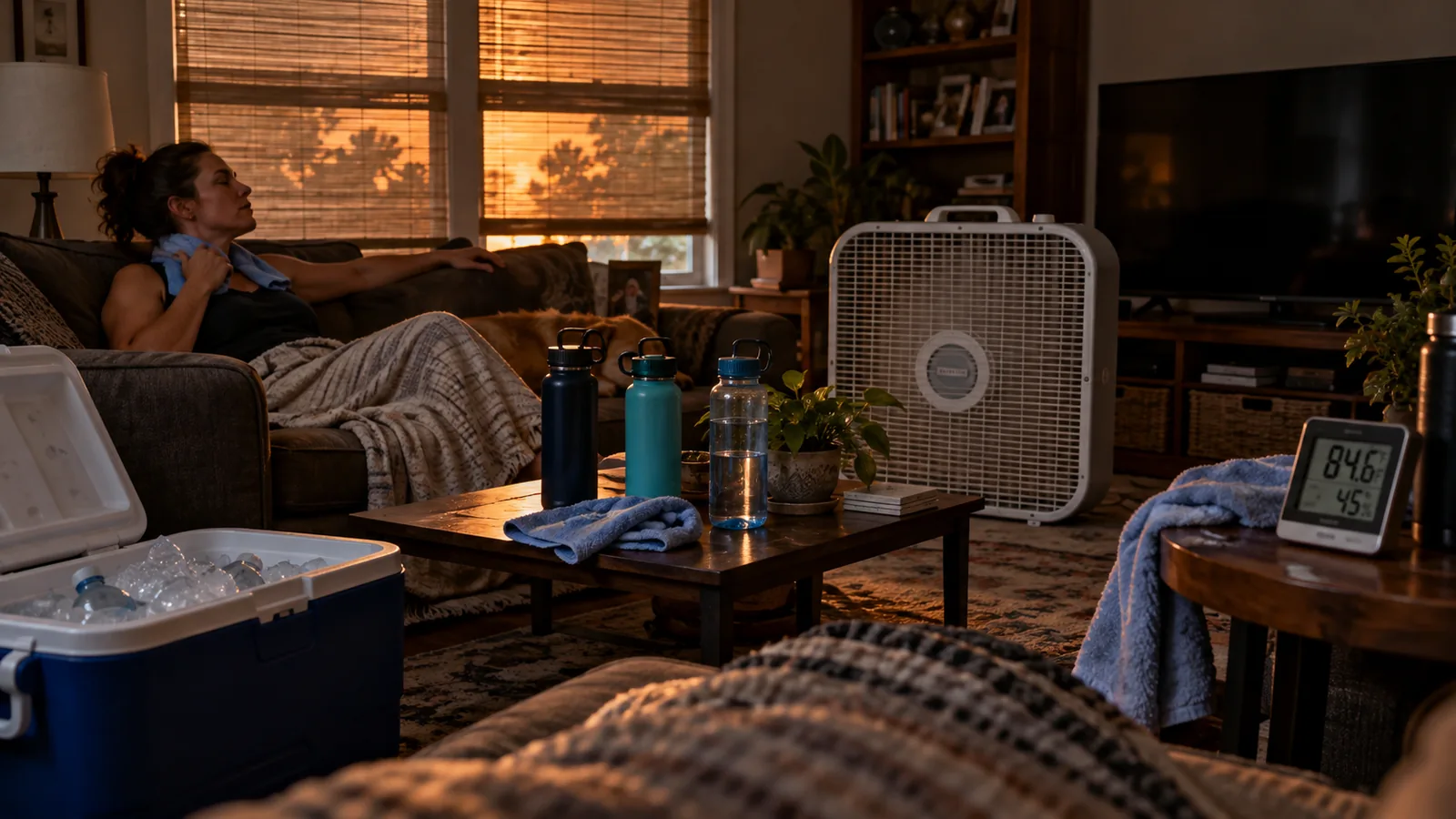
A house doesn't become dangerous the instant the air conditioner stops. It warms gradually. The trouble is that you can spend the first few hours feeling merely uncomfortable while the walls, furniture, and attic keep accumulating heat. By the time somebody feels sick, the easiest window for leaving may already have passed.
If you've lived through a hot-weather outage, you may remember everybody gathering in the one room with a breeze, checking the utility company's restoration estimate, and hoping the lights return before bedtime. That is a reasonable hope. It is not a cooling plan.
A useful plan answers three different questions: How do we slow the house from heating? How do we keep people cooler while we wait? At what point do we leave for a place with dependable air conditioning?
Start with a thermometer, not a fan
Indoor temperature is more useful than an outdoor forecast. Put an ordinary thermometer somewhere people are actually spending time, away from direct sun and from any window that might distort the reading. If you have a humidity display, note that too. Humidity makes sweat less effective at cooling the body.
People experience heat differently. Older adults, infants, people who are pregnant, and those with certain health conditions or medicines can be at greater risk. A healthy adult's tolerance is not a safe benchmark for everybody in the household.
Look up the nearest public cooling center or another dependable air-conditioned location before the electricity fails. A friend's home, library, community center, or hotel may be useful, but operating hours and generator capacity vary. Keep a way to get there, including fuel and a phone charging plan. If an evacuation or emergency instruction is issued, follow it.
A room reaching a particular number does not create the same risk for everyone. Watch the people, not just the instrument. Heavy sweating, headache, dizziness, nausea, weakness, or muscle cramps can be warnings. Confusion, loss of consciousness, or other signs of heat stroke are an emergency. Call emergency services and begin rapid cooling while help is coming.
Stop the house from collecting more heat
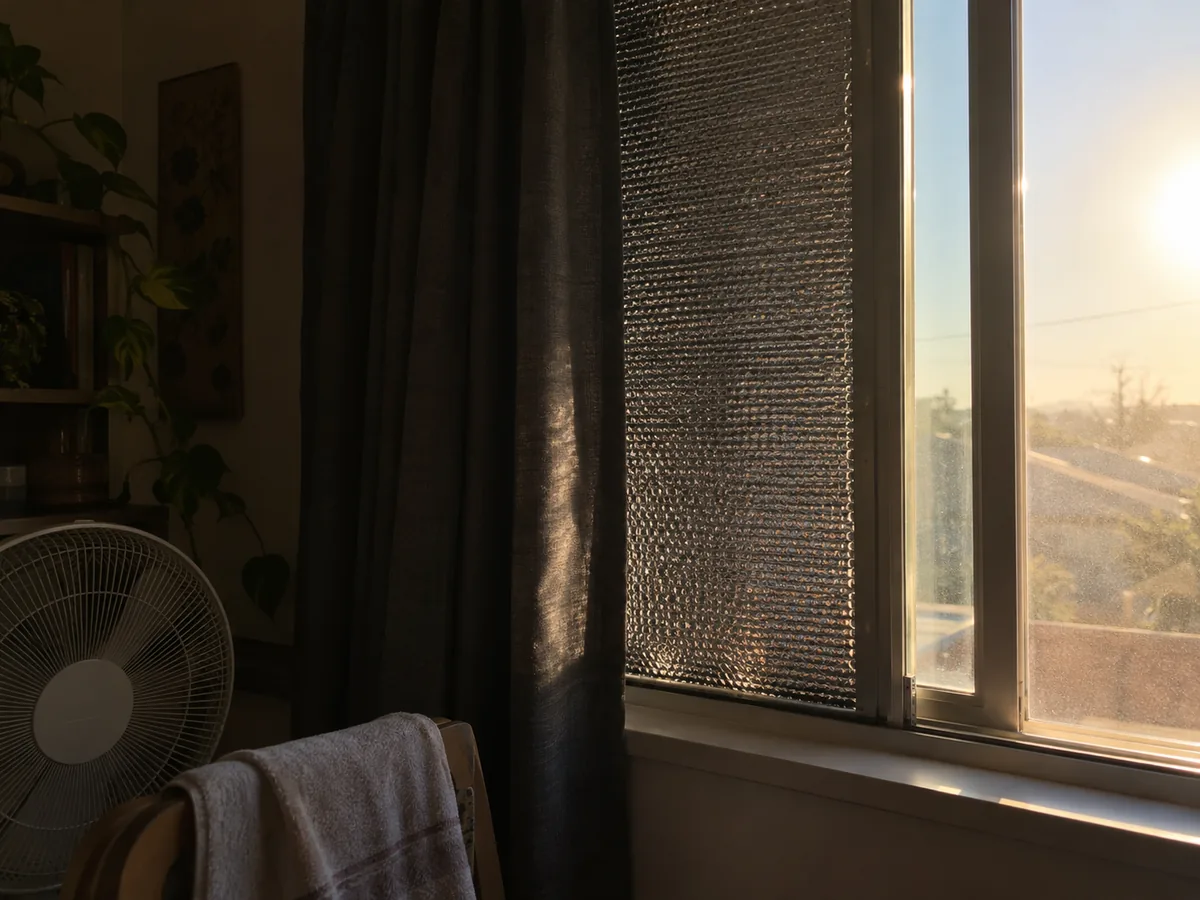
Direct sunlight through windows can add substantial heat. Close curtains or blinds on sun-facing windows early. Exterior shade is often more useful than a thin interior curtain, because it blocks sunlight before it passes through the glass. A well-placed awning or shade cloth can help, but don't improvise an installation that creates a fall or electrical hazard during the outage.
During the hottest part of the day, keeping hot outside air from entering may help if the indoor air is cooler. Once outdoor air becomes cooler than the air inside, safely opening windows on opposite sides of the house can promote ventilation. Security, outdoor air quality, insects, and smoke conditions matter here. There isn't a universal rule that windows should remain open all day or closed all night.
An attic full of stored heat can keep rooms warm after sundown. You cannot fix the insulation and ventilation during an outage, but that observation matters for future improvements. Shade, air sealing, insulation, and properly designed attic ventilation reduce the cooling demand before an emergency occurs.
Avoid cooking indoors when the kitchen is already hot. Switch to foods that require no cooking when practical. Our 30-day emergency food guide explains why a pantry should include some ready-to-eat options rather than relying only on dry staples.
Fans move air; they do not make a dangerously hot room safe
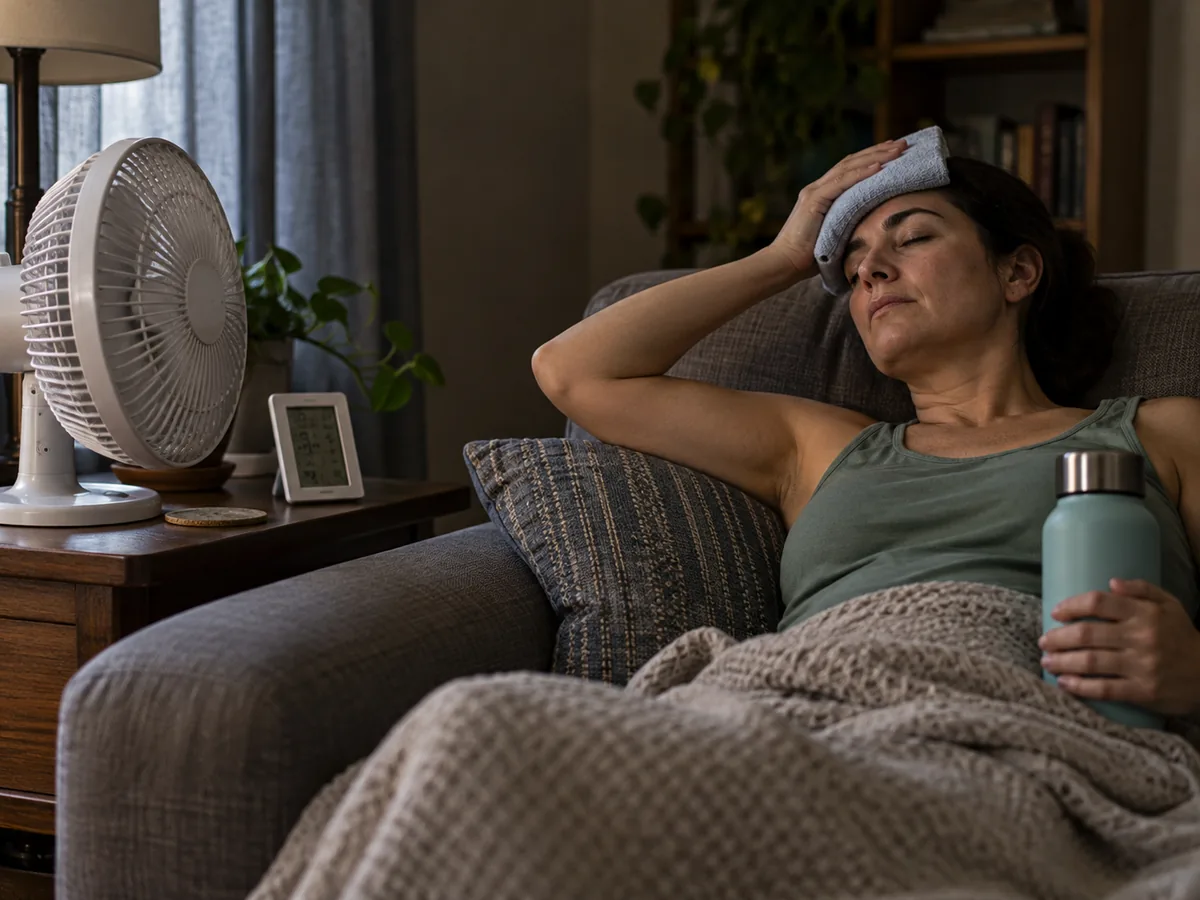
A fan can make you feel cooler by helping sweat evaporate. That benefit depends on temperature, humidity, hydration, and the person's ability to sweat. A fan does not lower the temperature of the room the way air conditioning does. At very high indoor temperatures, relying on fan airflow alone can be dangerous.
Battery-powered fans are useful for comfort when conditions remain within a safe range. Point one toward people rather than running several in empty rooms. Use rechargeable units according to their instructions and calculate the real battery runtime before an outage.
A damp cloth on the skin, a cool shower, or another safe way to wet the body can help with cooling. In an actual heat emergency, don't wait for a perfect device or a special product. Move the person to a cooler location, remove excess clothing, and use cool water and airflow while seeking appropriate medical help.
The internet is full of pictures of a fan blowing over a bowl of ice. It may provide local relief for a short while, but it doesn't transform an uncooled house into an air-conditioned room. Ice supplies also have a cost: if your freezer is warming, opening it repeatedly undermines food preservation. Choose deliberate uses for any ice you have.
Drinking water is part of the cooling plan
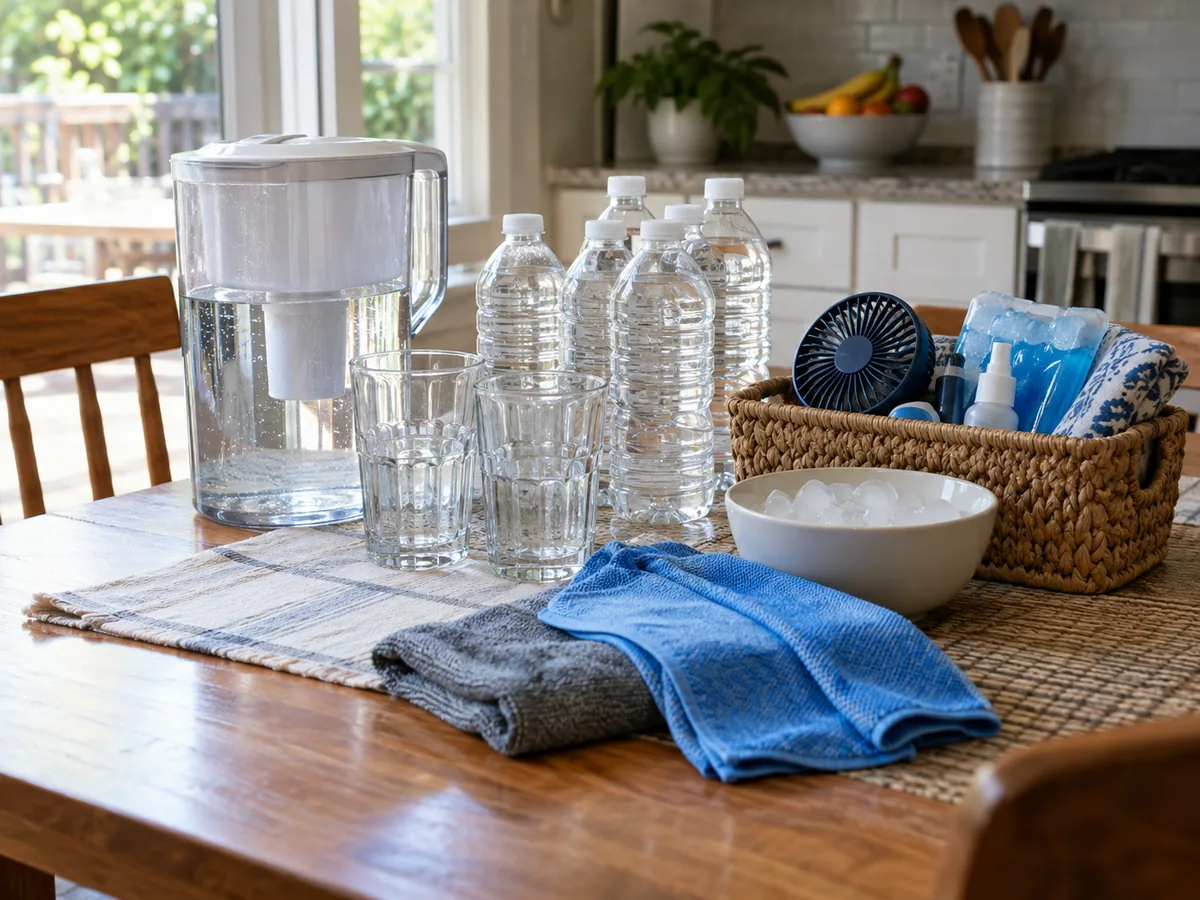
A hot house increases the importance of safe drinking water. Keep bottles easy to reach rather than stored only in a dark corner of the garage. Drink regularly, and remember that children and older adults may not reliably report thirst. People with medical conditions requiring fluid restrictions should follow their clinician's instructions.
A container that is awkward to lift or dispense from is harder to use when everybody is tired and hot.
If you lose electricity and running water together, cooling becomes more complicated. You may not have water for showers, cleaning, or preparing rehydration drinks. Keep drinking supplies separate from the water reserved for other purposes.
Don't treat caffeine or alcohol as substitutes for drinking water. What matters most is having enough safe fluid and actually consuming it. For anyone who is vomiting, confused, or severely ill, medical assessment matters more than an elaborate hydration recipe.
A backup battery changes the options, but not the math
A small power station can run fans and charge phones. It usually cannot operate central air conditioning for long. Even a portable air conditioner may draw much more power than a modest battery can supply, especially at startup. Before buying equipment, measure watts and watt-hours for the actual appliances, then account for conversion losses and the energy needed over the outage period.
Our refrigerator power-station guide explains why the advertised battery capacity is only the starting point. The same runtime logic applies to fans and portable cooling devices, although their power demands differ.
A fuel-burning generator can support larger loads when properly sized, but its exhaust can kill. Operate generators outdoors, at least 20 feet from doors, windows, and vents, with exhaust directed away from the home. Never run one inside a garage, on a porch, or near open windows. A home connection must use an appropriate professionally installed transfer arrangement. Backfeeding through an ordinary wall outlet is dangerous.
If your cooling plan depends on one generator and one fuel supply, decide what happens when either becomes unavailable. A backup plan should include a safe destination, not just more equipment.
Decide when to leave before heat makes the decision for you
Waiting out an outage can be reasonable when indoor temperatures remain manageable and every person in the home is doing well. But a house can be too hot even when nobody has a diagnosed heat illness yet. Pay closer attention at night, when people may be less able to notice worsening symptoms.
Call emergency services immediately for suspected heat stroke. Move anyone with concerning symptoms to a cooler area and begin cooling while seeking help. For people at increased risk, consider relocating earlier rather than waiting for a crisis.
An emergency kit matters because it gives you time and choices. A thermostat that still reads 82°F is not proof everything is fine, and a generator in the shed is not a substitute for a safe place to go. Before the next heat wave, identify that place, make sure everyone knows the plan, and test how long your essential devices actually run.