How to Build a 30-Day Food Supply on a Budget
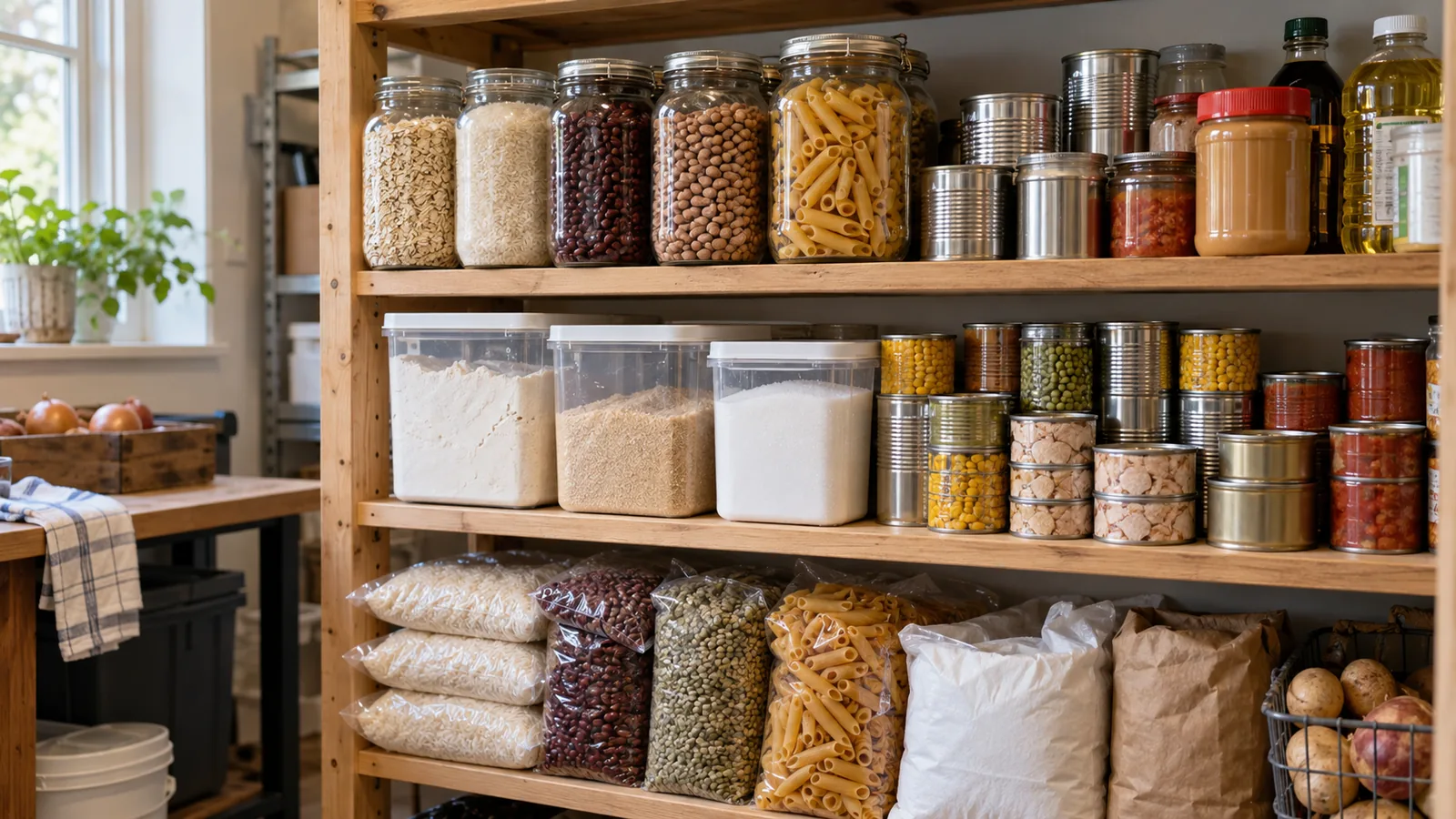
The cheapest way to build a month of emergency food is usually not to order thirty identical emergency meal pouches. It's to look at what your household already eats, find shelf-stable versions of those ingredients, and buy a little extra whenever the price is reasonable.
But there's a trap in the usual advice to buy rice, beans and oats in bulk. Those foods can be excellent value, yet a 25-pound sack of beans isn't much help if you've planned no water, fuel, seasonings or realistic meals to go with it.
The useful question isn't simply How many pounds of food do I need? It's What could this household actually eat, day after day, from a pantry with unreliable utilities?
Start with meals, then turn them into quantities
A family of four needs around 120 person-days of food for a thirty-day target. That's a planning unit, not a precise nutritional requirement. A child, a teenager, and an active adult have different needs. Medical conditions, allergies, and dietary restrictions can change the menu considerably.
Write down five breakfasts, five lunches, and five dinners that rely mostly on shelf-stable ingredients. A breakfast might be oatmeal with shelf-stable milk and raisins. Lunch could be canned chicken with crackers and fruit. Dinner could be rice, black beans, canned tomatoes, and a little oil and seasoning.
Now do the arithmetic meal by meal. If a particular dinner serves four and appears six times in the thirty-day plan, you need enough ingredients to cook it six times. Use the servings and calories on actual packages rather than assuming every can or bag feeds the same number of people.
This approach catches problems a simple weight-based shopping list misses. The plan may contain plenty of rice but hardly any fat or protein. It may require more water than you've stored. Or it may include foods nobody in the house will willingly eat for a week.
Before buying anything, cook two of the proposed meals from pantry-only ingredients. That small test can save more money than hunting for the perfect bulk-food bargain.
The affordable staples that earn their shelf space
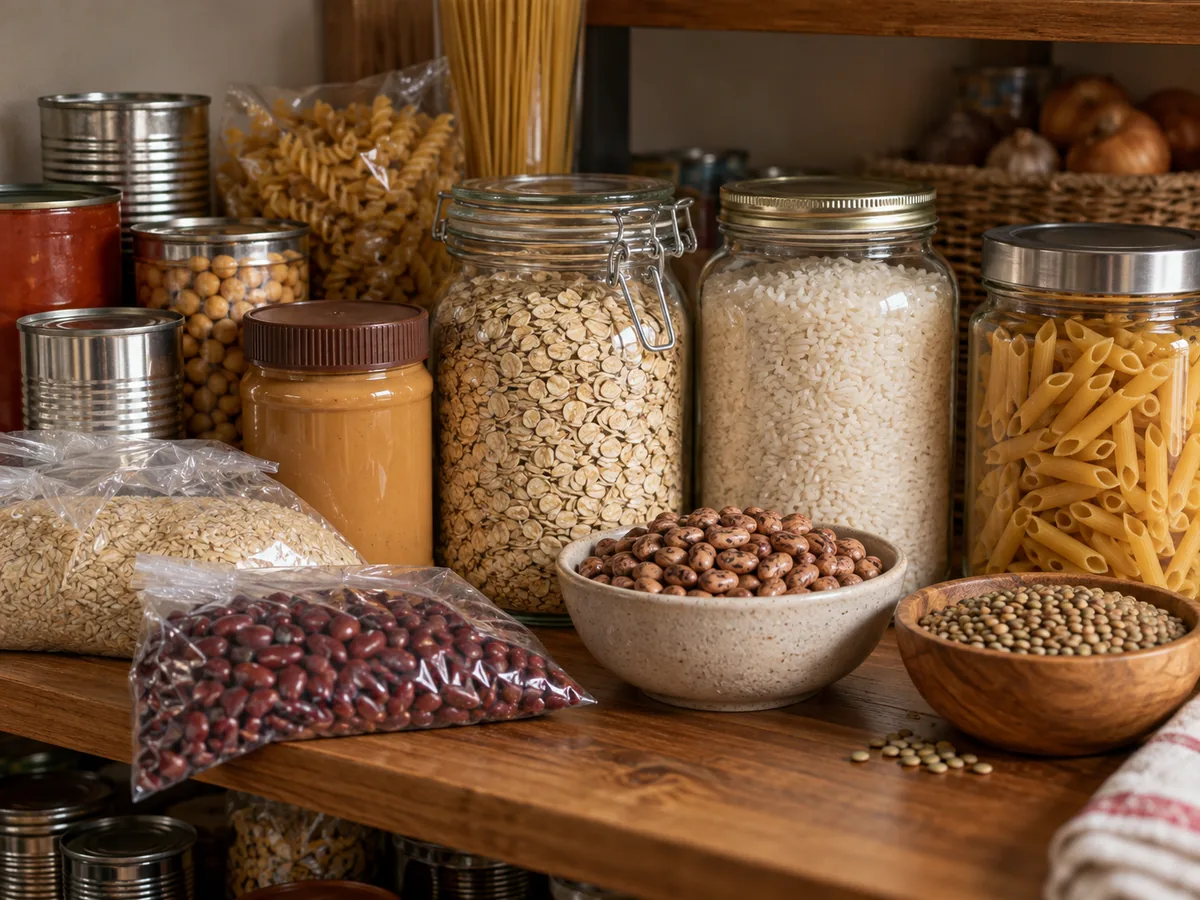
Dry rice, oats, pasta and dried beans are often inexpensive sources of energy or protein. Canned beans, vegetables, tomatoes and soups trade some cost-per-serving efficiency for convenience. Peanut butter, cooking oil, nuts and shelf-stable milk can help round out meals, subject to dietary needs and storage life.
The decision between dried and canned beans illustrates the trade-off. Dried beans can cost less per cooked serving and store compactly in suitable conditions. But they need soaking or cooking time, fuel and potable water. Canned beans are already cooked and can be eaten cold if necessary. A pantry that holds some of each is more resilient than one built entirely around either option.
Don't buy only staples that need boiling. During a power outage, readily edible foods give you a way to preserve cooking fuel and water. Keep a manual can opener with the pantry supplies.
The largest package isn't always the cheapest usable purchase. Compare price per prepared serving, not merely price per pound. Then account for how much of that package could spoil after opening, whether you own a container large enough to store it, and how quickly your household will use it.
Generic or store-brand canned foods can be good choices when they meet the same need. Specialty survival packaging earns its price only when its weight, storage properties, or convenience actually solve a problem for your household.
Budget by week instead of buying a mountain of food
A month of food feels expensive when treated as one giant shopping trip. It becomes easier to manage if you spread it over several normal grocery runs.
Choose a fixed extra amount you can afford without skipping regular necessities. On one trip, buy extra canned proteins and vegetables. On another, purchase rice or oats. On the next, add shelf-stable milk, fruit and condiments. Keep a written inventory with quantities, package sizes and purchase dates.
Suppose a week's extra budget buys six cans of beans, four cans of tomatoes and one bag of rice. Those purchases are not yet a balanced thirty-day supply. They are useful ingredients for specific meals. As each week's purchases accumulate, compare them against the menu, filling the actual gaps rather than repeatedly buying whichever item is on sale.
A practical budget should also reserve room for supplies that aren't food: clean water, a safe cooking method, can openers and containers. A cheap pantry that depends entirely on a powered stove is more fragile than it appears.
Prices vary by store, region and season, so a fixed universal dollar estimate is less helpful than recording your own unit costs. Once you know what a meal costs in your area, you can decide where bulk buying genuinely saves money.
Storage is part of the cost
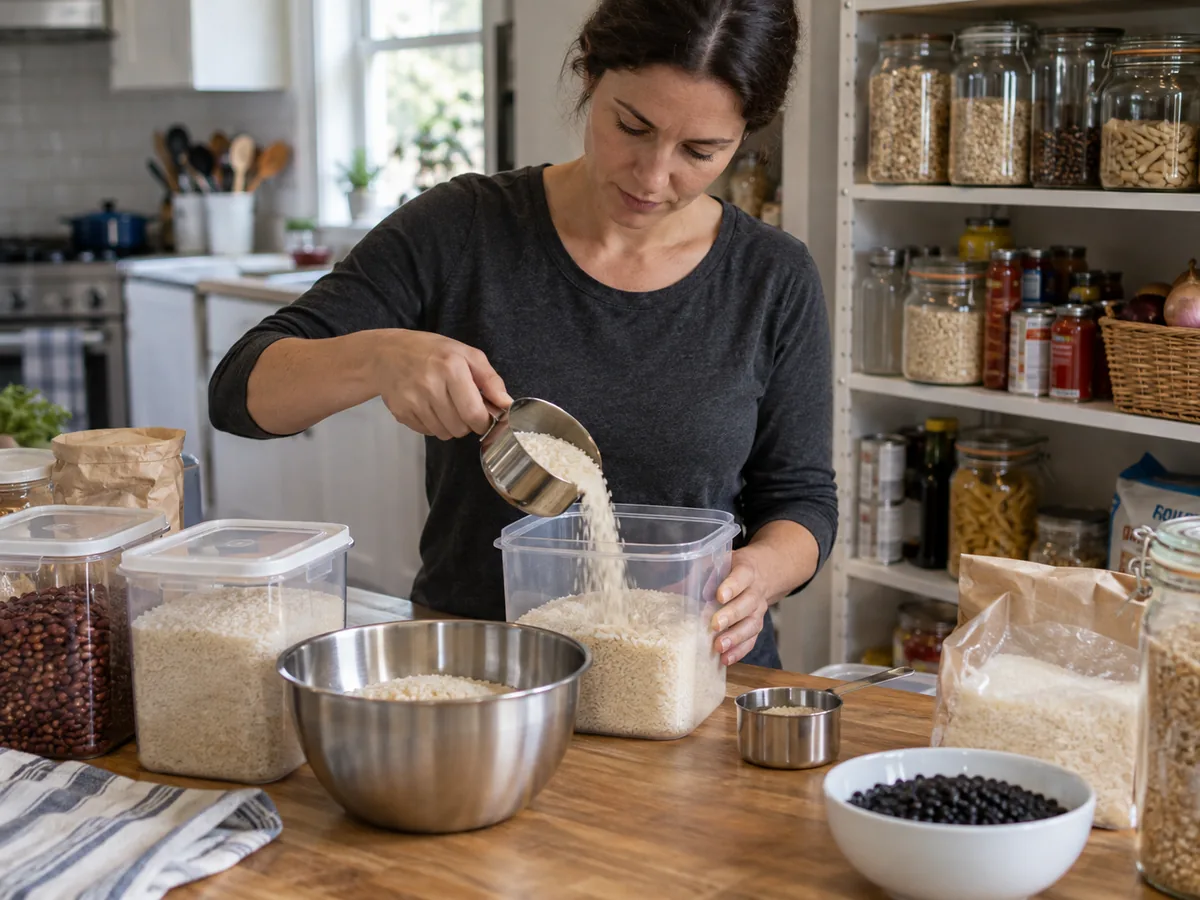
Dry foods need protection from moisture, insects and contamination. Keep them in a cool, dry space, away from sunlight and extreme temperatures. Use clean, dry food-safe containers and keep the manufacturer's information or a clear label with the contents and purchase date.
Don't assume every pantry item needs an expensive bucket or oxygen absorber. Commercially packaged canned food is already sealed. Everyday dry staples that you rotate frequently can often stay in their intact packaging, protected in suitable containers. Long-term oxygen-reduced storage requires product-specific procedures, moisture control and suitable materials; doing it casually can introduce problems rather than solve them.
Avoid damp basements, hot garages and shelves near stoves or plumbing leaks. Heat can shorten quality life even for canned foods. Inspect cans for bulging, leaks, severe rust or damaging dents. Discard suspect food rather than tasting it.
Dates on shelf-stable foods need interpretation. A 'best if used by' date generally refers to quality, not an automatic safety cutoff, but storage conditions and package integrity still matter. Infant formula is an important exception with date-related safety considerations. Never treat a date label as permission to eat food from a damaged container.
Your pantry should be easy to use. Put older suitable stock at the front and newer purchases behind it. If you routinely cook from these supplies, rotation becomes part of grocery shopping rather than a yearly emergency project.
A real meal tells you more than an inventory spreadsheet
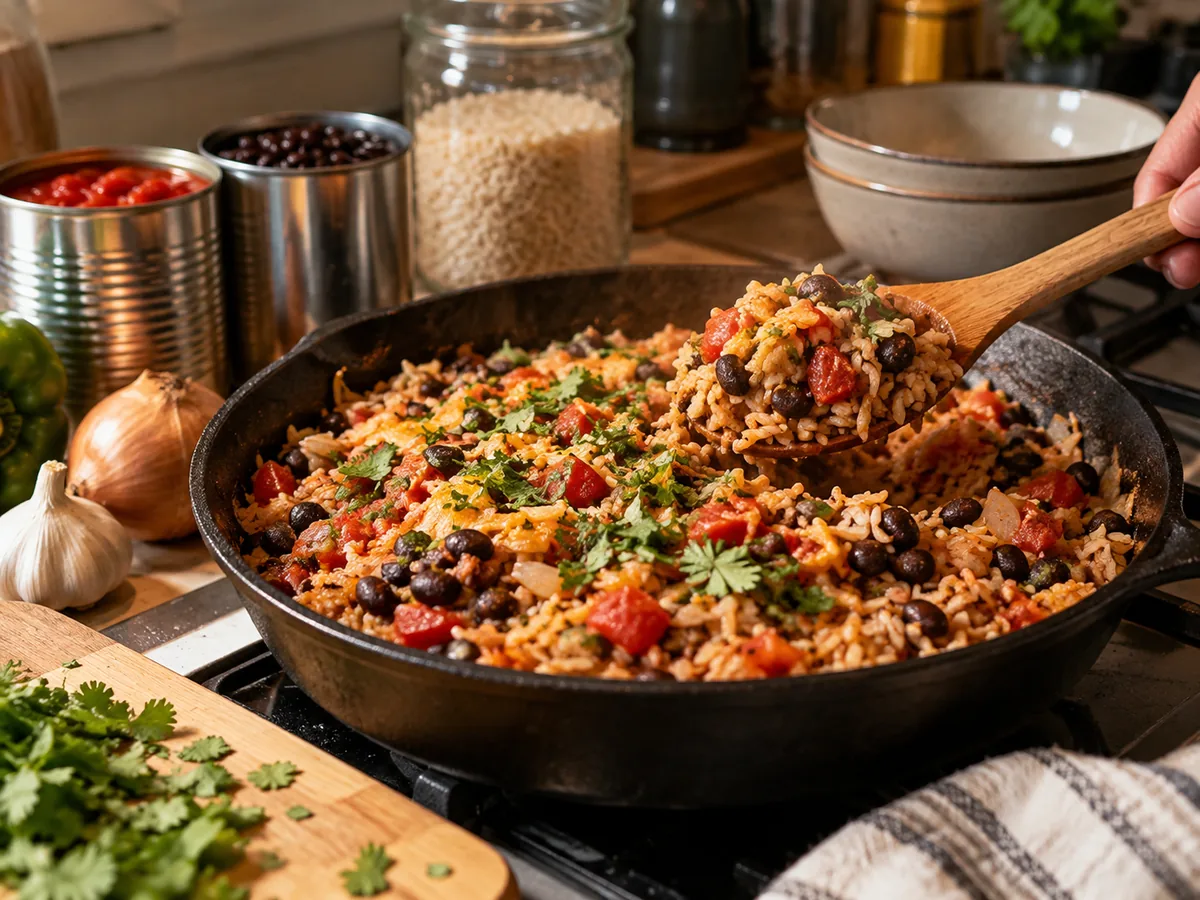
Think about a dinner built from rice, canned black beans and tomatoes. You can prepare several variations with the same basic ingredients, but the water, fuel and equipment requirements change depending on whether you're using dried or canned beans and how you cook the rice.
Try the recipe with the food and tools you intend to store. Measure the dry rice and the water it requires. Record cooking time. Count how many people eat it comfortably. Notice whether the meal needs oil, salt, a sauce or another ingredient you forgot to include.
Then ask whether you'd still want that dish after eating a similar meal three days in a row. Variety has a practical value. It helps a household keep eating adequately, especially with children or people who have limited appetites.
Build several familiar combinations: oatmeal with dried fruit, pasta with shelf-stable sauce and canned protein, bean-and-rice bowls, ready-to-eat soup with crackers, and nut butter with bread or tortillas while those products remain suitable. Adjust the plan for allergies and medical dietary instructions.
An emergency food supply is not a promise that you'll keep cooking normally. If electricity, gas, or water is unavailable, select foods and methods suited to the situation. Never use charcoal, camp stoves or fuel-burning grills indoors, in attached garages, or near openings where exhaust can enter. Store fuel according to its manufacturer's safety instructions and local requirements.
How to know when your thirty days are actually covered
Start by counting complete meals, not containers. Your pantry is closer to the goal when you can assemble roughly thirty days of plausible breakfasts, lunches and dinners for the people who live there, with additional appropriate snacks and sufficient nutrition.
Review package serving sizes and estimate energy and protein, accounting for each person's actual needs. Include foods requiring no cooking, because normal utilities may fail. Plan adequate safe water separately, including water needed to prepare dehydrated foods. If anyone uses special formula or medically required foods, those deserve their own clearly labeled reserve and rotation schedule.
Check storage space before purchasing the last third of the inventory. Some families can fit a month's supplies in a closet and a few kitchen cabinets. Others need to reorganize existing shelves. Heavy containers belong on stable lower shelves, not overhead where a falling box could injure someone.
Finally, stop treating the pantry as a collection. Make it an extension of the way you already buy and eat food. Use what you store, replace what you use, and revisit the menu as prices and family needs change.
The first meaningful step can be as small as choosing one reliable, affordable dinner and buying the shelf-stable ingredients to make it twice. That is a better start than an expensive kit you haven't opened.