How to Make Water Safe to Drink in an Emergency
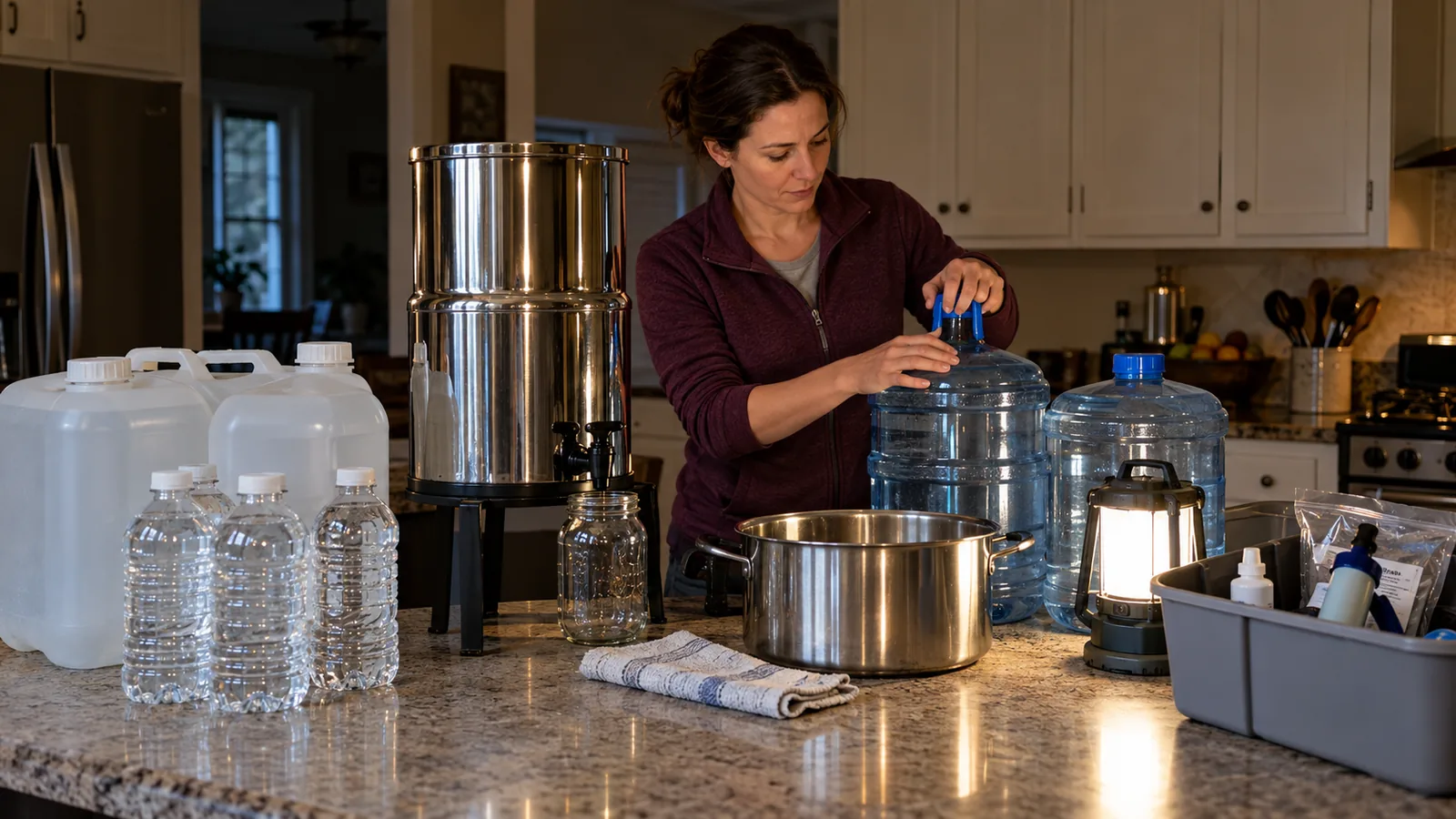
A kitchen faucet can look perfectly ordinary even when the water coming out of it is unsafe. The opposite is also true: water from a creek can look filthy because it is full of harmless sediment, while the organisms that could make you sick are invisible.
That is why appearance is such a poor guide. Clear is not the same as safe. A filter that makes water look beautiful may still leave behind viruses, and a pot that kills germs will not remove gasoline or dissolved chemicals.
When normal water service fails, the first decision is not which gadget to use. It is whether the water in front of you is a reasonable candidate for treatment at all.
First find out what happened to the water
A boil-water advisory usually means the water may contain disease-causing microorganisms. Boiling is appropriate because heat can kill those organisms. A do-not-drink notice is different. It may involve chemical contamination that boiling cannot fix. In some situations even bathing or washing dishes may be restricted.
Follow the precise notice from your water utility or local health department. Do not replace a specific warning with generic advice from a survival checklist.
If nobody has issued an advisory but a flood has covered your well, or runoff is flowing through an area with factories, fuel tanks, agricultural chemicals, or sewage, do not assume a camping filter will solve it. The safer move is to find a different water source. You cannot recognize every contaminant by smell, color, or taste.
The same applies to the tempting idea of collecting water from a flooded street or drainage ditch. Even if you can make it look clear, the contamination may be far beyond what ordinary household treatment can address.
Start with water you already trust
Before trying to treat pond water, look around the house. Unopened bottled water, properly stored emergency water, and ice made before the supply became unsafe may already cover immediate drinking needs. Some homes have other potential emergency sources, but those have conditions attached and should not be treated as automatic drinking water.
A sensible storage setup makes that choice easier. A large container buried behind heavy boxes is much less convenient than a few clean containers you can pour from without lifting forty pounds. The size, opening, and dispenser all matter when you begin using stored supplies every day, as becomes obvious when comparing water storage container designs.
Set aside safe drinking water first. You can often use lower-quality water for some cleaning tasks, depending on the contamination and official instructions. Don't spend your cleanest water rinsing the driveway while the household has no reliable drinking supply.
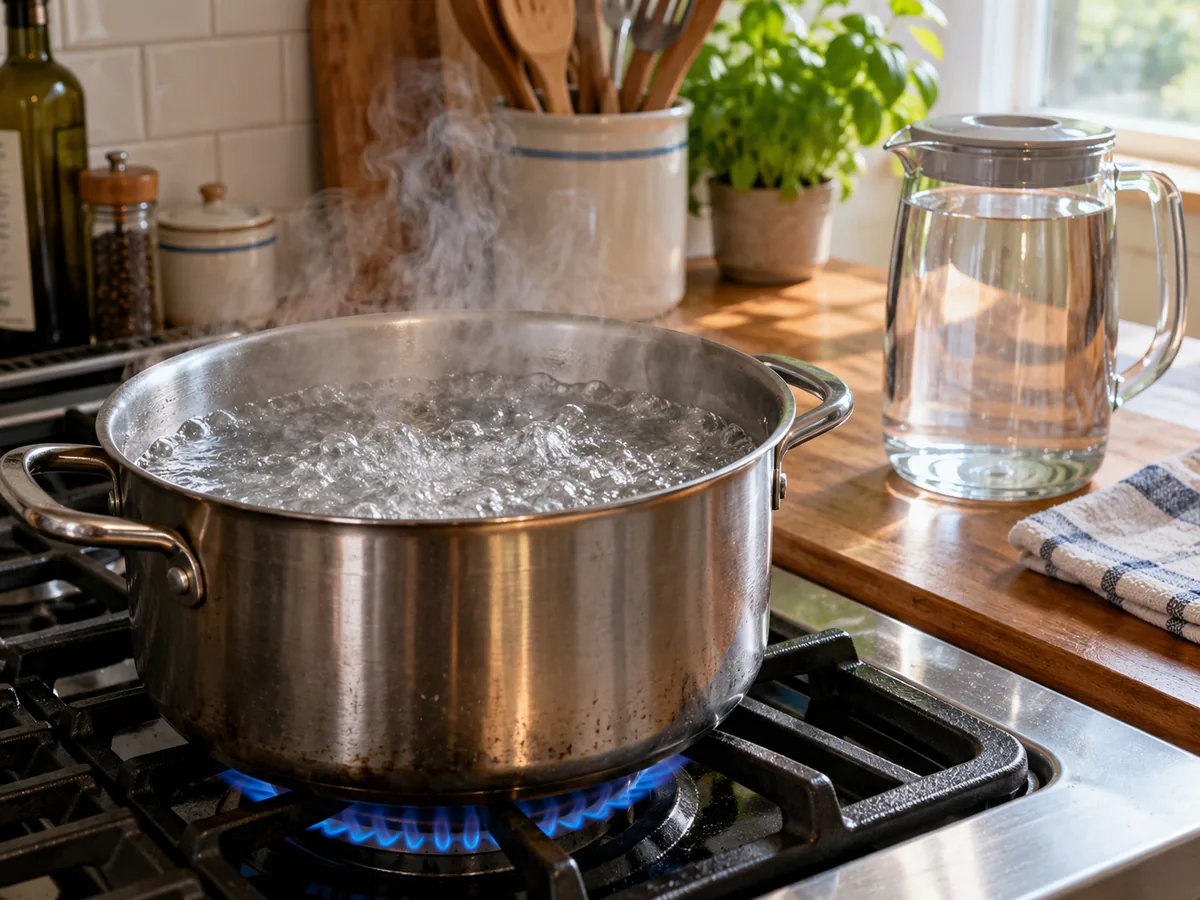
Boiling is the most dependable household treatment for germs
If the source is not suspected of chemical contamination, boiling is a straightforward way to make water microbiologically safer. Bring clear water to a full rolling boil for one minute. At elevations above 6,500 feet, boil for three minutes. Let it cool naturally before pouring it into a clean, covered container.
Cloudy water deserves an extra step before heating. Let the suspended particles settle and pour the clearer water through a clean cloth, paper towel, or coffee filter. That step removes debris. It does not make the water safe by itself.
A rolling boil is different from water that has merely begun to steam. You do not need to keep water boiling for twenty minutes, but you do need to reach the recommended boil and sustain it for the required time.
If the emergency has also taken away electricity or gas, fuel becomes part of the water plan. A family depending on a small outdoor stove may find that treating every drinking gallon by boiling consumes more fuel than they expected. Use appropriate outdoor cooking equipment and never operate a camp stove, charcoal grill, or fuel-burning generator inside a home or garage. Carbon monoxide is an immediate danger.
Boiling also does not remove metals, salts, pesticides, petroleum products, or many other chemicals. Some contamination can become more concentrated as water evaporates. If chemicals are the concern, choose another source instead of giving a contaminated pot more time on the stove.
When boiling isn't possible
Unscented household chlorine bleach can disinfect water in certain emergencies, but this is one area where measurements cannot be guessed. Formulations vary. Scented bleach, splashless products, color-safe bleach, and cleaners mixed with other ingredients are not suitable substitutes.
For ordinary, clear water and regular unscented bleach containing 5% to 9% sodium hypochlorite, CDC guidance gives 8 drops per gallon. Stir thoroughly and let the water stand at least 30 minutes before use. Double that amount for water that is cloudy, discolored, or very cold, after first allowing particles to settle and filtering them out. Check the concentration on the bottle and use the current instructions for that product. If you cannot establish what the product contains, do not improvise.
Bleach disinfection is a backup method for germs, not a cure for chemical contamination. It is also less reliable against some parasites. Someone who has a properly rated purification product should follow that manufacturer's instructions rather than mixing methods based on half-remembered ratios.
Water-treatment tablets have the same need for precision. Chlorine dioxide, iodine, and chlorine products do not all cover the same organisms or require the same contact time. Iodine in particular is unsuitable for some people, including those with thyroid conditions or during pregnancy. The instructions and limitations belong to the exact product in your hand.
What an ordinary portable filter will and won't do
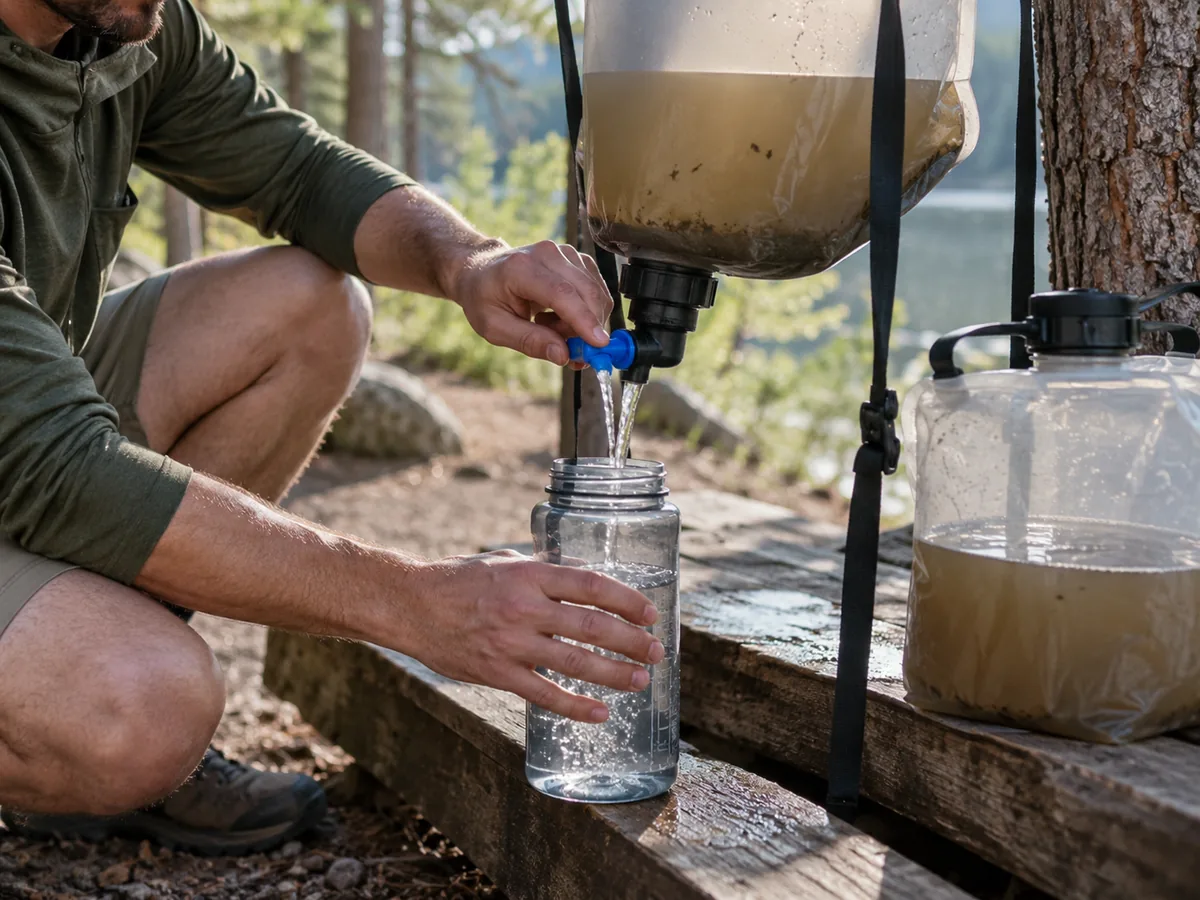
There is a useful difference between a filter and a purifier. Many backpacking filters are very good at removing protozoan parasites and bacteria, depending on their tested specifications. That does not mean they remove viruses. A product described as a purifier may provide broader microorganism coverage, but you still need to read its performance claims and follow its operating instructions.
Pore size, filter medium, and test standard matter more than the fact that an expensive-looking device has a hand pump. Carbon stages may improve taste or reduce selected chemicals, but a small carbon cartridge is not a general-purpose answer to industrial contamination. And a water filter that removes particles does not automatically desalinate seawater.
If a surface-water source might contain viruses, treatment may require an additional disinfection step after filtration. CDC guidance identifies boiling as the best germ-killing method, with filtering followed by disinfection as a useful alternative when boiling is not available.
A filter also needs protection from damage. Some hollow-fiber filters can be ruined by freezing while wet. Cracks may not be visible afterward. If your filter has been frozen or otherwise damaged, follow the manufacturer's replacement guidance instead of assuming it still works because water flows through it.
Keep the clean side clean
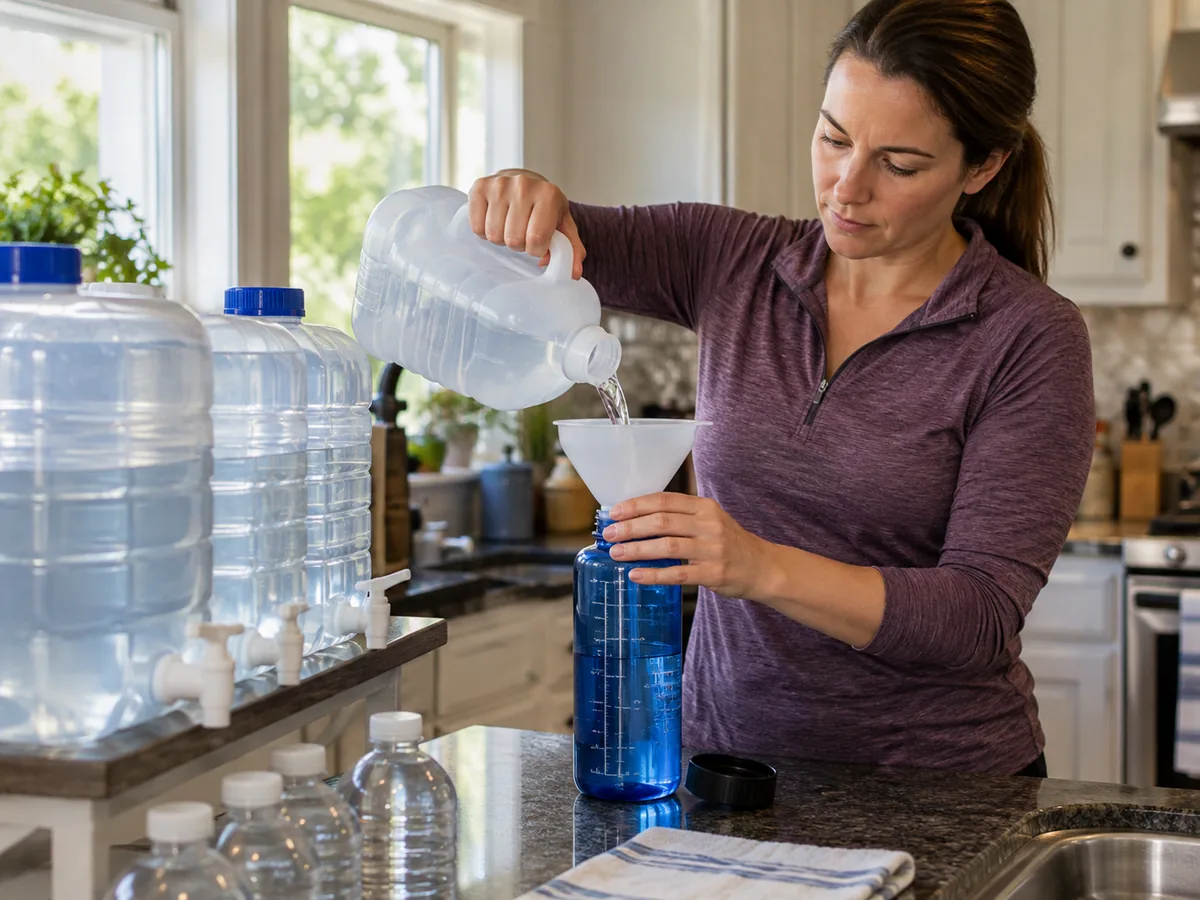
You can treat water correctly and contaminate it again with one dirty bottle.
Keep a dedicated container for untreated water and another for drinking water. Mark them clearly. Do not dip a contaminated scoop into the finished water. Wash or sanitize the receiving container before filling it, and use a clean lid or spigot.
That separation gets harder in a crowded kitchen when everybody is thirsty and the power is out. It helps to place the drinking-water container where people normally get a glass, and keep the treatment supplies somewhere else. A small habit can prevent a great deal of confusion.
If somebody in the household has vomiting or diarrhea, safe water becomes important for cleaning and handwashing as well. Planning for the first three days without utilities requires thinking about more than drinking alone, which is why a 72-hour household outage plan needs to account for both drinking and basic sanitation.
The problem you can solve before an emergency
Most households do not need to become experts in water chemistry. They need three clear answers: where their first safe water will come from, how they would treat water for germs if that supply runs out, and what contamination would make them abandon a source entirely.
Write down your treatment product's instructions while you can still read the label calmly. Keep the measuring device with the bleach or tablets if you plan to use them. Check that your stove has a safe outdoor location and adequate fuel. Make sure the clean containers have lids.
Then run one ordinary test. Fill a pot or treatment container with clean tap water and go through the process without actually pretending it is contaminated. See how much you can carry, where the cooled water would go, and how you would prevent the untreated and treated containers from being mixed up.
The reassuring thing is not owning three filters and a pile of tablets. It is knowing which method applies, where it stops working, and what you would do when the answer is simply: don't drink that water.