The Power Went Out. Which Food Can You Still Eat?
The Power Went Out. Which Food Can You Still Eat?
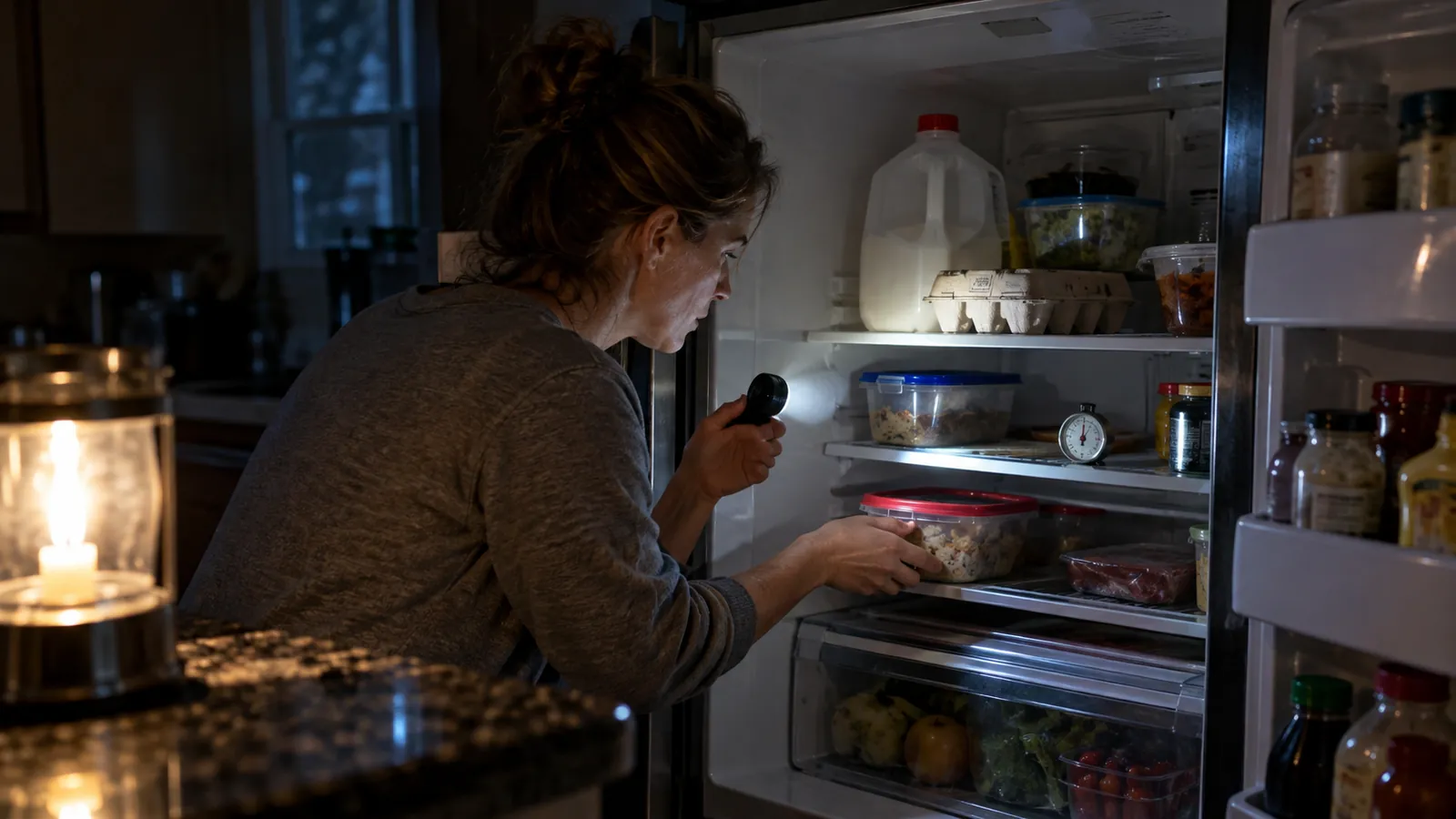
One of the more expensive consequences of a power outage can be sitting quietly in the kitchen. A refrigerator full of groceries looks perfectly normal from the outside, even as the temperature inside begins to rise.
You don't have to panic and throw away everything the moment the lights go out. You also shouldn't assume that food is safe because it still feels cool or because the power came back before morning.
The right decisions depend on how long the power was out, how warm the food became, whether the doors stayed closed, and which foods we're talking about. A carton of milk and a jar of mustard do not need the same treatment.
The simplest way to avoid guessing is to start a small record as soon as the outage begins.
Write down the time and leave the doors shut
When the power goes off, note the time. Use a piece of paper on the counter if that's easiest. Then keep the refrigerator and freezer closed as much as possible.
The familiar estimates are useful: an unopened refrigerator keeps food cold for about four hours. A full freezer holds temperature for roughly 48 hours, while a half-full freezer holds it for about 24 hours, assuming the door stays closed. These are planning estimates, not guarantees about every appliance or meal.
People often want to open the refrigerator to “check if it's still cold.” That check lets warm air in. Open it only when there's a real reason, and decide what you need before pulling the door open.
If you have a refrigerator thermometer and a freezer thermometer, this is where they pay off. You want the refrigerator at 40°F or below and the freezer at 0°F or below in normal use. A thermometer gives you evidence. The way a package feels in your hand doesn't.
Decide what deserves protection
Not everything in the refrigerator is equally sensitive.
Raw meat and poultry, fish, eggs, milk, soft cheeses, cooked leftovers, and cut produce require special attention. If these perishable foods have been above 40°F for two hours or more, they generally need to be discarded. At temperatures above 90°F, the safe time can be shorter, around one hour. When their temperature history is unknown after an extended outage, err on the side of discarding them.
Condiments and foods made to be shelf-stable may have different rules. An unopened can of beans in the pantry is not in the same situation as a container of cooked rice in the refrigerator. Even within the refrigerator, the discard decision varies by item.
This is not a good moment for a universal rule such as “anything unopened is fine.” An unopened carton of milk still requires refrigeration. And a food's smell cannot tell you whether harmful bacteria have multiplied.
The FoodSafety.gov refrigerated-food chart is helpful because it distinguishes foods rather than treating the entire shelf as one category. Keep a copy or a saved version available before the next storm.
Ice and coolers can buy time, but only if you monitor them
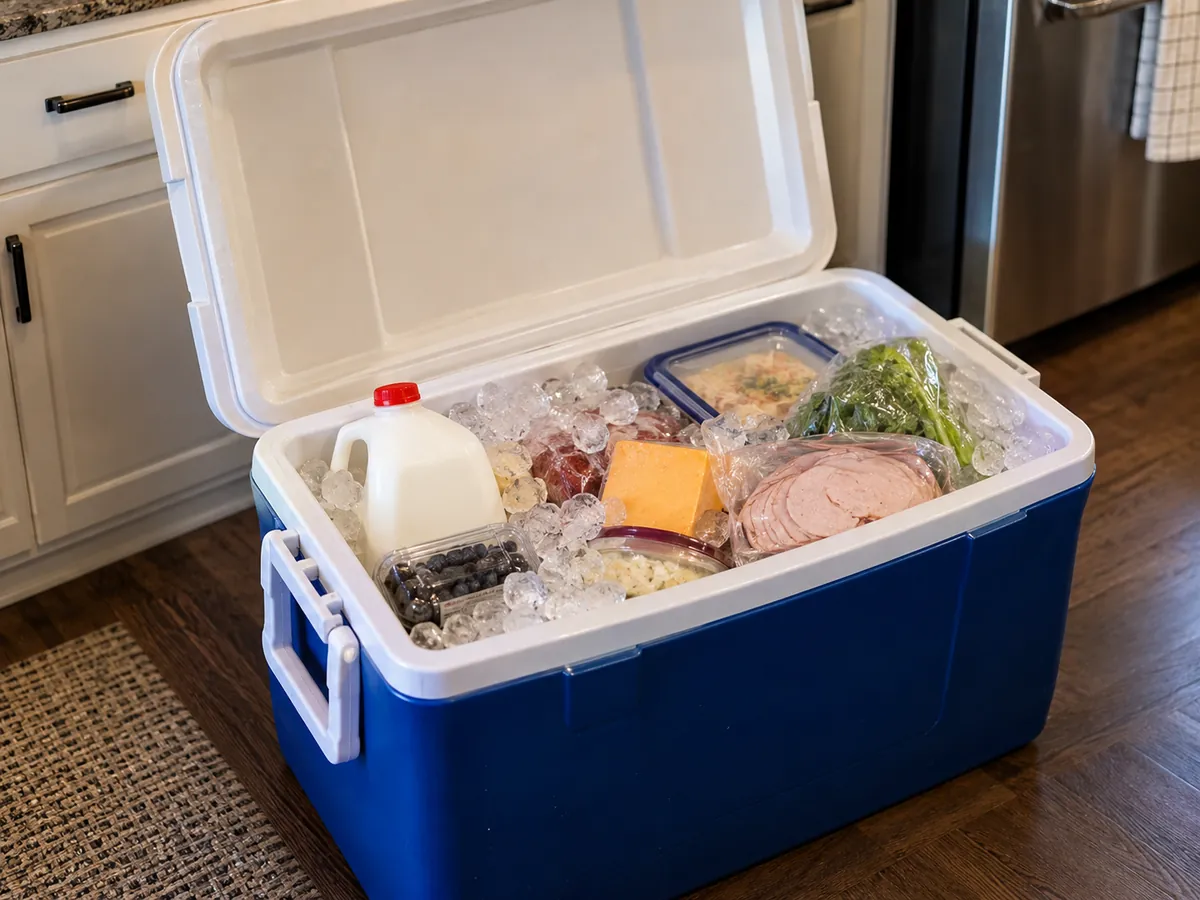
If the utility expects a long outage, a cooler with ice or frozen gel packs may preserve selected foods. It needs to keep the food at 40°F or below. Just surrounding a container with a handful of melting cubes isn't proof that it's safe.
Put the foods you most want to save together, use sufficient ice, and measure the cooler temperature. Open it sparingly. Keep raw meat securely wrapped and separated so juices cannot contaminate ready-to-eat food.
Block ice generally lasts longer than loose cubes. Dry ice can help protect a freezer, but it requires particular precautions: never handle it with bare hands, never seal it inside an airtight container, and never use it in an unventilated enclosed space because it releases carbon dioxide. If you're unfamiliar with it, ordinary ice and a properly monitored cooler may be the simpler choice.
Power stations and generators introduce a separate calculation. A battery can keep a refrigerator running only if its inverter handles the refrigerator's startup surge and its usable energy covers the appliance's actual consumption. The math is worth doing before buying a unit; refrigerator backup power depends on measured energy use, not the large wattage number on the box. Keep combustion generators outdoors well away from openings and never backfeed a house through an outlet.
Freezer food is not automatically lost when it thaws
A thawing freezer can be surprising. The ice cream may become soft while some packaged meat is still solid. The important question is temperature, not whether everything looks exactly like it did yesterday.
If a frozen food still contains ice crystals or is 40°F or below, it can generally be cooked or refrozen, although its texture and quality may suffer. If perishable food has warmed above 40°F for too long, it should be discarded. Where the temperature history is uncertain, treat the food conservatively.
A full freezer also tends to stay cold longer because the frozen contents help retain cold. Keeping it fairly full, without blocking normal air circulation, can help. If the freezer is lightly stocked, frozen water containers can fill some empty space in advance, as long as they leave room for expansion and don't interfere with the appliance.
Do not use “I'll just cook it thoroughly” as a rescue plan for food that has been held unsafely. Cooking can destroy many bacteria, but it doesn't reliably remove every hazard produced during improper storage.
A practical triage method when the power returns
When electricity is restored, don't immediately load the refrigerator with food from questionable coolers or countertops.
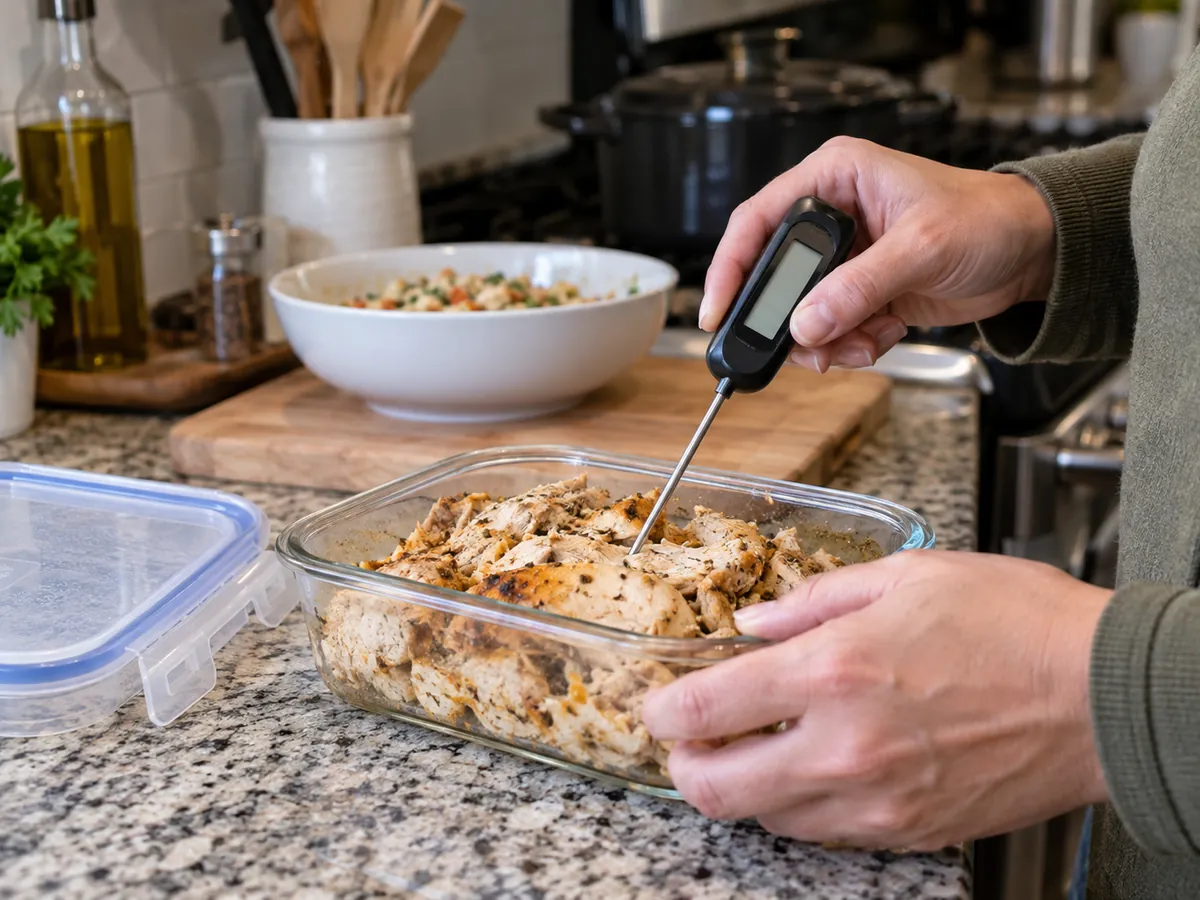
First, check your recorded outage duration. Then check appliance temperatures and evaluate the contents by category. If you have reliable thermometer readings from the outage, use them. If not, the time the refrigerator went without power matters a great deal.
Separate food into three broad decisions: foods that remained safely cold, foods that are shelf-stable and weren't otherwise damaged, and perishable items whose safe temperature cannot be established. The last group may be painful to throw away, but a grocery bill is less costly than a preventable foodborne illness.
Inspect any food that may have contacted floodwater separately. Floodwater contamination is not solved by putting food back in a cold refrigerator. Discard food in unsuitable packaging that has contacted floodwater and follow official guidance for any potentially salvageable sealed cans.
Do not taste suspicious food. It may smell, look, and taste normal and still be unsafe.
Plan meals that don't require the refrigerator at all
The cheapest food-safety strategy may be to have something else to eat.
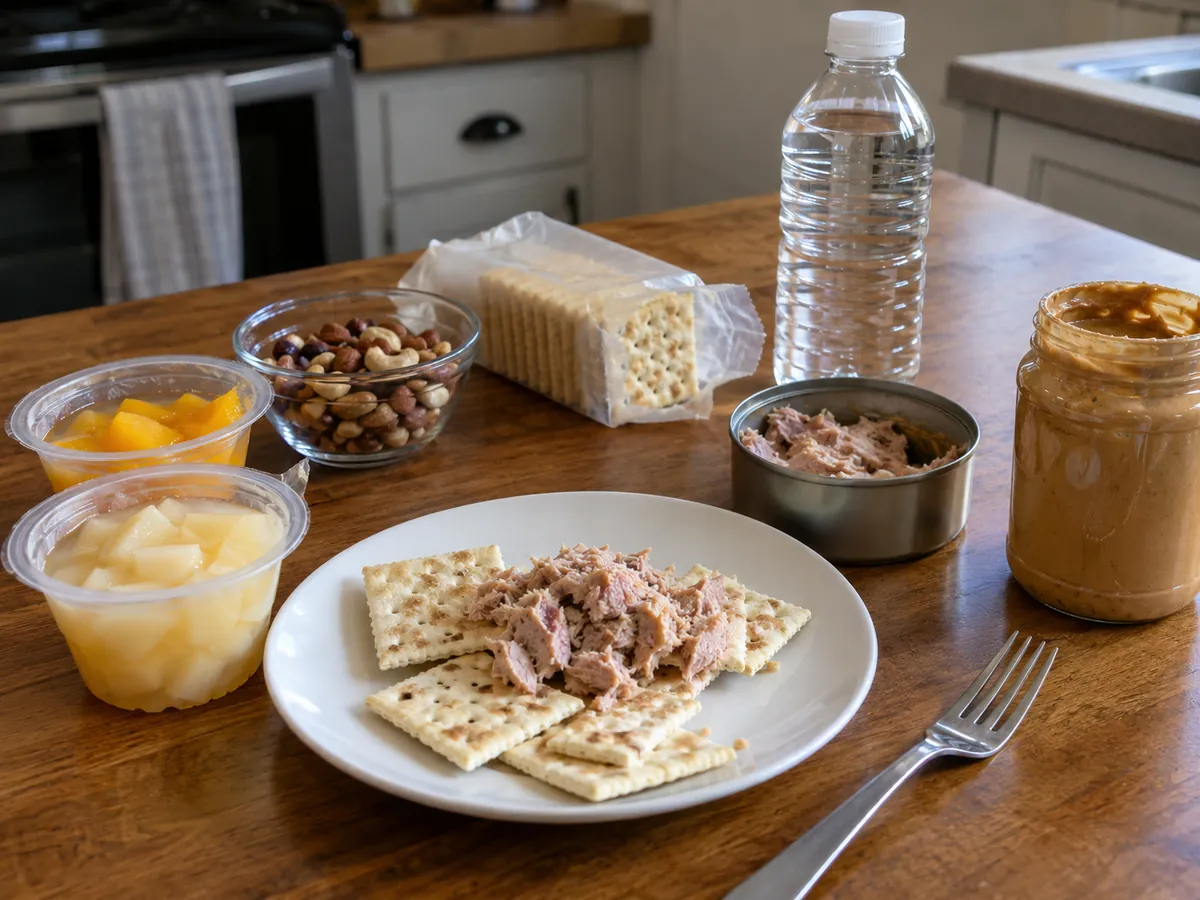
If you already keep shelf-stable meals in the pantry, there's less pressure to open the refrigerator and less temptation to stretch the safe life of perishable ingredients. Canned beans, nut butter, crackers, shelf-stable fruit, canned proteins, and other ready-to-eat foods can carry a household through a short outage with little preparation.
A sensible 30-day food supply built around ordinary meals can provide those easy alternatives without requiring specialty survival rations. During a blackout, choose the no-cook portion of that pantry first, especially if you are also conserving water or cooking fuel.
When cooking is possible, prepare modest quantities rather than a pot big enough for two days of leftovers. You may not be able to refrigerate what's left. Packaged shelf-stable products should still be handled according to label instructions once opened.
What about medicines in the refrigerator?
Some medicines and medical products have temperature requirements different from food. Refrigerated insulin and other temperature-sensitive medication shouldn't be treated according to general grocery rules.
Ask a pharmacist or the manufacturer for the specific product's guidance. Don't automatically discard or use medicine based solely on how warm the refrigerator became. If somebody depends on it, make the storage and backup-power plan before storm season, including a reliable place to obtain replacement medication if necessary.
The small habits that save the most food
Put appliance thermometers where you can read them. Keep a cooler and reusable ice packs accessible. Freeze some water containers before severe weather when space allows. Know where to buy ice locally, though stores may be affected by the same outage. Keep your freezer organized enough that you can find things without leaving the door open.
And talk through the decision that often causes an argument after the power returns: what gets thrown out. Agree beforehand that no one will taste-test questionable meat, milk, or leftovers in an attempt to save money. The person who bought the groceries may understandably hate waste. That doesn't make an unsafe meal a bargain.
The most useful preparedness step here doesn't require another large piece of equipment. Put a thermometer in the refrigerator, note how long power has been out, and know which foods need cold temperatures to remain safe.
Then, when the lights come back on, you can make decisions based on something better than hope.