How to Manage 30 Days Without Running Water
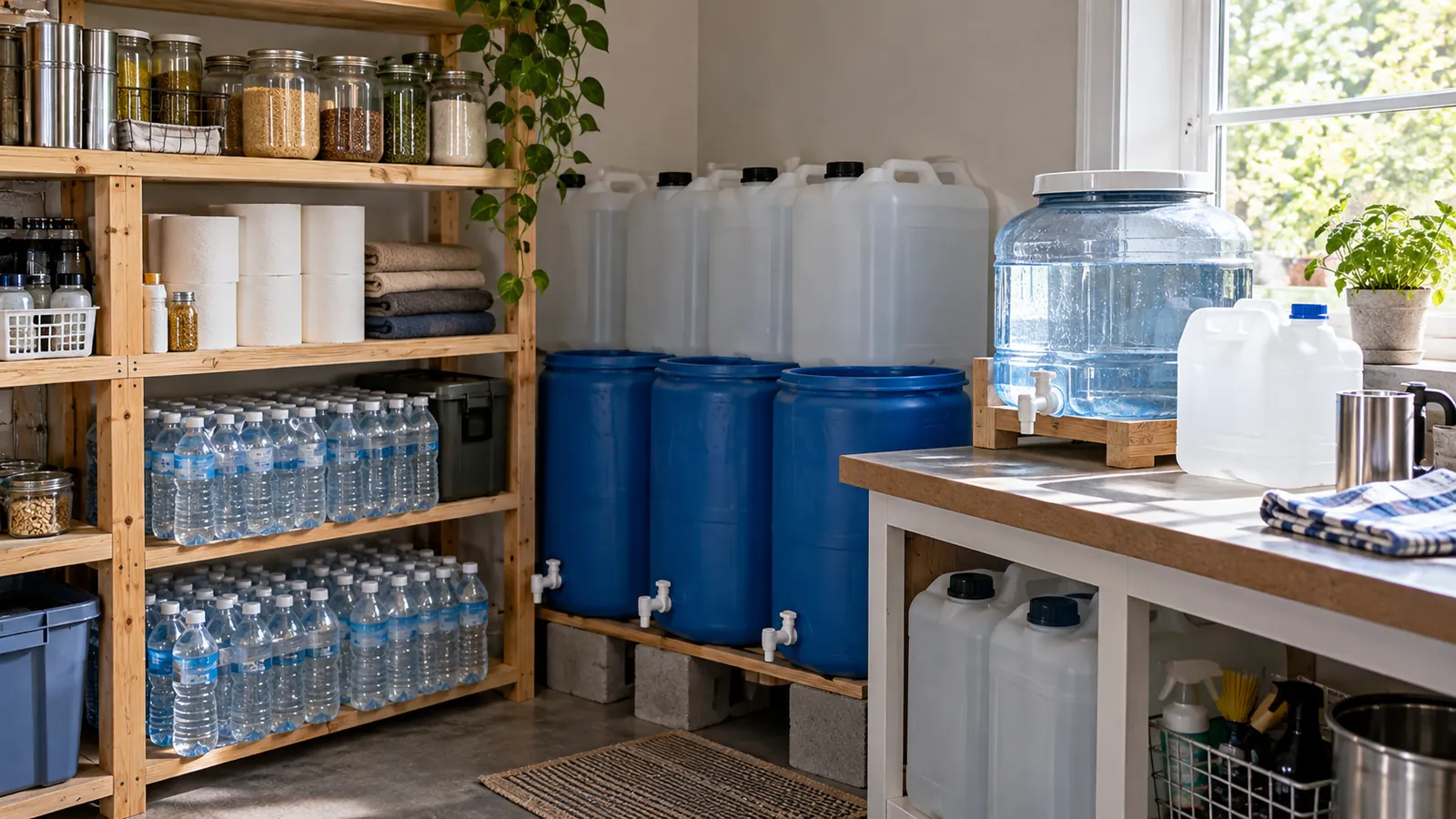
For the first few hours after the taps stop, a house can feel surprisingly normal. There are still dishes in the cabinet, food in the pantry, and a toilet that looks exactly like it did yesterday. Then somebody needs to wash a saucepan. Somebody else needs a shower. The bathroom becomes a problem. By the end of the first day, you start noticing how often ordinary life depends on water appearing whenever you turn a handle.
A month without running water isn't just a matter of lining up thirty jugs in the garage. Drinking is only one part of the household demand. You have to plan for cooking, handwashing, toilets, dishes, cleaning, laundry, and any medical needs. And you need to decide which uses deserve clean drinking water and which can be handled differently.
The best plan isn't one that promises to recreate your usual lifestyle without plumbing. It's one that protects health without burning through your drinking supply in the first week.
Work out your real daily demand
The familiar emergency baseline of one gallon per person per day is a useful minimum starting point for drinking and basic food preparation, not an allowance for normal bathing, toilet flushing, laundry, and dishwashing. Needs increase in hot weather, with physical activity, and for some medical conditions.
A family of four using one gallon each per day would need 120 gallons over thirty days just for that baseline. That's roughly 1,000 pounds of water, before the weight of containers. Most families cannot casually move or store that much in one corner of the house.
Rather than pretend there is a perfect universal number, separate your calculation into three categories. First is water you must be able to drink. Second is water for essential hygiene and food preparation. Third is water for activities that can be reduced, postponed, or replaced with another method.
Don't silently include toilet flushing or a daily sponge bath in the drinking-water allowance. Write those uses down separately, even if you plan to supply them from rainwater or another nonpotable source.
Store drinking water where you can actually use it
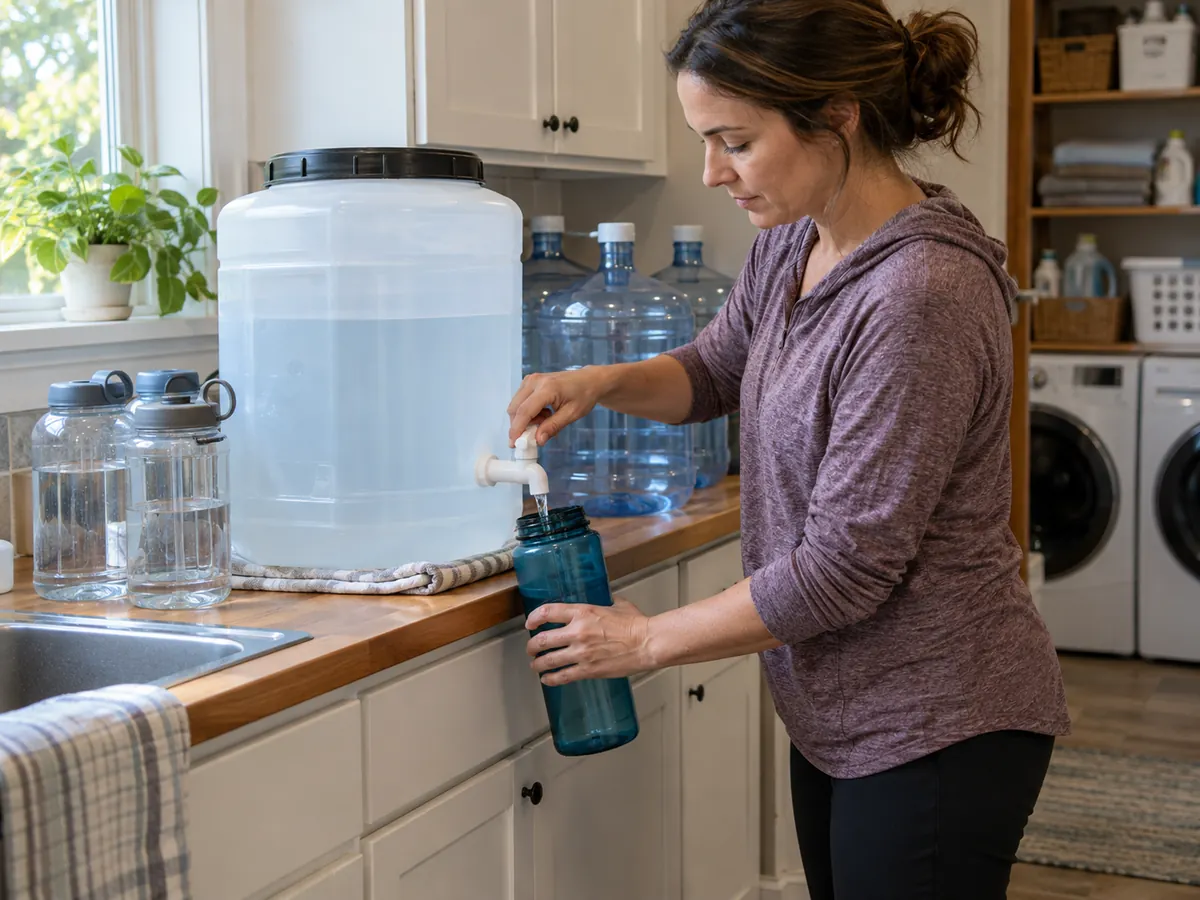
A giant container may be efficient for storage and terrible for daily dispensing. A container that weighs too much to lift, leaks at the spigot, or is wedged behind other supplies tends to get avoided.
Use a mixture of manageable sealed containers and larger storage if your space permits. Place frequently used water where people can access it without moving half the pantry. Keep a dedicated clean dispenser or pouring jug for drinking; this makes it easier to avoid dipping dirty cups into a storage container.
Container design matters once you're drawing water every day, which is why the differences between bottles, rectangular jugs, and modular containers in water storage containers compared are worth thinking through before buying a month's worth of anything.
Protect stored water from heat, direct sunlight, and contamination. Label containers with the fill date and follow appropriate sanitation and rotation guidance for the type of container and water source. Commercially bottled water can be convenient for drinking, while properly prepared food-grade containers can be useful for larger volumes.
Don't assume found water is drinking water
Water collected from a roof, swimming pool, creek, or questionable storage vessel may contain microbes, chemicals, or other contaminants. Clear water isn't automatically safe, and boiling cannot remove fuel, pesticides, heavy metals, or many dissolved chemical contaminants.
If the utility issues a boil-water advisory, follow that specific advisory. If contamination is suspected, use bottled water or another confirmed safe source until officials say otherwise. A household filter designed for taste and sediment is not necessarily a purifier for pathogens.
When water needs treatment and the source is appropriate for it, the methods and limits in making water safe to drink in an emergency should guide your choice. The most important principle is that treatment must match the hazard. Don't apply a wilderness filter to chemically contaminated floodwater and assume the job is done.
Turn the kitchen into a low-water workspace
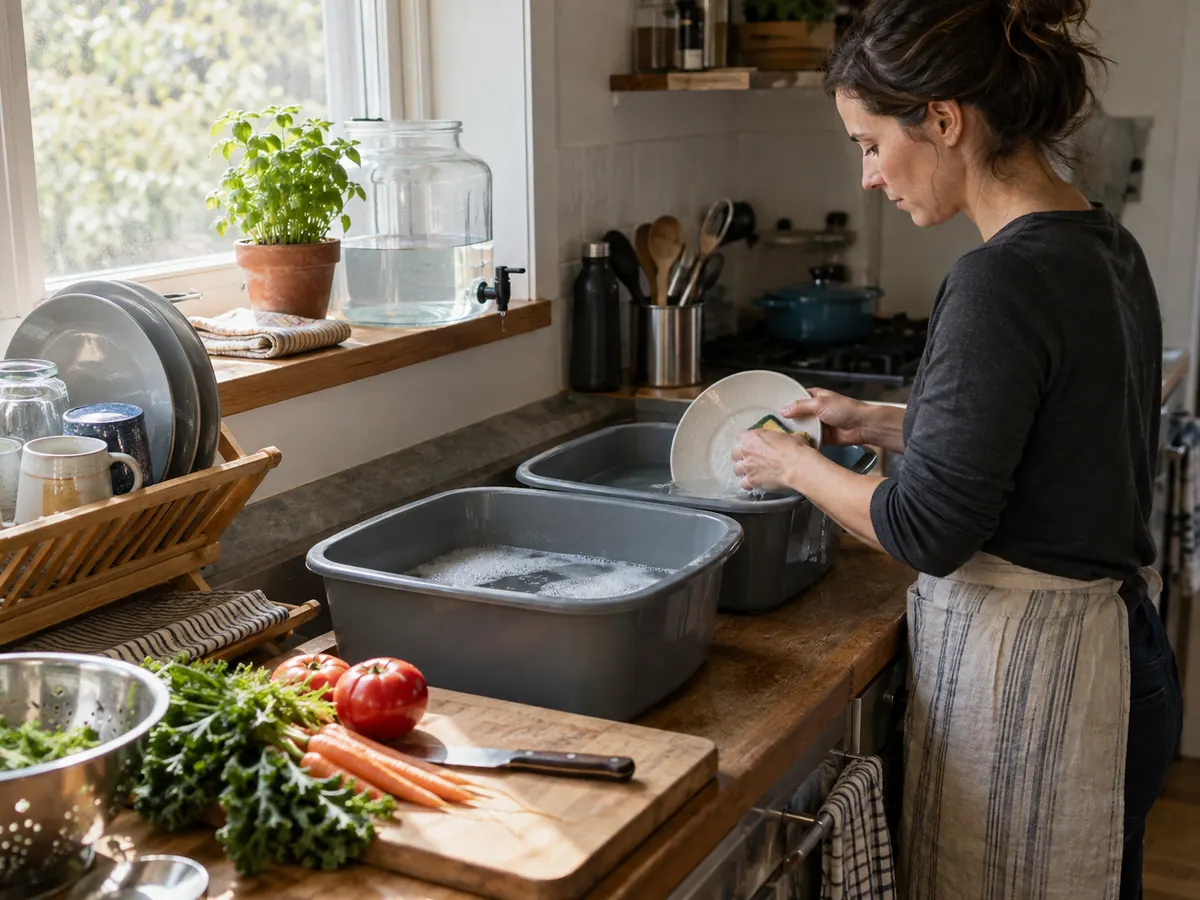
Cooking choices determine how much water you use and how many dirty dishes you create. During a long outage, rice, dry pasta, and dry beans may be economical pantry staples but require cooking water and sometimes a fair amount of cleanup. Canned beans, ready-to-eat foods, and meals made in one pot can reduce demand.
Keep one clearly marked clean-water jug for cooking and a separate basin for dishes. Scrape plates thoroughly before washing. Use a small amount of clean water and detergent for washing, then rinse and sanitize food-contact items using a method suitable for the situation. Don't allow dirty dishwater to become the same water used for brushing teeth or preparing food.
Disposable plates can reduce washing temporarily, but they add trash. A month is long enough that you'll want a workable routine instead of trying to solve the entire problem with paper products.
Treat handwashing as essential, not optional
The biggest hygiene mistake is letting the dwindling water supply discourage handwashing after toilet use and before handling food. That is exactly when a household can least afford a stomach illness.
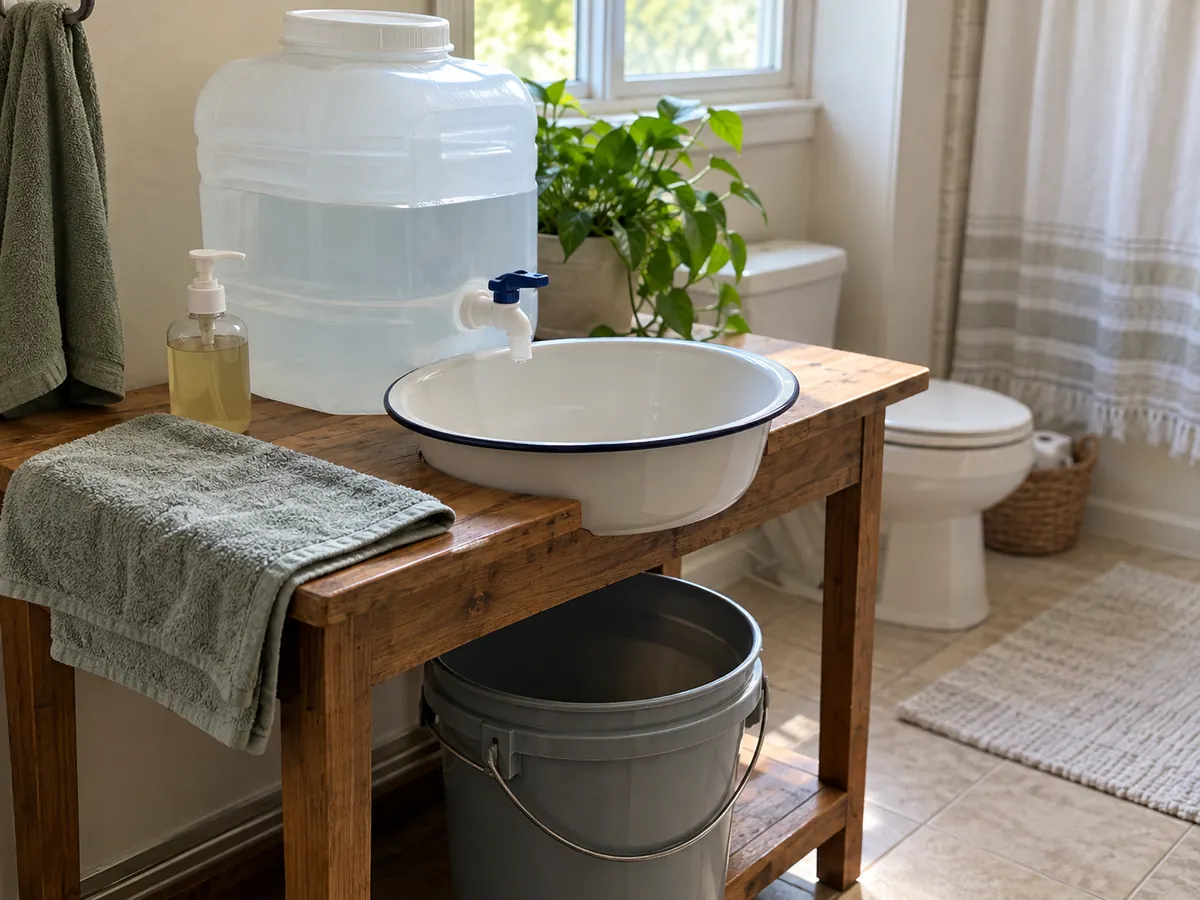
A simple handwashing station can be a food-grade water container with a tap, soap, a basin to catch wastewater, and clean towels or paper towels. Put it near the bathroom and make sure children can reach it. Soap and clean running water are best when hands are visibly dirty; alcohol-based sanitizer can help in situations where hands aren't visibly soiled, but it is not a substitute for every wash.
Use a small, controlled stream rather than leaving a tap open. Empty the catch basin before it overflows, and dispose of wastewater in a way that does not contaminate wells, drinking supplies, or food-growing areas. Local restrictions and the cause of the outage matter here.
Toilets become a different system
If the water supply is unavailable but sewer service is still functioning normally, a toilet may be flushed manually with nonpotable water. That doesn't mean you should devote scarce drinking water to every flush. Confirm that wastewater can safely leave the house before choosing this method.
If sewage lines have failed, drains are backing up, or local authorities instruct residents not to use the sewer, stop flushing. A stable emergency toilet with heavy-duty liners, suitable absorbent material, a secure lid, cleaning supplies, and a plan for safe waste storage may be necessary.
Separating toilet waste from drinking-water tasks is one of the most important practical habits in a prolonged outage. Keep supplies organized, wash hands every time, and follow local health guidance for waste disposal rather than improvising burial or dumping.
Bathing, laundry, and cleanliness
A full shower may be unrealistic, but cleanliness isn't all-or-nothing. A basin, a clean cloth, and a modest amount of warm water can manage essential washing. Focus on hands, face, underarms, feet, and other areas prone to irritation. Keep separate washcloths for each person and launder or replace them appropriately.
Change into clean clothing when you can, prioritize underwear and socks, and reserve laundry efforts for garments that genuinely need it. If you must wash clothing by hand, use two basins to manage wash and rinse water, and dry items completely to avoid mildew.
Do not reuse contaminated water for bathing, food preparation, or handwashing. Water used for one task does not automatically become suitable for another simply because it still looks clear.
Decide now where more water could come from
Stored supplies buy time. A thirty-day plan also needs a replenishment strategy. Find out whether your municipality has emergency distribution points, whether nearby communities are on a different system, and whether family or friends outside the affected area could help. Don't wait until the final jug to start looking.
A rain barrel may supply some nonpotable tasks where collection is permitted and practical. It is not a dependable drinking-water supply, particularly during a drought or contamination event. A private well is only useful if the pump has power and the water remains safe. Following a flood, wells may need inspection and testing before use.
Transport is another limitation. Five gallons weighs more than forty pounds. If someone in your household cannot lift a large container, use smaller ones or a dolly. Make sure your replenishment plan works with the vehicle and people you actually have.
A week-by-week plan is easier to maintain
In the first week, establish rules for who can open stored containers, where drinking water is dispensed, and how the toilet and washing stations work. Check for leaks and track actual consumption. A guess made on day one is less useful than a number measured on day three.
In the second week, inspect the remaining inventory and arrange replenishment well before a shortage becomes urgent. Replace soiled towels, maintain waste containers, and confirm the kitchen cleanup process is still sanitary.
By weeks three and four, fatigue becomes a bigger problem than novelty. People cut corners when a process is awkward. If the washing station is too far away, move it. If the daily allotment is unrealistic, update the plan and obtain more water. Make the safest behavior the easiest one to follow.
Keep additional needs in view throughout: infant feeding, dialysis or other medical care, wound cleaning, pets, and heat exposure can change the water calculation substantially. Some situations are not reasonable to manage at home for a month. If safe water cannot be obtained or sanitation cannot be maintained, relocating temporarily may be the safest form of preparedness.
A month without running water can be managed in some circumstances, but not by treating water like a single pile of bottles. Give drinking, cooking, handwashing, and waste their own systems. Measure what you use. Keep a way to replenish the supply. Then make the daily routine simple enough that the household can keep doing it when the inconvenience stops being interesting.