How Much Emergency Water Does Your Household Really Need?
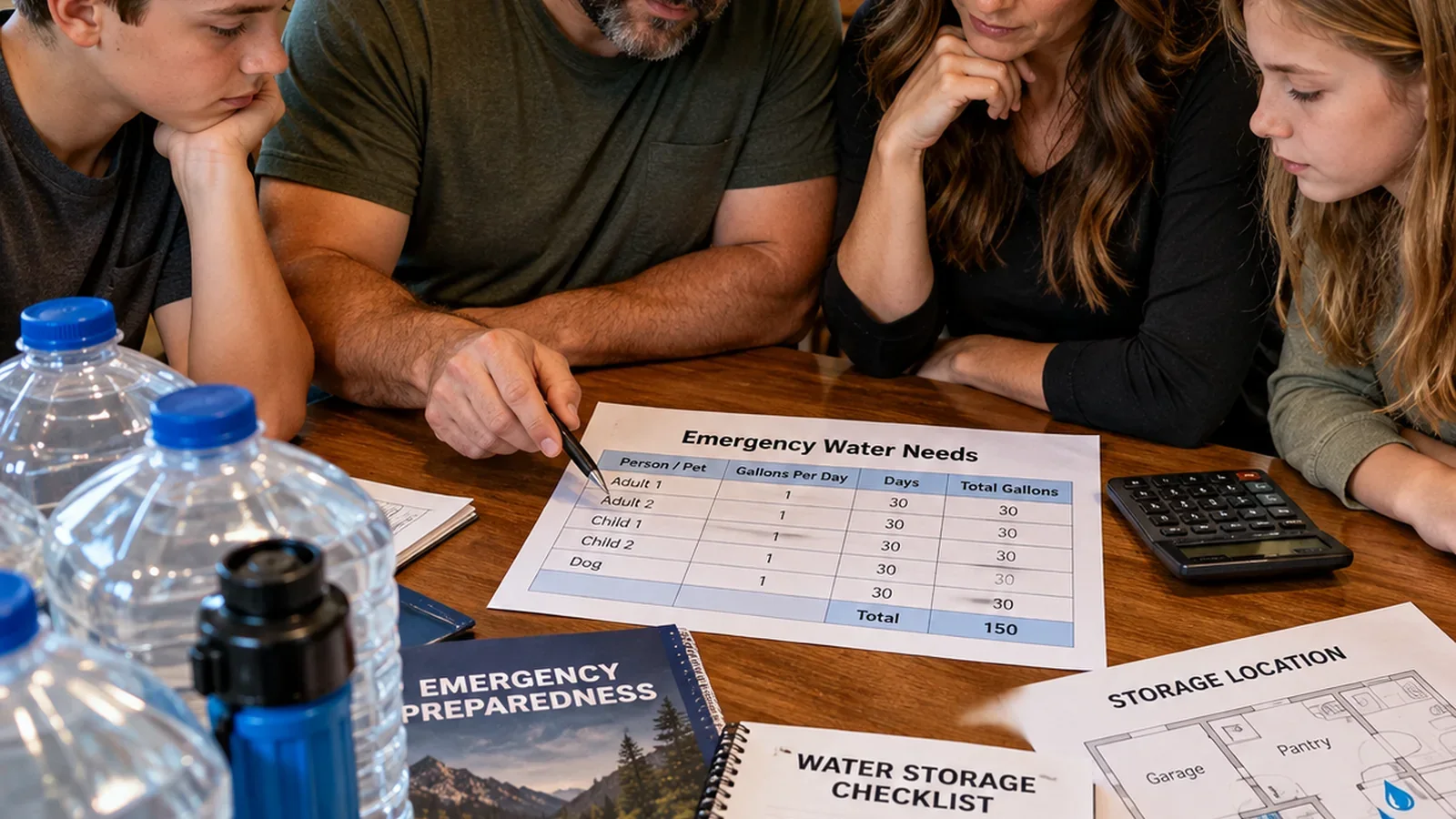
“Store one gallon of water per person per day.” You've probably heard that advice. It's a useful place to start, and it is much better than having nothing stored at all.
But if you have ever tried to keep a household going without running water, you can probably see the problem. Drinking is only one use. There is water for cooking, brushing teeth, washing hands, cleaning dishes, pets, medications, and the occasional mess nobody planned for.
The gallon rule is a minimum emergency planning baseline, not a promise that your household will live comfortably on that amount. Let's work out a number for your actual household without turning your garage into a swimming pool.
First, get the basic number right
The Centers for Disease Control and Prevention advises storing at least one gallon per person per day for at least three days, with a two-week supply if possible. The guidance also says to plan extra for hot weather, illness, pregnancy, and pets.
The starting calculation is simple:
Number of people × days × 1 gallon = baseline gallons.
For a household of four:
| Time without water | Basic minimum for four people |
|---|---|
| 3 days | 12 gallons |
| 7 days | 28 gallons |
| 14 days | 56 gallons |
| 30 days | 120 gallons |
That table is a starting floor, not the full answer. The 30-day row simply extends the daily baseline mathematically; it is not a statement that 120 gallons will cover all sanitation and household uses for a month.
And gallons get heavy. A gallon of water weighs approximately 8.34 pounds, not counting its container. Fifty-six gallons weighs about 467 pounds. Before piling containers onto a shelf, consider floor loading, shelving strength, how they will be moved, and who in the household can safely lift them.
Count the people who will actually be there
Start with everyone who lives in the home. Then consider who might reasonably shelter with you: a college student returning home, a grandchild staying for a weekend, or a relative who would come to your place during a storm.
Don't build a year's supply around imaginary houseguests, but don't pretend your household will always be the same size either.
Pets need their own allocation. Water needs vary dramatically between a small cat and a large dog, and activity and heat change the picture again. Use your veterinarian's guidance for animals with unusual needs. Livestock and large animals require an entirely separate water plan; don't bury their needs in a human drinking-water calculation.
If someone is pregnant, nursing, sick, recovering from surgery, or managing a condition that increases fluid requirements, put that in the plan. Follow individualized medical guidance where appropriate. A summer outage in Texas can also call for substantially more drinking water than an indoor winter shelter-in-place situation.
Separate drinking water from everything else
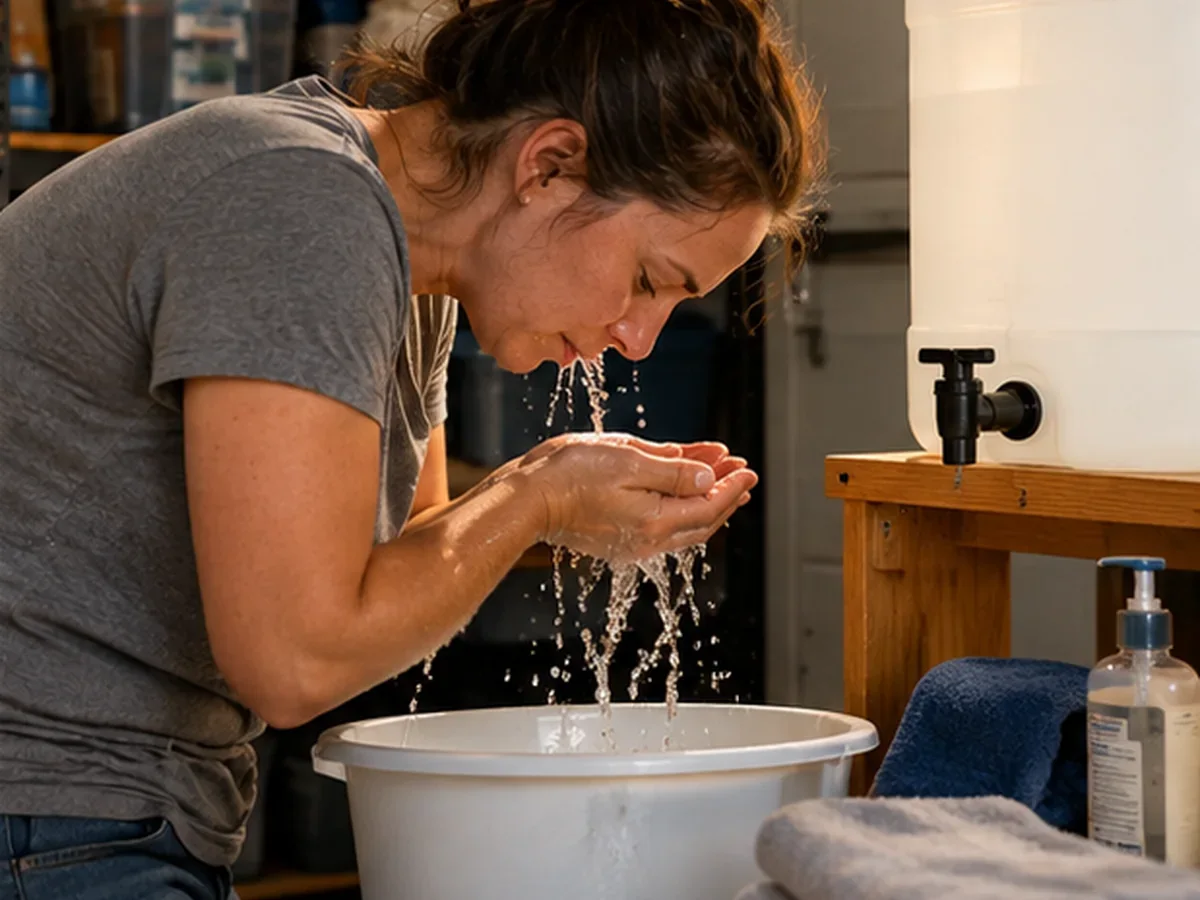
This makes the math clearer. Instead of one enormous bucket called “water,” use three categories:
Safe water for drinking and food. This includes beverages, cooking water, brushing teeth, food preparation, and anything swallowed. When authorities issue a boil-water or do-not-drink advisory, follow its specific directions. Boiling and filtration do not remove every kind of chemical contamination.
Clean water for basic personal hygiene. Handwashing and limited cleaning still matter, especially when several people share a bathroom and prepare food. How much you need depends on your supplies and practices.
Utility water. Toilet flushing, some household cleaning, and certain other uses may not require drinking-quality water, but they can consume astonishing amounts. This water should be clearly separated from the safe drinking supply, used only where appropriate, and never confused with potable water.
Why separate them? Because a person who starts flushing toilets with bottled drinking water on day one can run through the emergency supply very quickly.
If plumbing has failed, our guide to managing 30 days without running water covers how sanitation and household routines change. That subject deserves its own plan rather than a footnote in the drinking-water calculation.
A household example that goes beyond the minimum
Imagine two adults, two children, and one medium-size dog preparing for a seven-day disruption.
The human baseline is four people × seven days = 28 gallons. That's the minimum starting allocation, including essential consumption and basic needs as outlined in public-health guidance.
For planning, the family might choose to add:
- A separate pet allocation, based on how much the dog normally drinks plus a buffer for heat.
- A heat and illness reserve, especially for summer weather or increased medical needs.
- A hygiene reserve for handwashing and essential cleaning beyond the baseline.
- A nonpotable water source or no-water sanitation method for toilets, rather than using the bottled supply.
Those additions are household choices, not official per-person gallon requirements. To avoid false precision, measure your actual use for a few days. Fill a clean jug of known capacity and see how often your household uses it for handwashing or simple food preparation. You will learn more from your kitchen than from a random internet chart.
I would rather see a family store 28 gallons they know how to use, with a sensible plan to expand, than buy a 200-gallon tank and discover they cannot fill it, move it, or keep it clean.
The water you need isn't always the water you can store
Apartment residents have limited floor space. Some homeowners have a basement, while others have only a hot garage where long-term storage conditions are poor. A rural household might have a well but no way to run its pump without electricity.
Work in layers.
Layer one: water ready to drink. Keep a three-day baseline in sealed, manageable containers where you can reach them. Commercially bottled water is a straightforward option if you rotate it by the label date.
Layer two: two-week resilience. Add enough for fourteen days if space, budget, and structural support allow. Divide it into smaller containers so a single leak or damaged cap doesn't wipe out the entire supply.
Layer three: a replenishment plan. Know where additional water could come from and what makes that source safe. Possibilities might include an unaffected municipal supply, a functioning well with approved backup power, or an authorized distribution point. A creek, rain barrel, or swimming pool is not automatically a source of drinking water.
Our home emergency water storage guide deals with selecting containers and keeping stored water in usable condition. This article is about sizing the supply before you choose the container.
Measure your containers instead of trusting the label on a shelf
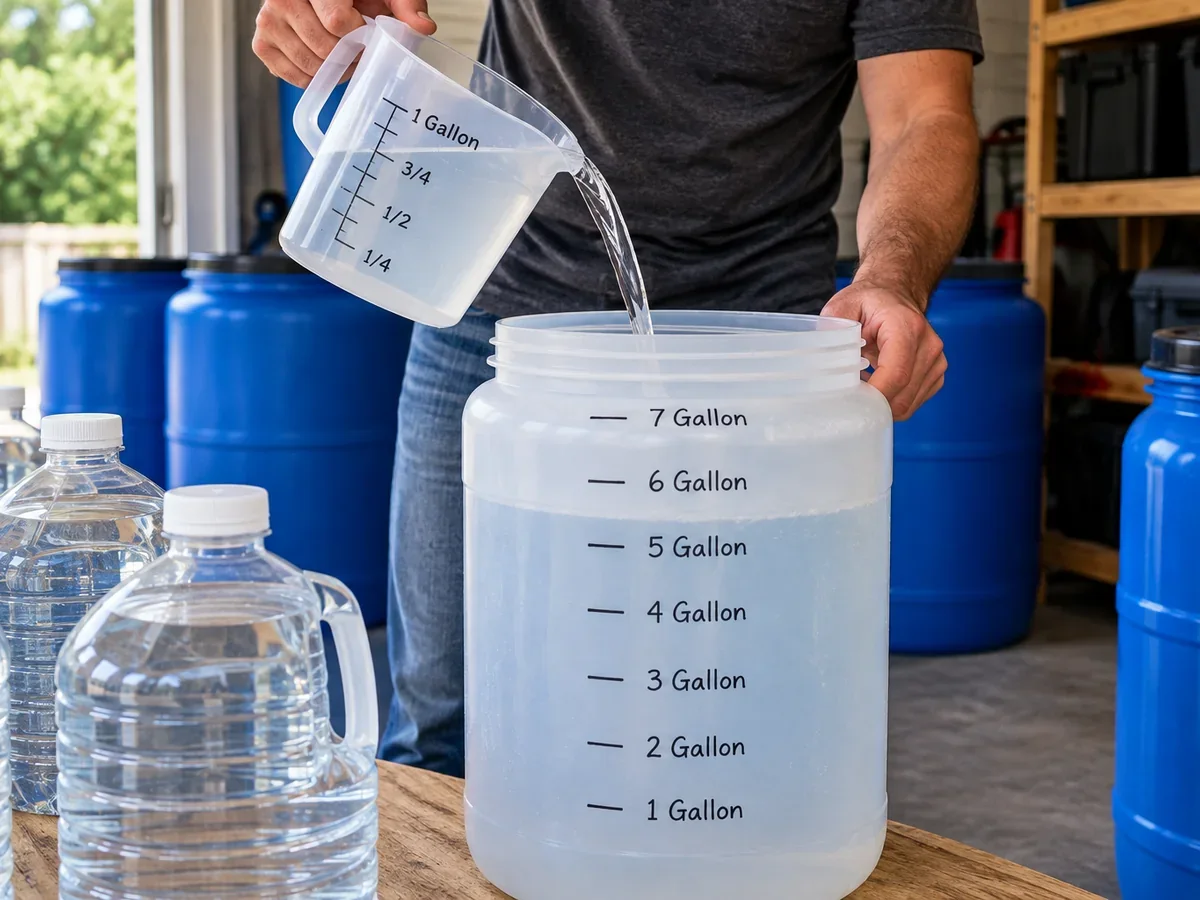
A family might say, “We have plenty. Look at all those cases of water.” Count the volume.
Twenty-four 16.9-ounce bottles contain about 3.17 gallons. Four such cases are roughly 12.7 gallons. That covers the three-day one-gallon baseline for four people, but not a two-week period and not any additional allowance.
A five-gallon jug sounds small until someone has to carry it down the hallway; filled with water, the contents alone weigh about 42 pounds. Large containers can be efficient, but access matters. Consider dispensing spigots, stable shelves, and smaller carry containers.
Label each container with what it is intended for. If you fill containers yourself, use containers suitable for potable water, clean and sanitize them correctly, and replace self-filled stored water at the recommended interval. The CDC advises replacing water that you filled into containers every six months. Follow manufacturer instructions and public-health guidance rather than improvising chemical treatment.
Do not reuse a container that previously held pesticides, fuel, or other toxic chemicals, even if it looks clean.
Heat, activity, and illness can change everything
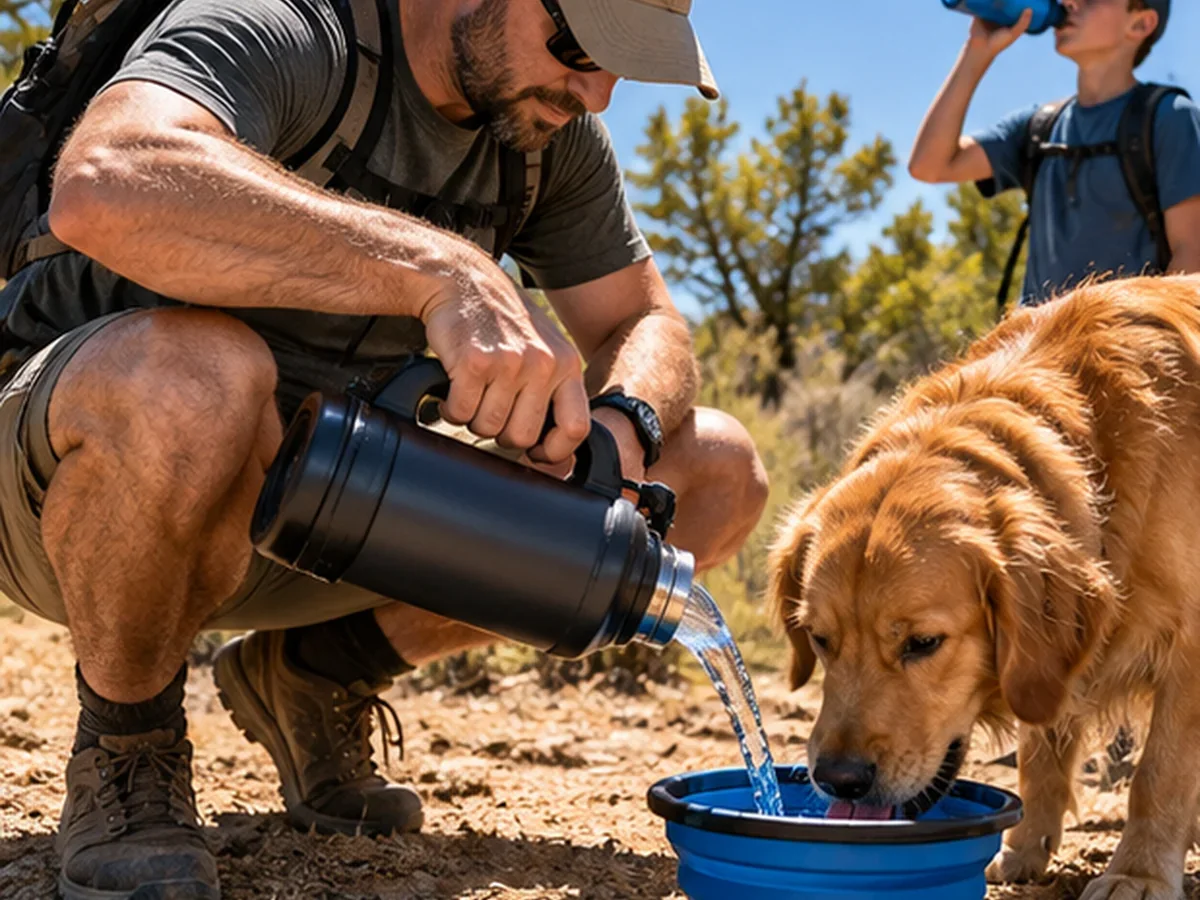
A baseline calculation assumes ordinary conditions. It doesn't know your house is at 95 degrees indoors, that someone has a fever, or that you are hauling supplies in the heat.
Build your reserve around what may actually happen in your area. During severe heat, access to a safe, air-conditioned location may matter as much as having extra bottles. A person with signs of heat stroke needs emergency care, not merely another gallon of water on a shelf.
Be especially cautious about giving generic fluid targets to someone with a medical condition that requires fluid restriction or individualized management. Their emergency plan should follow their clinician's guidance.
Babies also deserve their own thought. Formula preparation may require a reliable source of safe water and careful handling. Store appropriate infant feeding supplies and follow public-health instructions during water advisories.
If the tap still works, don't assume it's safe
After a storm or flood, water pressure may return before the supply is confirmed safe. If local officials issue a boil-water notice, follow the notice. A do-not-drink advisory because of chemicals or toxins may require a completely different response: boiling could be ineffective or inappropriate.
Treat rainwater, surface water, or water from an unknown tank as potentially unsafe until it has been evaluated and treated by a method appropriate to the hazard. Ordinary backpacking filters are useful for some microbes, but they are not universal solutions for dissolved chemicals.
Keep potable and nonpotable containers unmistakably different. Never pour untreated water into a clean drinking-water container and assume you can sort it out later.
Build your own seven-day calculation tonight
Take a piece of paper and fill in these blanks:
People in the house: ___
Days you want to cover: ___
Minimum human gallons (people × days): ___
Pet needs for that period: ___
Extra allowance for heat, illness, or special circumstances: ___
Additional hygiene water beyond the baseline: ___
Separate toilet or utility-water plan: ___
Total safe drinking/food water to store: ___
Total additional clean or utility water to plan for: ___
It helps to write down where each part will live, how you will rotate it, and how you will know when it's time to replace it. Also note which supplies you could move quickly if your family had to evacuate. A fifty-gallon reserve in the garage will not help much on the highway.
A realistic water plan beats a heroic number
You do not need to fill every spare corner with jugs tomorrow. Start by making the baseline real. For four people, that means twelve gallons for three days. Then build toward two weeks, accounting for pets and the specific situations that increase your needs.
Once that is done, test the plan for one ordinary day: pretend the faucets are unavailable and use your designated water supply. Don't shut off anything hazardous or deny anyone needed water. Just observe what your household reaches for and how quickly the numbers change.
The most useful emergency water figure isn't the biggest number you can write down. It's the amount your household can safely store, find, use, and replenish when the tap gives you nothing.