Emergency Toilets When Your Plumbing Stops Working
There is a big difference between losing a toilet for an hour and losing your plumbing for a day or two. The first problem is annoying. The second one can turn a decent house into a miserable place faster than most people expect.
People usually think first about drinking water and food, which makes sense. But once toilets stop flushing, every ordinary bathroom habit changes. You need a place for waste to go, a way to control odor, a plan for cleanup, and some way to keep hands clean afterward. When electricity and water fail together, the household may have to survive 72 hours without electricity or running water while keeping the bathroom safe and usable.
The good news is that you do not need an elaborate setup to get through a short-term emergency. You need a workable one.
Start by deciding what kind of problem you have
If the municipal sewer is fine and the only issue is that your well is down or the water service is temporarily off, the solution may be as simple as using stored water to flush when necessary. If the sewer itself is backing up, the septic system is saturated, or local officials say not to use drains, then flushing is no longer your answer.
That distinction matters.
Pouring extra water into a toilet only helps when the toilet can still move waste safely out of the house. If the line is blocked or the system downstream has failed, you are just adding more mess to a problem that is already going the wrong direction.
So before you start improvising, figure out whether the toilet can still be used for manual flushing, whether wastewater can still leave the home, and whether the problem is likely to last a few hours or a few days.
The simplest emergency toilet is usually a lined bucket
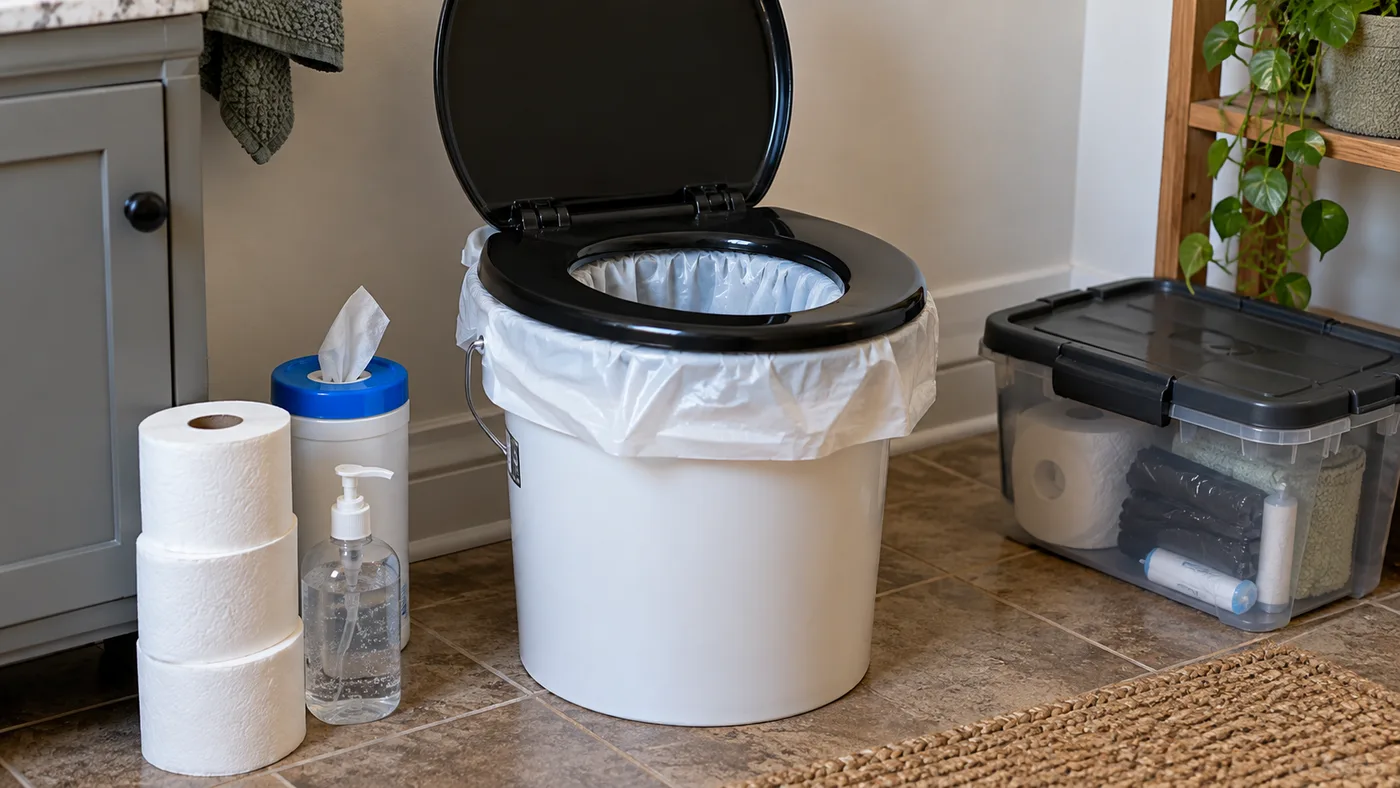
A five-gallon bucket with a sturdy snap-on toilet seat is not glamorous, but it works. That is why so many people fall back on some version of it.
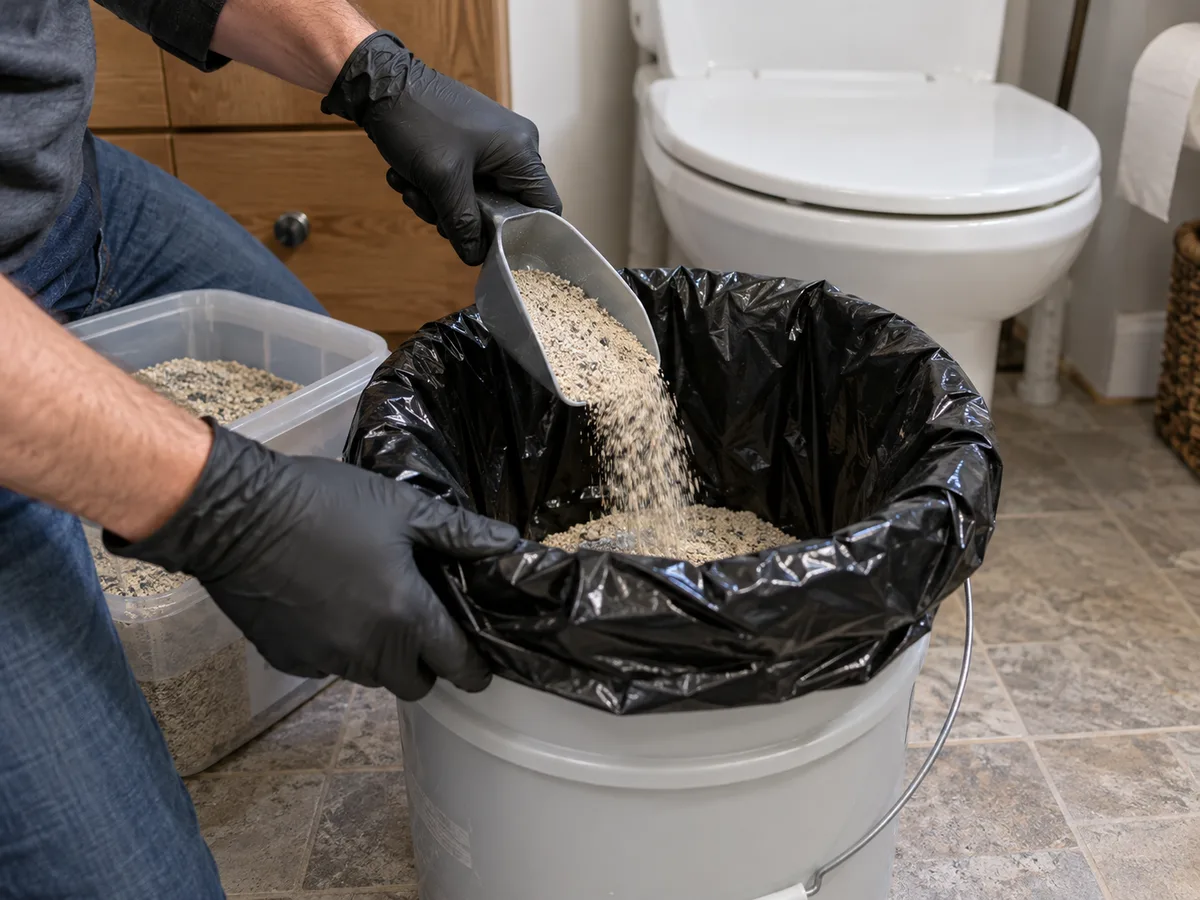
For a short-term setup, line the bucket with a heavy-duty trash bag. Many people prefer using two bags rather than one, especially if the bag quality is questionable. Keep the seat on top, keep the lid closed when it is not in use, and keep a cover material nearby.
That cover material can be sawdust, pine pellets, fine wood shavings, cat litter, or another dry absorbent material that helps with moisture and odor. You do not need to dump in half the container every time. A modest layer after each use does more good than people think.
What matters most is stability. If the bucket rocks, the seat shifts, or the bag slips down inside the rim, the setup will feel one step away from disaster. Build it once while everything is calm. Sit on it. See if it moves. Check whether the bag stays in place. That five-minute test is better than discovering the weak point later.
Put together a sanitation kit before you need it
The toilet itself is only part of the job. A usable emergency bathroom setup also needs the things that make cleanup manageable.
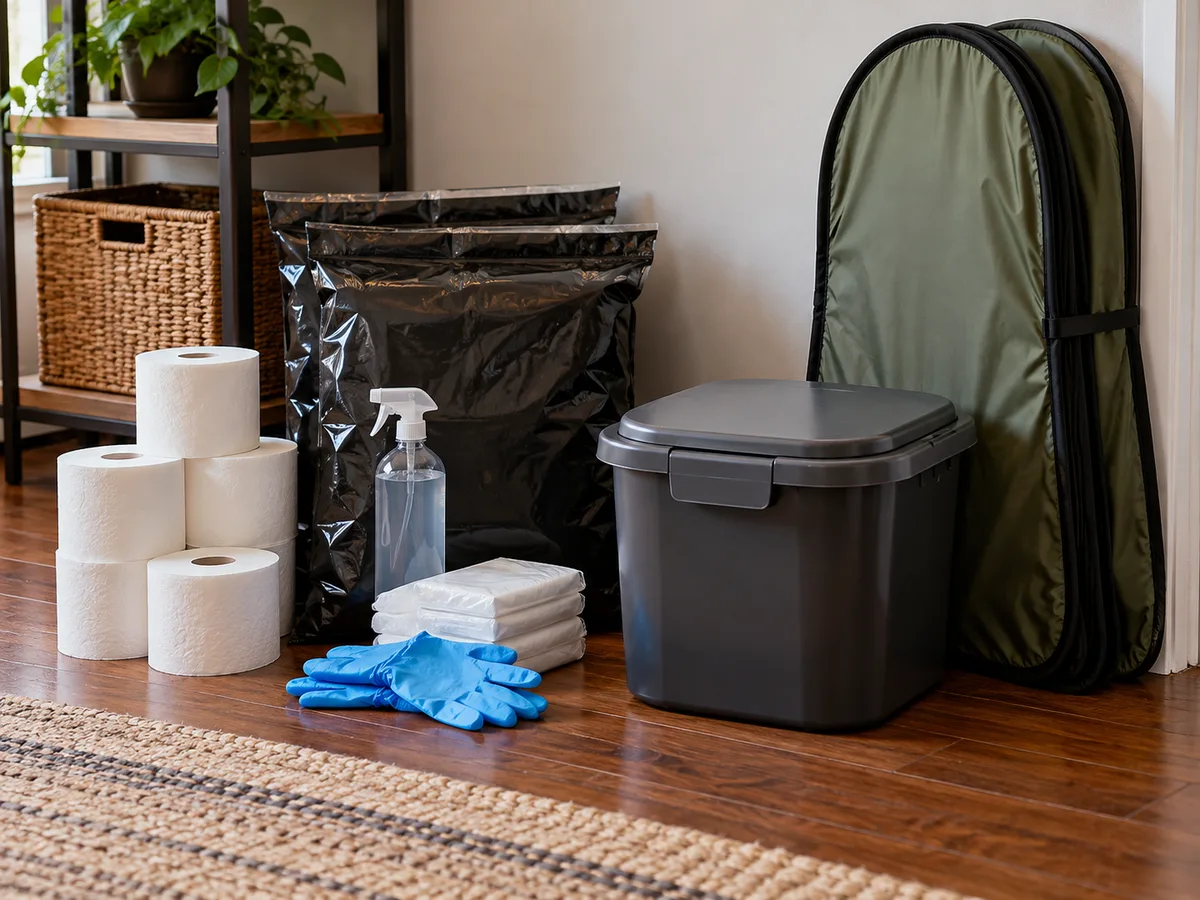
At minimum, I would want:
- heavy-duty trash bags
- toilet paper
- disposable gloves
- hand soap or hand sanitizer
- disinfecting wipes or a cleaning spray
- absorbent cover material
- paper towels or washable cleaning cloths
- a lidded container or dedicated storage tote for the supplies
If you expect the setup to be used by children, older adults, or anyone with limited mobility, comfort matters too. That may mean a better seat, a grab point nearby, better lighting, or a privacy screen if the normal bathroom is not usable.
A miserable setup gets avoided. An avoided setup creates other problems.
Choose the location carefully
If one bathroom still works as a room but not as a plumbing fixture, it usually makes sense to keep the emergency toilet there. The surfaces are easier to clean, there is a door, and people already understand that the room is for bathroom use.
If that is not possible, pick a place with privacy, ventilation, and enough space for supplies. Do not wedge the toilet into a busy hallway because it seemed convenient in the moment.
Also think about nighttime use. If the path is dark, cluttered, or awkward, somebody will eventually trip, spill, or try to avoid the setup altogether. A battery lantern outside the bathroom or a flashlight hanging on a hook is a small improvement that pays for itself quickly.
Waste storage and disposal need their own plan
This is the part people avoid thinking about, which is why it deserves attention.
If the disruption is short and you can tie off and remove a bag promptly, the process is straightforward. If the outage stretches on, you need a clean place to store filled bags temporarily until disposal is possible. That place should be away from food storage, away from children and pets, and protected from puncture or leakage.
Do not assume you can bury waste in the backyard and call it solved. In many neighborhoods that creates a new health problem, not a better plan. Local guidance, local ordinances, and the nature of the emergency all matter.
For many households, the practical answer is simple: use strong bags, close them securely, and store them in a lidded outdoor trash container or another controlled temporary location until normal disposal resumes. What you do not want is loose, leaking, half-managed waste sitting indoors because nobody decided in advance where it would go.
You still need a way to wash hands
A family can tolerate a lot of inconvenience for a few days. Poor hand hygiene is harder to forgive.
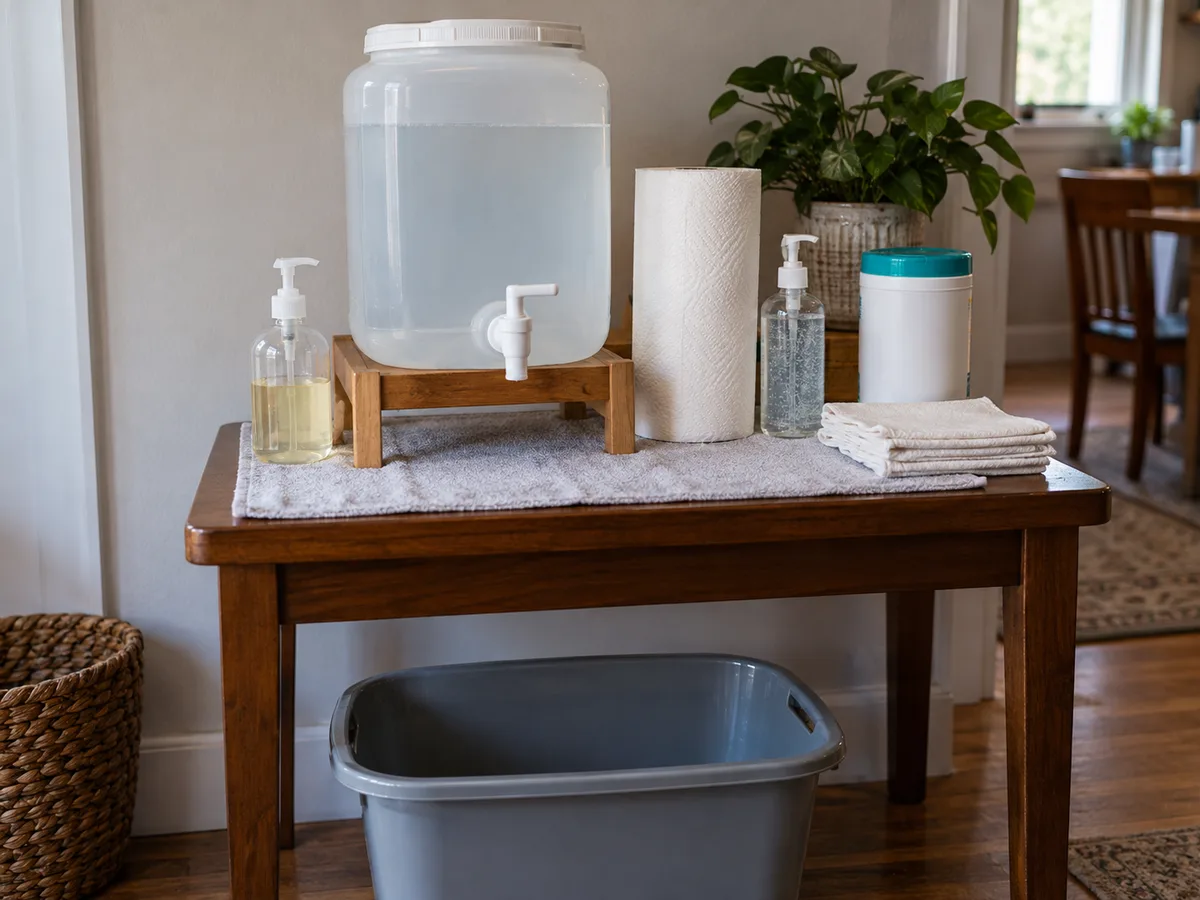
If sinks are not working, set up a basic washing station nearby. A water dispenser with a spigot, a basin underneath, soap, and towels will do the job. The shape and dispensing design of your water containers matter because a dispenser that is too heavy to move or awkward to pour from quickly becomes a nuisance.
If water is limited, hand sanitizer helps, but it is not a full substitute for basic washing when hands are visibly dirty. The cleaner and easier your wash station is, the more likely people are to use it every single time.
Odor control is mostly about routine
People sometimes go hunting for a magic product when what they really need is a rhythm.
Close the lid. Add cover material. Change bags before they become overfilled. Keep cleaning supplies in reach. Wipe nearby surfaces regularly. Empty the room trash. Ventilate when possible.
That routine does more for comfort than one expensive deodorizer tossed into the corner.
You may also find that one toilet is not enough if a full household is home all day. In that case, a second bucket setup stored in reserve is not overkill. It is the sanitation version of having a spare flashlight. Nobody is impressed by it until the first one becomes unavailable.
Keep expectations realistic
An emergency toilet does not need to feel normal. It needs to be clean enough, stable enough, and simple enough that everybody in the house can use it without panic.
That means you do not need a ten-part composting system for a two-day outage. You also should not trust a flimsy bag balanced inside a decorative wastebasket and pretend you have prepared.
The sweet spot is usually somewhere in the middle: a basic setup that is sturdy, private, supplied, and easy to maintain.
Practice the setup once
You do not need to use it for a full weekend to learn a few important things.
Set up the bucket. Attach the seat. Put the bags where they belong. Place the cover material nearby. Arrange the soap, paper, gloves, and wipes. Then step back and ask a few blunt questions.
Can everyone find the supplies?
Can everyone understand what to do without a lecture?
Is there a place to wash hands right away?
If a bag needs to be removed, is the route out of the house obvious and clean?
Preparedness gets much better when ordinary friction is removed. If the toilet seat pinches, change it. If the wipes are stored in another room, move them. If the water dispenser is too heavy, split the water into smaller containers.
That is the kind of adjustment that turns a vague idea into a workable household plan.
When plumbing stops, people do not need elegance. They need a bathroom plan that is clear, clean, and ready before the first flush fails.