Emergency Cash and Documents: What You'll Need If You Can't Go Home
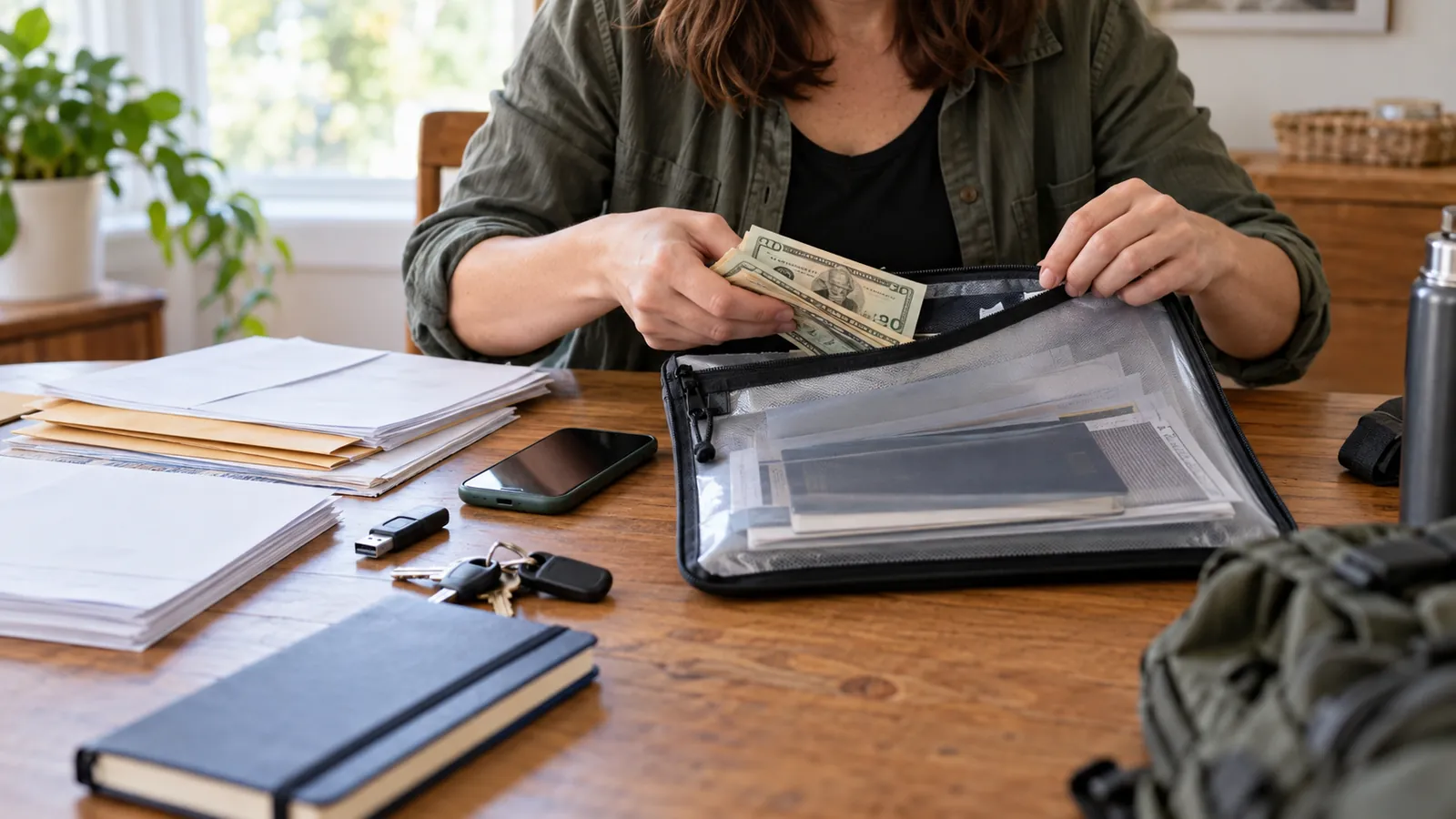
A disaster can leave your house standing and still make your normal life surprisingly difficult. You may be sleeping somewhere else, using somebody else's Wi-Fi, waiting for a bank to reopen, or trying to remember your insurance policy number while your phone battery is running low.
This part of preparedness gets less attention than flashlights and water filters because it's not especially interesting to buy. But when a storm, fire, or evacuation interrupts ordinary routines, access to money and records can determine whether the next few days are manageable or miserable.
The goal isn't to carry every important paper you own. It's to make the information you need easy to find, secure, and usable when home isn't an option.
Start with the first three days away from home
Think through a modest problem before imagining the worst possible disaster. Your household has to leave quickly, the power is out in part of town, and you don't know when you'll be allowed back. Where will you sleep? How will you pay for fuel, a meal, or medication? Can you prove who you are if your wallet goes missing?
That exercise reveals two different needs. You need immediate spending ability, and you need proof and account information that lets you arrange the larger things later.
A little emergency cash addresses the first need. Organized documents address the second. They should be planned together but stored with different risks in mind.
Build a cash reserve you can actually use
Cash can be helpful during a local outage if card terminals, networks, or ATMs aren't working. You don't need to keep a fortune in an envelope, and you should never put your entire emergency fund in cash at home. Cash can be lost, stolen, or destroyed and is not earning interest in a secure account.
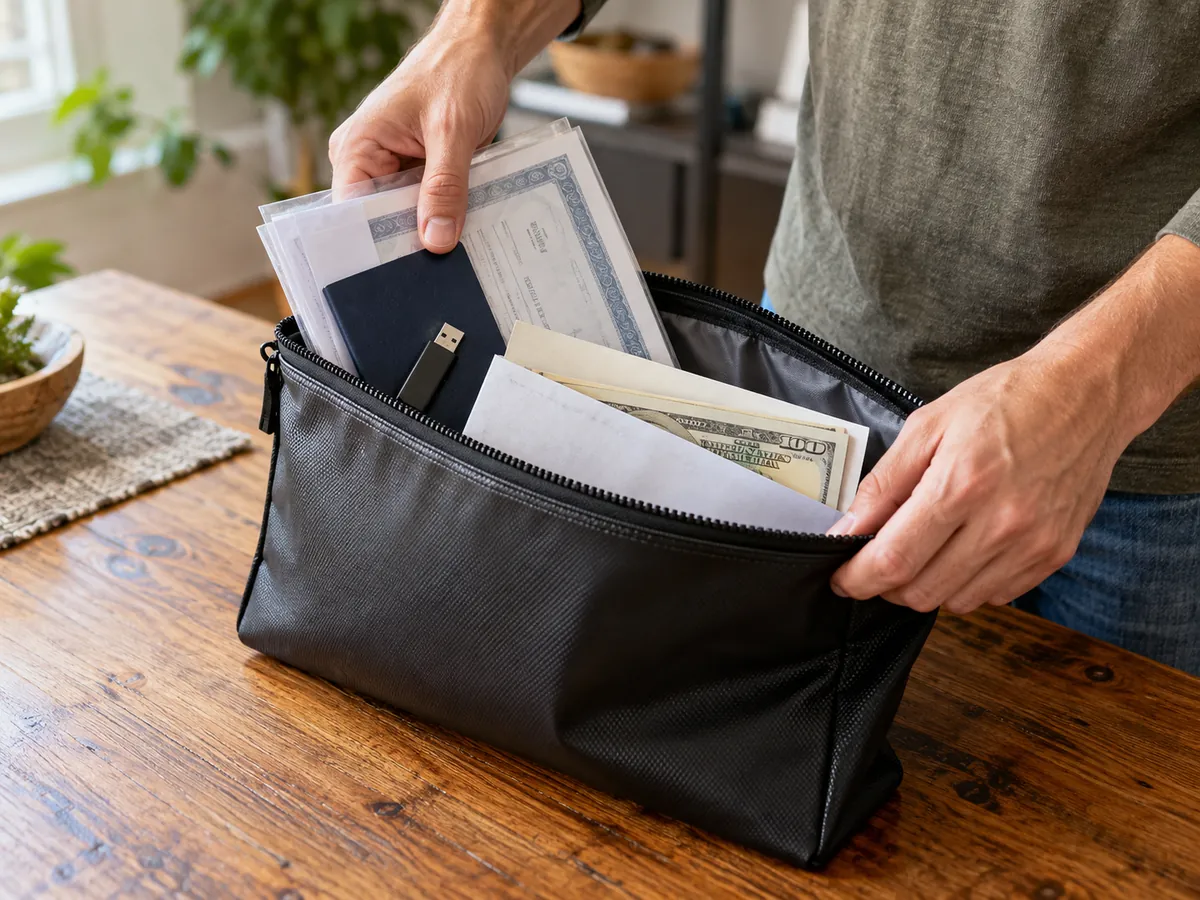
Start with what your budget permits. A reasonable first target may be enough for a tank of gas, some groceries, and one night's necessities. Increase it gradually if your household size, evacuation distance, and financial circumstances justify more.
Denominations matter. A stack of hundred-dollar bills is awkward when a business can't make change. Use a mix of smaller notes, keep the amount private, and make sure another trusted adult in the household knows how to access it when appropriate.
The larger emergency savings balance belongs in a financial account suitable for your needs, ideally accessible from more than one device or location. Think of physical cash as a short bridge, not a substitute for savings.
Make a short list of the records that unlock everything else
The first document set should fit in a slim folder or small waterproof pouch. It may include copies of identification, relevant insurance cards, essential medical information, a household contact sheet, and instructions for accessing important accounts. Keep original identification in its normal secure place unless a departure requires bringing it.
The second set is your deeper records archive. That's where insurance policies, deeds, vehicle titles, mortgage information, tax records, estate documents, and other difficult-to-replace paperwork belong. You may not need every page in an evacuation bag, but you should know where the originals are and have protected copies you can use from elsewhere.
A photograph of each room and major belongings can be useful when describing damage later. Update the inventory after expensive purchases or major improvements. Try photographing serial numbers where readable and keeping purchase records for items that may become insurance claims.
If you're preparing to leave during a wildfire, the pace of decisions can change quickly. The essentials in your wildfire evacuation plan should already be packed or easy to grab. This folder belongs with those essentials, not buried beneath a drawer of old paperwork.
Don't make one folder your only copy
A physical pouch is easy to carry but easy to lose. A home safe may protect important originals, but you can't assume every safe will withstand every kind of fire, flood, or structural damage. The rating and installation matter, and even a good safe might be inaccessible for days.

Use more than one layer.
Keep originals stored appropriately. Keep a limited paper copy set for leaving the house. Maintain encrypted or otherwise strongly protected digital copies that can be reached if the house, computer, or phone becomes unavailable. A separate secure backup is valuable because a single flood or theft should not eliminate every version of the records.
Don't leave unencrypted copies of identity documents and account details on a shared USB drive, a public computer, or a casually shared cloud folder. Protect devices and accounts with strong unique passwords and multifactor authentication where available. Make sure the household knows how to use the backup without giving every person unrestricted access to sensitive information.
If you use an encrypted drive, test it. A backup that nobody can unlock because the recovery information went missing is not a workable emergency plan.
Know what insurance will and won't cover before something happens
People often discover coverage gaps while making a claim. That's a bad time to learn that certain flood damage is excluded from a standard homeowners policy or that your deductible is larger than expected.
Read the declarations page and ask the insurer questions you don't understand. What types of disaster are covered? What is the deductible? Is temporary housing included under the circumstances described by the policy? Are expensive tools, equipment, or home-business items covered fully, partially, or not at all?
Insurance varies by policy and location. Avoid trusting broad claims that every storm, flood, fire, or evacuation receives the same treatment.
Photographs, receipts, and a concise list of property can support the claims process. When you prepare for a flood before the water reaches your home, the paperwork can be just as important as raising belongings above the floor, provided you leave while travel is still safe.
Make the folder usable under stress
A beautifully organized binder is worthless if the person who needs it doesn't know where it is.
Arrange the information so someone can find important contacts without reading every page. A first sheet might contain the insurance claim number, agent or company contact, financial institution phone numbers, medication contacts, and a trusted family contact. Don't print passwords or sensitive account credentials on that front sheet.
Separate material by purpose rather than by whichever envelope it originally arrived in. Identification and family records can be grouped together. Insurance and property can be another section. Financial account contacts and obligations can be a third.
If you use a digital version, give the files plain names and a sensible directory structure. Don't rely on a personal shorthand that only one person understands. Consider what would happen if that person were injured or unavailable.
The bills don't stop just because you're displaced
A flood, wildfire, or extended power outage can interrupt income and mail delivery while rent, mortgage, insurance, or loan payments continue coming due. That's one reason account-contact information matters.
Make a short list of regular bills, their approximate due dates, and how each is normally paid. You don't need to carry years of statements. You need enough information to contact the right company and explain what happened.
If disaster disrupts your ability to pay, contact lenders, landlords, service providers, and insurers promptly when safe to do so. Ask what hardship arrangements or payment flexibility might be available, and get any agreement in writing. Don't assume an emergency automatically suspends obligations.
Watch for fraud as well. A message demanding immediate payment to release disaster aid or claiming you must provide account credentials to verify an insurance payout deserves careful scrutiny. Contact the organization using a number or website you independently know is legitimate.
Make room for the people who depend on you
An emergency record plan changes when a household includes children, older relatives, pets, or anyone who depends on regular care.
School contacts, guardianship instructions where applicable, medication lists, caregiver numbers, pet identification, veterinary records, and accessibility needs may be as urgent as insurance information. Keep sensitive medical information to what is necessary for continuity of care and store it securely.
Talk with the trusted person who might need to act in your absence. The time to discover that they cannot access a document or understand a medical instruction isn't the middle of an evacuation.
Some records require originals, legally valid copies, or formal authorization. A photocopy alone may not be enough to complete every transaction or make healthcare and financial decisions. Check the requirements for the documents that matter to your household.
Rehearse a five-minute departure
Once you've assembled your information, imagine leaving right now. Can you collect the folder, medication, keys, essential devices, and a little cash in five minutes? Does everything fit in a bag you can actually carry? Is there a digital backup if the bag is left behind?
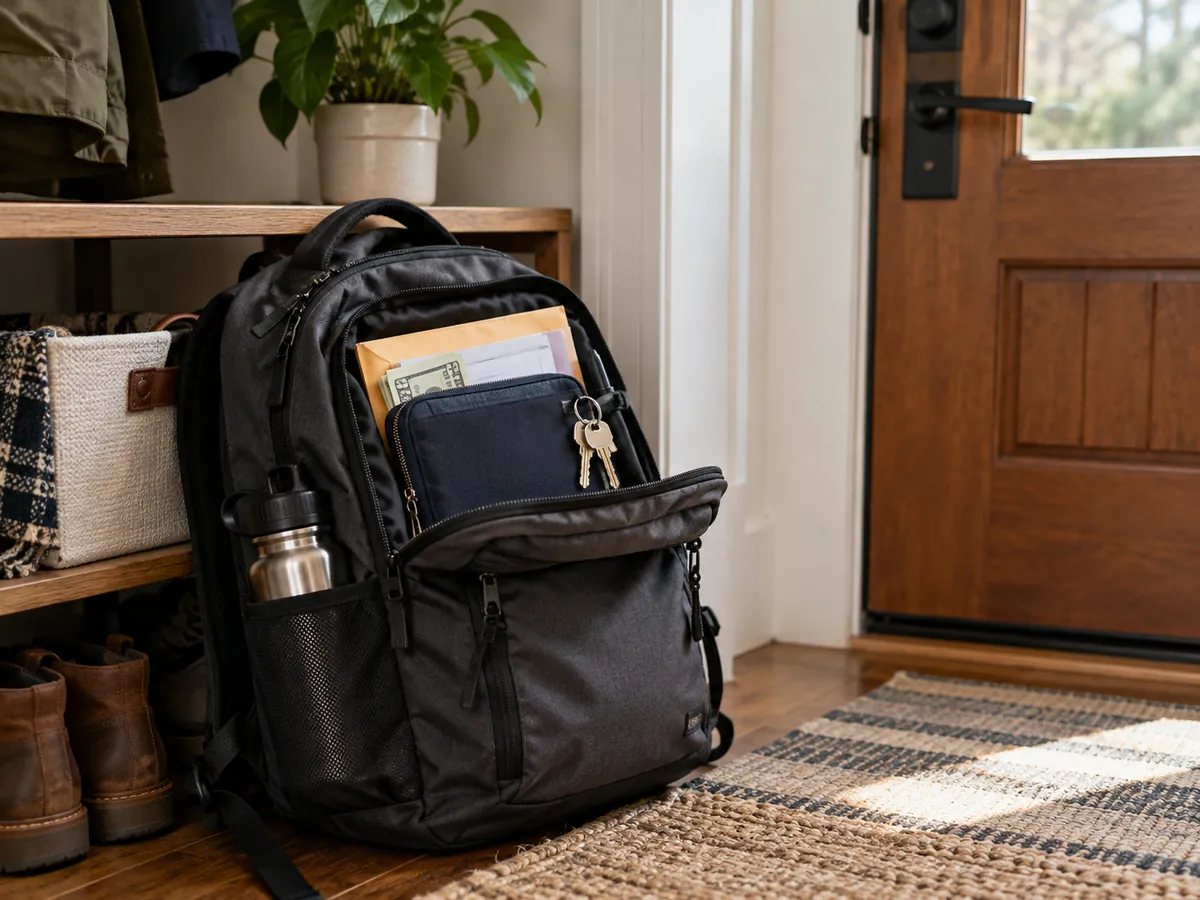
Then test something more important: can you find one insurance number and one vital record from another location, using a device that isn't your main phone? A few minutes of practice will expose missing passwords, outdated contact information, and files stored only on an old computer.
Review the packet periodically, particularly after changing jobs, insurance policies, vehicles, addresses, or household circumstances. Replace expired copies when necessary and securely dispose of versions you no longer need.
Preparedness doesn't end when you get out of the danger area. There's still the ordinary work of feeding people, finding somewhere to stay, paying bills, getting medication, and rebuilding routines. A small amount of cash and a carefully organized set of records won't solve everything, but they'll let you deal with those problems without first having to reconstruct your life from memory.