Earthquake Preparedness at Home: What to Secure Before the Shaking Starts

A lot of earthquake advice begins with what to do when the floor moves. That's important, but it skips something you can handle on an ordinary Saturday: making your house less likely to hurt you in the first place.
You may not think of your town as earthquake country. Still, damaging shaking is possible in more places than the West Coast, and the things that fall in a house are remarkably similar wherever you live. A bookcase in the hallway doesn't know whether the earthquake came from a California fault or one hundreds of miles away.
An earthquake is different from a storm you can follow on a forecast. There may be little or no useful warning. You don't have time to move the furniture, hunt down shoes, or teach the family where to go once the shaking begins. That work belongs to a quieter day.
Look at your rooms from the floor up
Stand in your bedroom doorway and imagine the room moving sharply sideways. What's above the bed? A framed mirror? Floating shelves? A tall dresser that could fall toward someone? Now look at the path from the bed to the door. Is there a chance broken glass or overturned furniture could block it?
The answer is not to empty your home. It's to deal with the few objects that could cause the most harm.
Secure tall bookshelves and dressers to wall framing with hardware suited to the furniture and the wall. Move heavy objects to lower shelves. Keep large mirrors and heavy framed artwork away from places where people sleep or sit. Don't leave glass bottles and heavy ceramics lined up above the kitchen counter, where they can become falling hazards.
Children's rooms deserve a second look. A dresser isn't safer because it's small, and a crib or bed should not sit beneath a shelf full of books and decorations. Furniture-tip safety matters even when there is no earthquake at all.
Walk through the house again after you make changes. The goal is to have fewer things that can fall, slide, shatter, or trap someone, not to make every room look like a supply closet.
Know which parts of the house deserve professional attention
Some fixes are ordinary homeowner work. Others involve structural connections and utilities where a guess can make things worse.
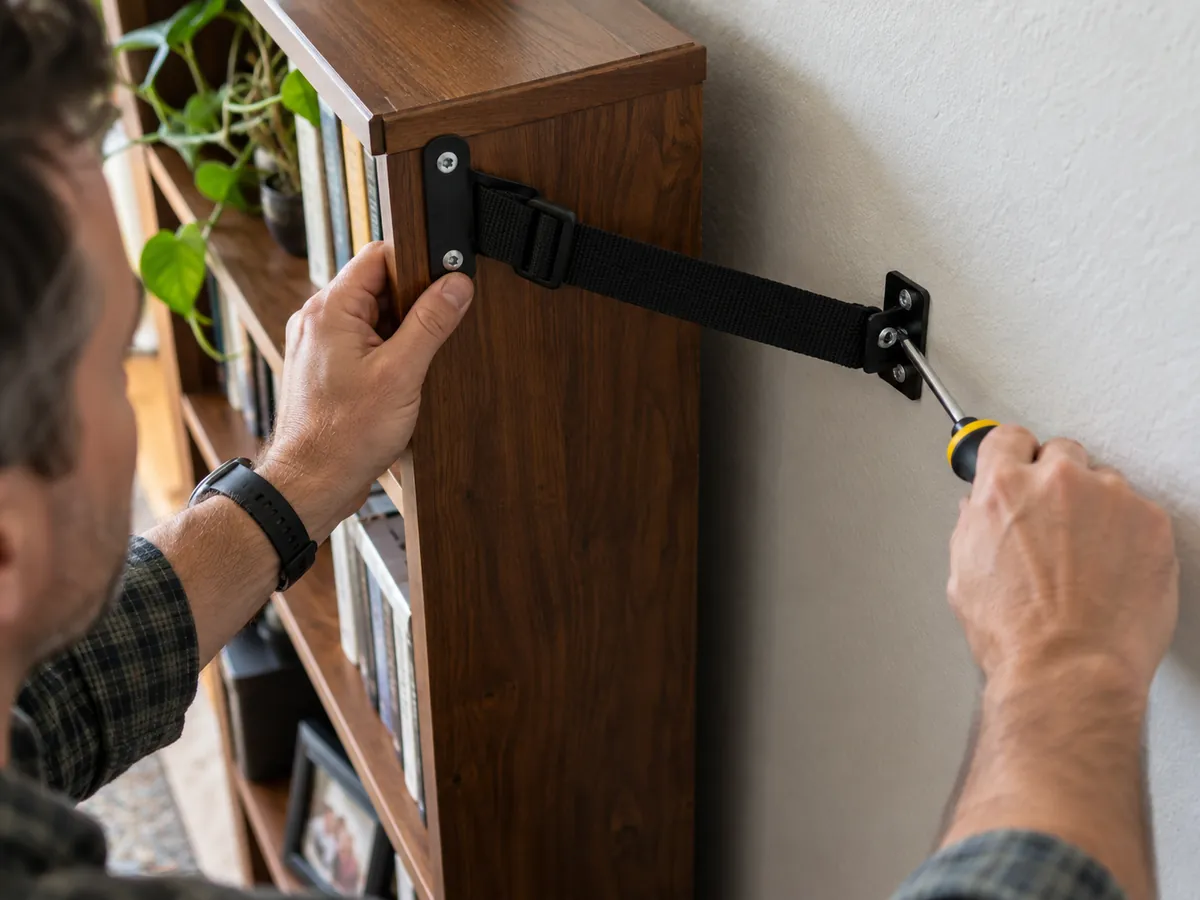
An older house may benefit from evaluation of its foundation anchoring, cripple walls, masonry chimney, or other vulnerabilities. Water heaters need appropriate restraints in earthquake-prone locations, and gas connections require particular care. Local building age, construction type, and seismic exposure make a difference.
If you're unsure whether your home needs structural retrofit work, ask a qualified local professional rather than choosing hardware from a photo on the internet. The inspection cost can be far smaller than the damage from installing the wrong system or missing a serious weakness.
A masonry chimney deserves respect even if the fireplace has been unused for years. Falling brick can damage the roof and the ground around the house. During shaking, stay away from fireplaces and exterior masonry.
Practice the response before anyone needs it
The central instruction indoors is simple: Drop, Cover, and Hold On. Drop to your hands and knees, get beneath a sturdy table or desk if one is nearby, protect your head and neck, and hold on until the shaking stops. If you cannot get under sturdy furniture, stay low and protect your head and neck with your arms. Adapt the response to mobility needs rather than trying to force everyone into the same movement.
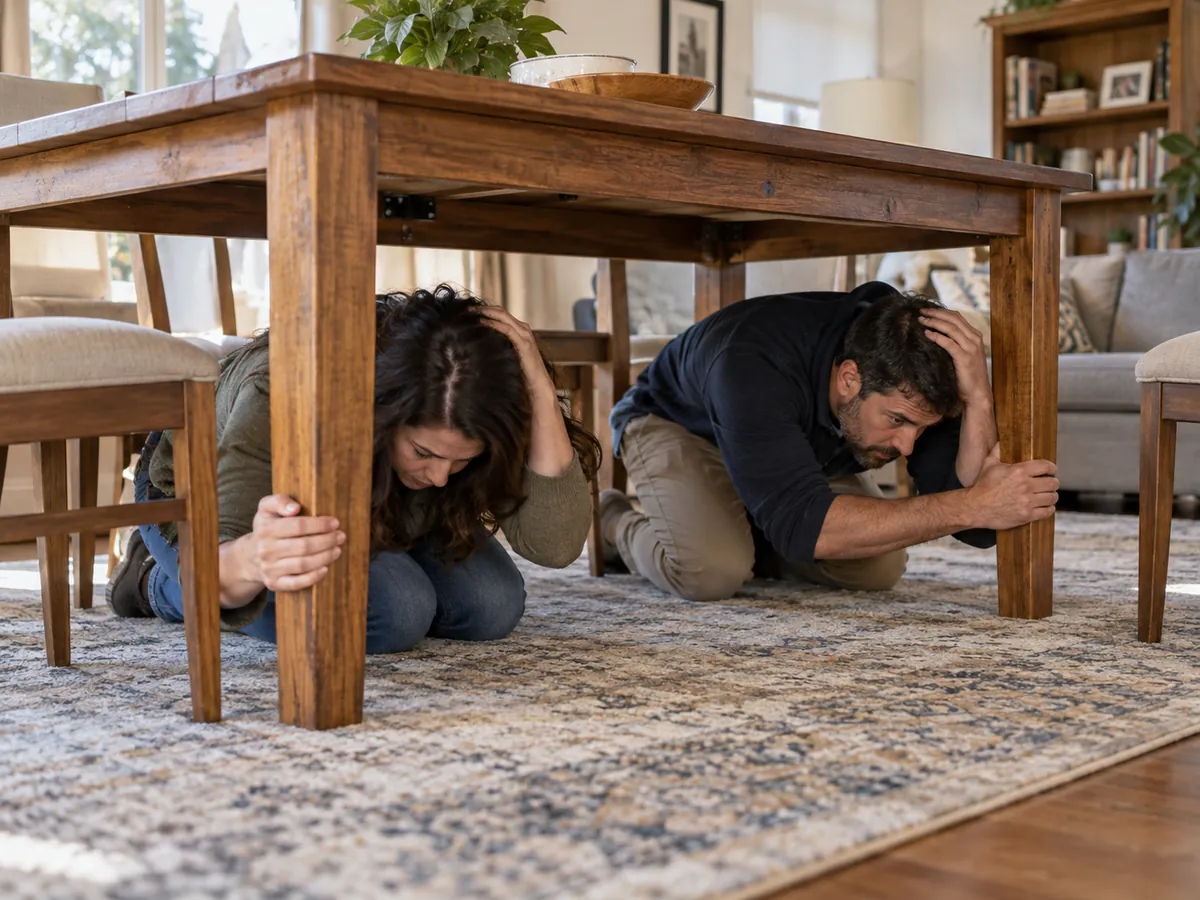
Don't run through the house looking for an exit. Don't stand in a doorway because somebody once told you it's the strongest place. Modern doorways are not reliably safer, and getting to one may take you past falling objects or glass.
If you're in bed, stay there and use a pillow to protect your head unless there is an immediate hazard where you are. If you're outside, move away from buildings, trees, and utility lines when you can do so safely. If you're driving, pull over in a safe location away from overpasses, bridges, and power lines, and remain in the vehicle until the shaking stops.
Try the response in the rooms where people spend time. Have everyone identify the closest sturdy cover in the living room, bedrooms, and workspaces. It takes minutes, and it makes the action less unfamiliar when someone is frightened.
Keep shoes and light where you can actually reach them
A nighttime earthquake brings a problem that's easy to miss when you're writing a shopping list. The power may go off. Glass may break. You may be barefoot.
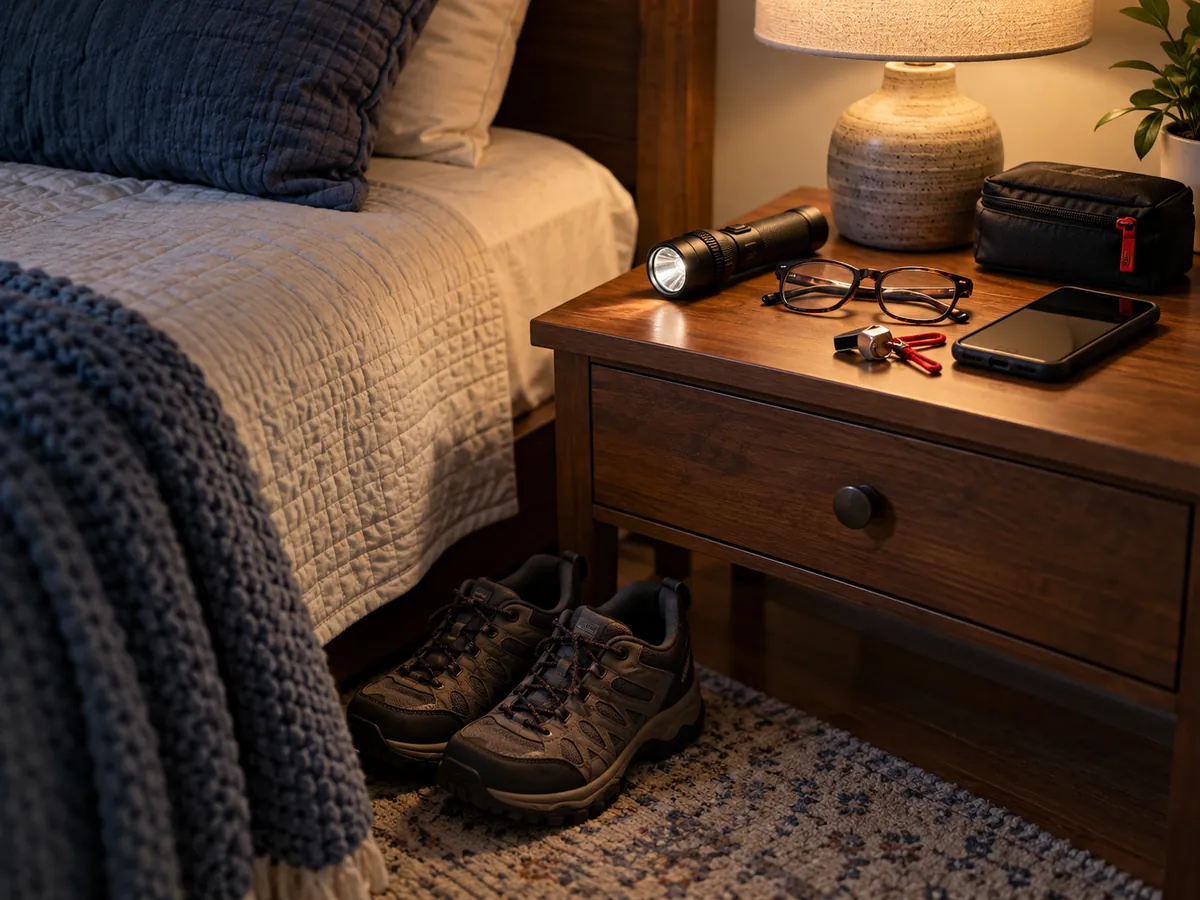
Sturdy shoes and a flashlight next to the bed are more useful than emergency gear stored across a dark hallway. Keep a light where someone can find it without searching through a drawer, and avoid relying entirely on a phone that may have slid behind the furniture.
The same reasoning applies to people who use glasses, hearing aids, medications, or mobility equipment. Put those necessities where they can be reached after shaking without exposing yourself to more danger.
If you lose power and water after the event, the first day's decisions become much easier with a working 72-hour household outage plan. Earthquake-specific preparation should build on that baseline, not replace it.
Have a way to communicate when everybody is in different places
An earthquake doesn't wait until the whole family is home. One person may be at work while another is driving or picking up a child.
Agree on a nearby meeting point and a second location outside the immediate neighborhood. Choose an out-of-area contact that household members can text or call with a brief status update. Write the numbers down as well as saving them in phones. Local phone networks may be congested, and short texts can sometimes go through when calls are difficult.
Schools and workplaces have their own emergency procedures. Know how your child's school communicates after an incident and whether a parent can simply arrive or must wait for instructions. A plan that depends on everybody driving to the same place immediately can create more confusion, especially if roads, bridges, or traffic signals are damaged.
After the shaking, slow down before moving
When the ground stops moving, there is a powerful urge to get outside immediately. Sometimes you do need to leave, particularly when you see severe structural damage, fire, or another immediate danger. But rushing barefoot through broken glass or under a damaged facade creates a second emergency.
Check yourself and those nearby for injuries. Put on shoes. Look for fallen objects and broken glass. Expect aftershocks, and be ready to Drop, Cover, and Hold On again.
If you smell gas, hear hissing, or suspect a leak, leave the area and contact the gas utility or emergency services from a safe place. Do not operate switches, use flames, or start electrical equipment where gas may be present. Do not turn gas service back on yourself after it has been shut off. Follow your utility's instructions.
Stay clear of downed lines and damaged buildings. Don't enter a visibly compromised structure to retrieve belongings. A building can look mostly familiar from the street and still contain hidden damage.
The safest room decision can also change depending on the emergency. During a tornado, for example, the right shelter is often a small, interior, windowless room on the lowest level, as explained in tornado safety without a basement. Earthquakes require immediate protection from falling debris where you already are. Treating those different hazards as interchangeable is a mistake.
The outdoor risks are different
Loose masonry, fallen trees, damaged utility poles, and glass from upper windows can turn a familiar sidewalk into a dangerous route. Give buildings and walls a wide berth when possible. If authorities are checking bridges or overpasses, don't try to slip around closures.
Near the coast, a strong or long earthquake can be a tsunami warning. In a tsunami hazard zone, move inland or to higher ground as soon as the shaking stops and it's safe to move. Do not wait to see the ocean change or rely solely on an official alert. Inland households should focus on their local hazards, including possible landslides, damaged infrastructure, and aftershocks.
If water pipes break or a boil-water advisory is issued, switch to safe stored water. Do not assume a clear-looking tap means the water system has escaped damage.
Give the house one realistic earthquake check
You don't need to buy an enormous kit or retrofit every room at once. Pick the bedroom furniture that needs anchoring. Look at the kitchen shelves. Find the shoes and flashlights. Practice cover in each main room. Review the shutoff information for your utilities without manipulating anything unnecessarily.
Then write down the work that requires a professional. It's better to have three important changes finished than a twelve-page shopping list that sits untouched.
Most earthquake preparation isn't dramatic. It's removing a heavy frame from above the bed, attaching a bookcase correctly, and making sure a frightened person doesn't have to invent a plan while the house is moving.