How to Cook When You Have No Electricity or Gas
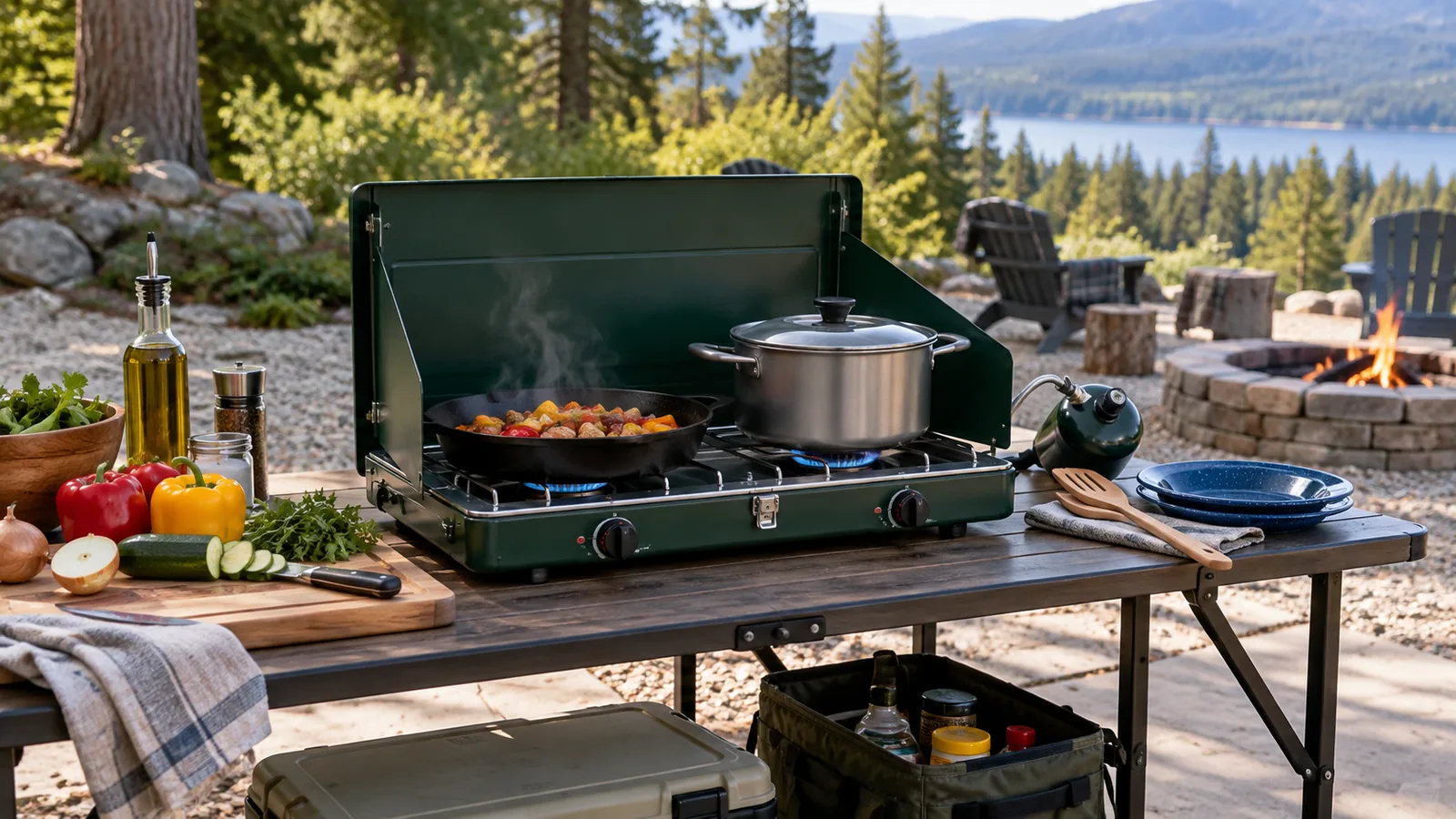
A pantry can be full of food and still fail at dinnertime. The rice needs boiling. The pasta needs boiling. Dried beans need much longer than either one. If the stove is dead and the tap isn't working, those inexpensive staples suddenly have two costs that don't appear on the grocery receipt: fuel and water.
Cooking through an outage starts with a less exciting question than which camp stove to buy: What meals can you make without a flame at all?
For the first day, that answer may be peanut butter and crackers, canned beans, fruit, tortillas, or shelf-stable foods your family already likes. They're not glamorous meals. They also don't require you to operate fuel-burning equipment while exhausted, distracted, or sitting in a house with no ventilation.
Separate 'ready to eat' from 'needs heat'
Look through the emergency pantry and divide foods into three groups. The first can be eaten straight from the package. The second needs heating for taste but is already cooked. The third requires substantial cooking before it is safe or palatable.
That distinction becomes important when fuel is limited. Commercially canned beans are generally already cooked. Dried kidney beans, by contrast, require proper boiling and cooking; slow, inadequate heating can leave naturally occurring toxins. Don't attempt to make dried kidney beans safe with a low-temperature improvised method.
Ready-to-eat foods are also useful when water quality is uncertain. A meal built around dry pasta and rice needs clean cooking water, and the dishes require cleanup afterward. A can of prepared soup or beans may let you conserve both water and fuel for other needs.
Our 30-day budget pantry guide explains why a balanced emergency inventory includes canned food alongside cheaper dry staples. When you review the pantry, count meals you can actually make under the outage conditions, not just packages on a shelf.
Choose cooking equipment for where it will be used
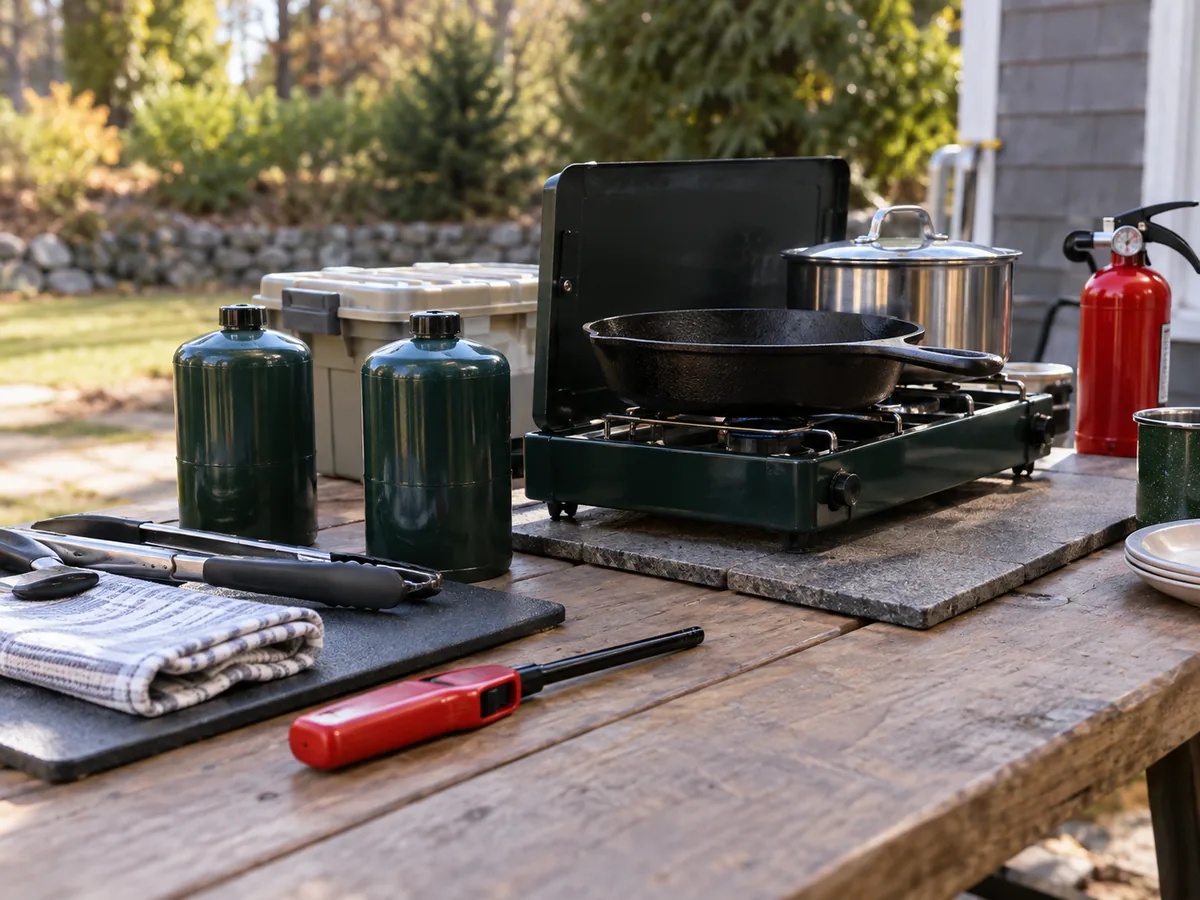
There is a sharp safety difference between preparing food and generating combustion fumes. Charcoal grills, camp stoves, propane burners not approved for indoor operation, and gasoline generators must never be used in a house, garage, tent, or other enclosed or partially enclosed space. Carbon monoxide can accumulate without a smell and can be fatal.
For outdoor cooking, a simple propane camp stove is often more controllable than an open fire. It can boil water and heat a pot without collecting firewood. But it still needs a level, stable surface, safe clearance from combustible materials, compatible fuel, and protection from children and pets. Read the instructions for your particular stove, including its weather and ventilation restrictions. Never use it indoors.
A charcoal grill works outdoors for familiar grilling tasks. It is less convenient for precise heat control, and its embers remain hot long after the meal. It should not be moved into a garage or doorway because of rain. A wood fire may be useful where allowed, but burn restrictions, smoke, wet fuel, and land-use rules can make it a poor emergency option.
One-burner equipment is enough for many household meals. A fancy multi-burner outdoor kitchen takes more storage space and can encourage you to cook elaborate meals when you should be conserving fuel. Start with what can safely heat a pot of water, then expand only if the household actually needs more.
A stove is a system, not a single purchase
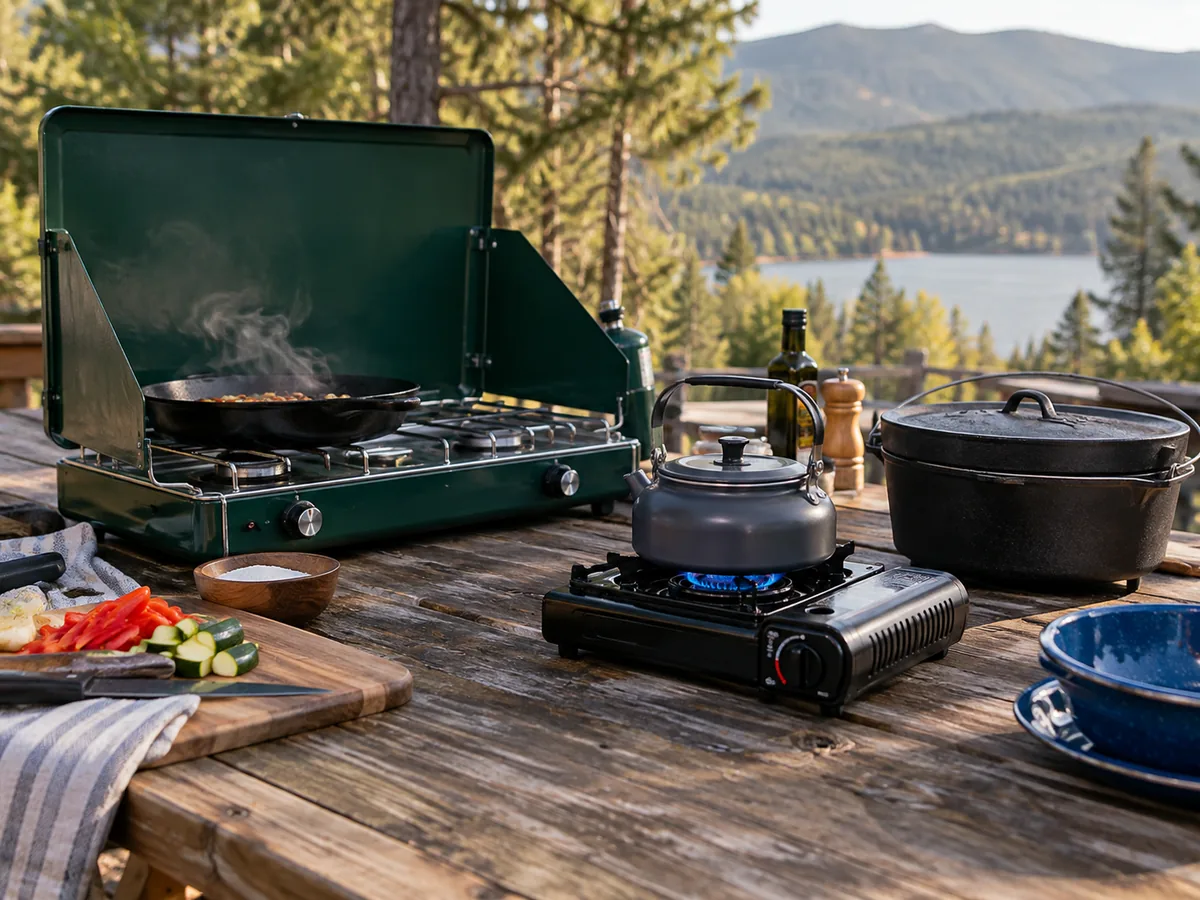
The burner is only one part of the setup. Check the fuel canisters, the method for lighting the stove, a stable table or surface, a pot sized for the flame, and a way to handle hot cookware. Keep a manual can opener with food supplies. If you'll be cooking after dark, set up a battery light that doesn't depend on the stove's flames.
Fuel amounts cannot be predicted accurately from the number of meal packages alone. Outside temperature, wind, water starting temperature, pot size, burner output, and cooking method all change consumption. Try the actual equipment outdoors on a normal day, prepare one of your planned meals, and note how much fuel and time it takes.
Follow fuel manufacturers' storage instructions. Do not keep spare cylinders near heat sources or in living spaces where prohibited by instructions or code. If you smell gas, stop, avoid ignition sources, and follow the equipment's emergency directions.
A car, patio, or open garage is not automatically a safe kitchen location. Keep combustion equipment well away from doors, windows, vents, and overhangs as directed by the maker. If severe weather makes outdoor cooking unsafe, switch to no-cook food rather than bringing the stove inside.
Plan meals around water and cleanup
Some emergency recipes assume a generous supply of clean water and a sink full of running water. That is fine for a weekend campground with serviced facilities. It is less helpful when municipal water has stopped.
Pasta usually requires cooking water that you must heat, handle, and perhaps drain. Rice needs measured safe water and a period of covered cooking. Canned beans can be combined with canned vegetables and a shelf-stable sauce with much less preparation. Tortillas, nut butter, crackers, and ready-to-eat proteins need almost none.
The water-storage container guide can help you choose a dispenser that makes measured pours practical. If your water supply is under a boil-water advisory, follow the local authority's instructions before using it for drinking, cooking, or brushing teeth. Boiling does not remove every chemical contaminant.
Use a clean prep surface and utensils. Wash hands with soap and safe water before handling food. If water is scarce, reserve it for handwashing and critical sanitation first, then reduce dirty cookware by preparing simple one-pot meals. Disposable serving items can be convenient in a short emergency, but they don't eliminate the need for hygienic food handling.
Build three realistic dinners, not thirty fantasy recipes
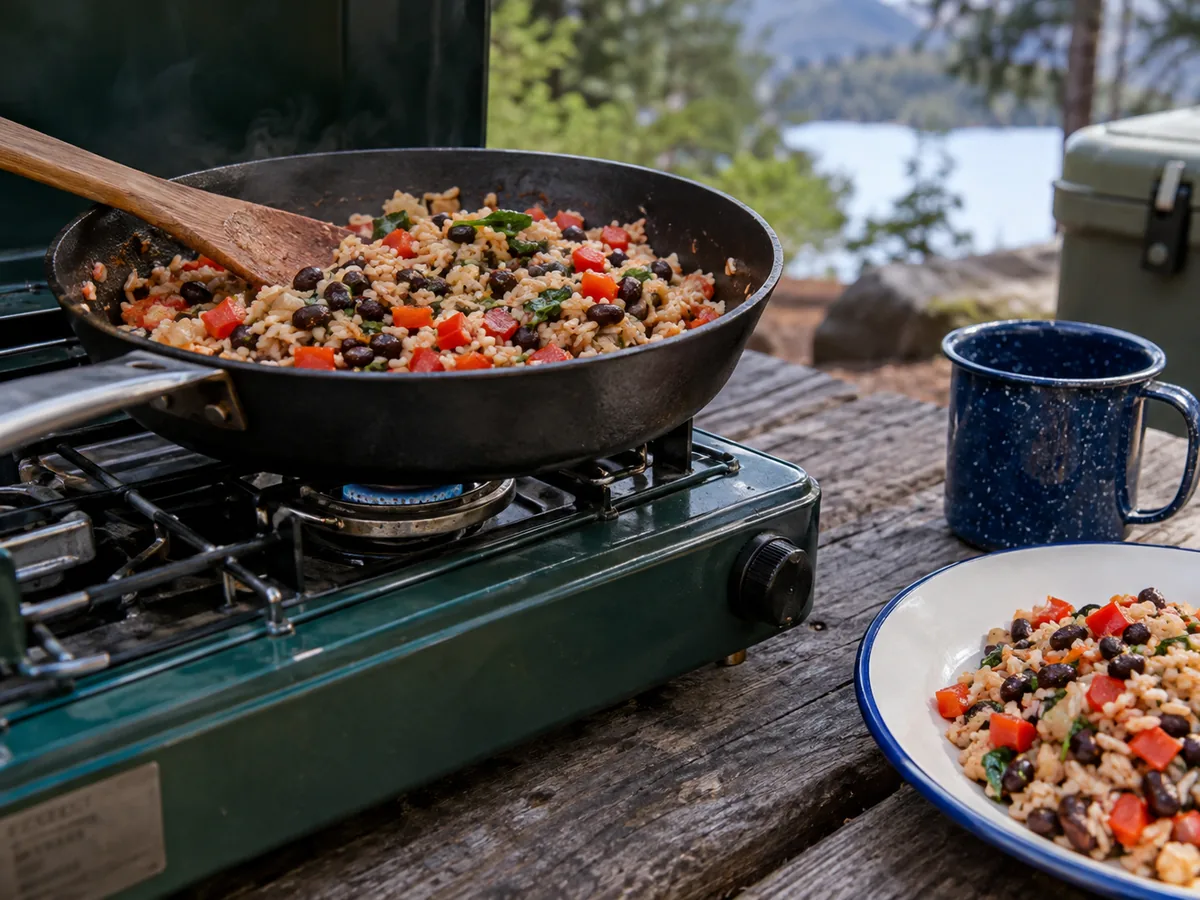
One practical outdoor-cooking dinner might combine canned black beans, canned tomatoes, spices, and quick-cooking rice. Another might use canned chicken in a prepared soup. A third might be heated tortillas with beans and a shelf-stable filling. Use ingredients you can store and tolerate, and choose meals that fit your family's dietary restrictions.
Before the outage, cook each meal once with the exact stove and pot you plan to use, in a safe outdoor location. Count portions. Record fuel and water used. Notice which items are missing from the equipment box. If everyone dislikes the finished meal, change the plan while grocery stores are still open.
A breakfast or lunch doesn't need to be hot just because normal routines make it that way. Oatmeal prepared with safe cold water is not the same as cooked oatmeal, but commercially ready-to-eat cereal, shelf-stable milk, nut butter, fruit, and crackers are simple alternatives. Choose foods according to package directions and food-safety requirements rather than inventing soaking methods for products that need cooking.
When the outage lasts longer, don't forget refrigeration. Any leftovers made without reliable cooling can become unsafe quickly. Prepare portions you will eat promptly, and follow standard temperature and time guidance for perishable foods.
The best outage meal is one you can still make when the plan changes
Your primary stove might be unusable because of heavy rain or a burn ban. Fuel might run out. Someone might become ill, or the water supply might be questionable. That is why a good pantry includes an easy, no-cook backup meal for every person in the house, not just a list of dishes intended for the camp stove.
Store those meals together with a manual opener, clean utensils, and safe water. Test the cooking gear before you need it. If local conditions make outdoor combustion unsafe, leave the stove packed away.
The point isn't to recreate the entire kitchen. It is to feed people reliably without introducing an avoidable fire, carbon monoxide, water, or food-safety problem. A small set of tested meals is worth more than a shelf of equipment nobody has used.