How to Communicate When Cell Towers and Internet Go Down
Most people think they have a communication plan because everybody in the family owns a phone.
That works right up until it does not.
Sometimes the network is down. Sometimes power is out long enough that devices go dead one by one. Sometimes the phones technically work, but the network is overloaded and calls will not go through. And sometimes the problem is smaller and more ordinary than a regional disaster. Somebody is driving home, roads are blocked, charging is low, and the usual habits that make life feel organized stop being reliable.
A good communication plan does not begin with gadgets. It begins with a few decisions made before anyone is stressed.
Start with one written family plan
If all the important phone numbers live only inside the phone, you do not really have them.
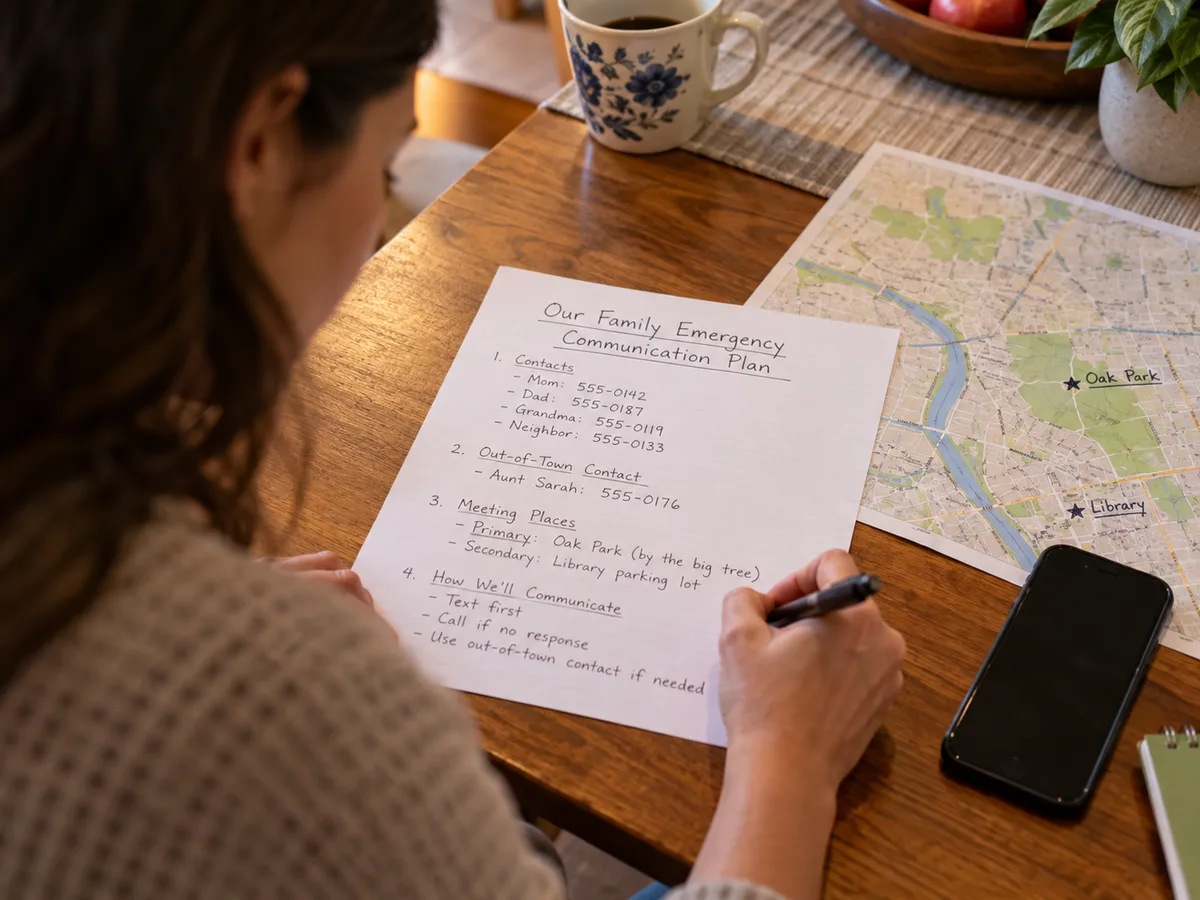
Write down the contact information that matters. That should include household members, a nearby friend or neighbor, one out-of-town contact, doctors or caregivers if needed, schools, and any place the family might need to coordinate with during a disruption.
Keep the list short enough to be useful. This is not a directory. It is a practical contact sheet.
Then add two meeting locations. One should be close to home for a fast regroup. The other should be a little farther away in case your neighborhood is inaccessible or someone is already across town when trouble starts.
During the first 72 hours without electricity or running water, confusion can build long before the situation becomes dramatic. People forget what they meant to do. A sheet of paper does not.
Text first, call second
When networks are strained, text messages often have a better chance of getting through than voice calls. They use less bandwidth, they do not require both people to answer at the same moment, and they leave a record of what was said.
That means your family plan should be simple.
Send a short text.
Say where you are.
Say where you are going.
Say what you need.
A message like “At work. Leaving now. Going to Oak Park. Phone at 40%.” is more useful than a long explanation that never sends.
If texts are failing too, a call is still worth trying. But people should know in advance that a missed call is not proof of a crisis. Sometimes it is just a weak network.
Pick one out-of-town contact
This step gets skipped more than it should.
A relative or friend in another city can serve as the message hub if local communication is chaotic. One family member reaches that person. Another family member reaches the same person from somewhere else. Now both sides know the other is safe even if they cannot connect directly yet.
The out-of-town contact needs to know this role in advance. Do not surprise them in the middle of a storm. Tell them what kind of messages you may send and what information you want them to relay.
That tiny bit of structure removes a lot of confusion.
Keep the right tools together
Communication gear is easier to use when it lives in one place. Scattered equipment tends to stay scattered.
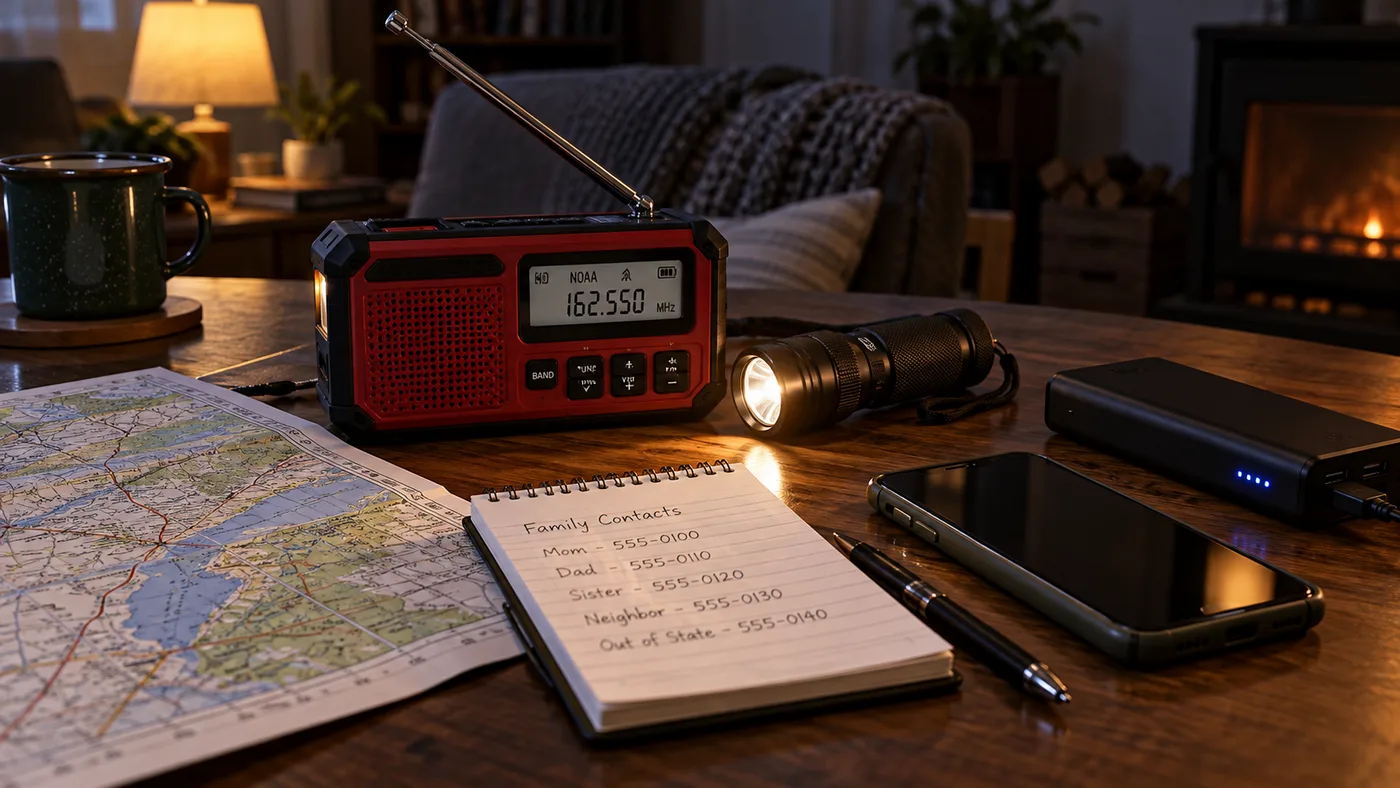
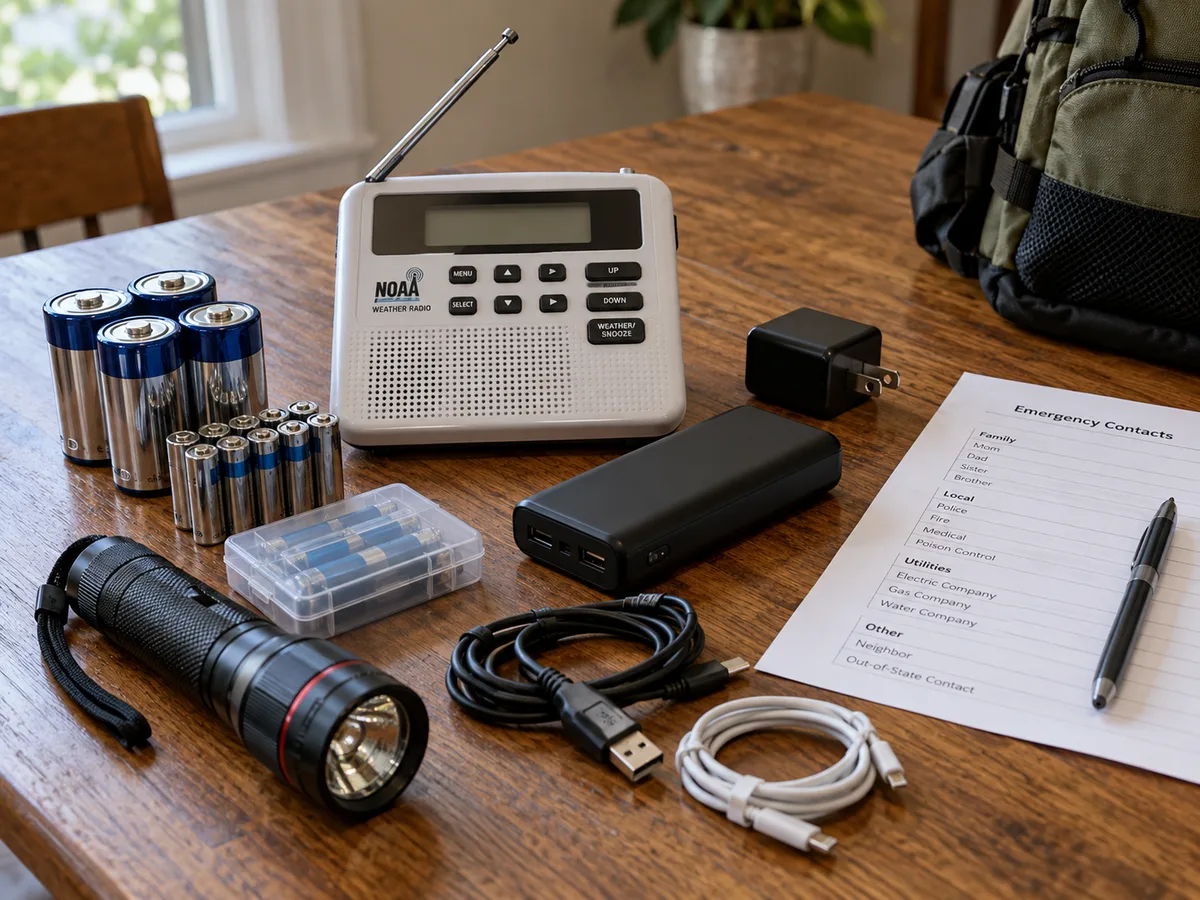
A practical household kit might include:
- a weather radio with alert capability
- a flashlight
- a power bank and cables
- spare batteries if your radio uses them
- the written contact list
- a paper map of your local area
- a pen and small notebook
You do not need to turn this into a hobby. You just need a small group of tools that still works when the comfortable digital layer disappears.
A weather radio matters because your phone is not your only source of information. If internet service is gone or local alerts stop arriving, a radio gives you another path to warnings and updates. Away from home, it belongs alongside a vehicle emergency kit that can withstand summer heat, because a communication problem on the road can quickly become a transportation problem too.
Charging deserves more attention than it gets
A dead phone in your hand is not a communication device. It is just a rectangle.
Keep at least one power bank charged. Check it often enough that it is not sitting in a drawer empty for six months. Put the right cables with it. If more than one person depends on it, consider a second one rather than assuming the family will calmly take turns around a single battery pack.
Use low-power habits when outages drag on. Reduce screen brightness. Turn off unnecessary apps. Charge when you can, not when the battery is already near zero.
This is simple, but it changes outcomes.
Paper maps are not old-fashioned when the phone is failing
People joke about paper maps until the phone is at 8 percent, the signal is weak, and a detour sends them somewhere unfamiliar.
You do not need an atlas collection. One decent local or regional map is enough for most households. Mark the roads you would most likely use to reach work, school, relatives, your meeting point, and a route out of town if needed.
The point is not nostalgia. The point is independence.
A map also helps when you are trying to explain a route over a scratchy call or when the person receiving the message is stressed and not thinking clearly.
Decide how your household will share updates
Some families talk too much in an emergency. Others say almost nothing. Neither extreme is helpful.
Set a basic rule. For example: if someone is away from home during an outage or emergency, they send an update when they leave, when they arrive, and if the plan changes. That is enough to keep everybody informed without creating a flood of unnecessary messages.
Households with teenagers especially benefit from this because it removes the guesswork. Nobody has to decide in the moment what counts as enough communication. The standard is already there.
Think about local communication too
If the whole family is at home and the power is out, internal communication matters more than people realize.
Who is monitoring the radio?
Who is charging devices when generator or vehicle power is available?
Where are notes being left if someone steps out?
If the house is noisy, dark, or crowded, even simple coordination becomes clumsy. A notebook on the kitchen table solves more than people expect. Write where someone went. Write what time they left. Write what errand they are handling. Keep it plain.

Practice once while nothing is wrong
Preparedness plans improve quickly when you test them in a low-stakes way.
Try one evening with the Wi-Fi off and the phones charging from battery packs instead of wall chargers. Pull out the radio. Find the paper contact sheet. See whether your meeting locations still make sense. Hand the map to the person least likely to use one and ask them to trace the route.
That kind of trial reveals the obvious gaps. Maybe nobody knows where the spare cables are. Maybe the weather radio needs batteries you do not keep in the house. Maybe the contact list is buried in a drawer behind old takeout menus.
That is useful information.
Keep the plan boring
People often imagine communication planning as something dramatic, almost tactical. Most of the time it is not.
It is a list of names.
A couple of places.
A charged battery.
A radio.
A map.
A habit of sending short updates.
That is why it works.
The best emergency communication plan usually looks a little dull sitting on the table. Then a storm rolls through, the network acts up, and suddenly the dull plan is the only organized thing in the room.