15 First Aid Skills Every Adult Should Know
There is a difference between owning a first-aid kit and knowing what to do when somebody needs it. A box of supplies helps with a scraped knee. It doesn't tell you whether the person who just collapsed needs an ambulance, why a bleeding wound won't stop, or what to do while help is coming.
You don't need to become a paramedic to be useful in those minutes. You do need to recognize the emergencies that cannot wait, avoid making them worse, and practice a handful of physical skills before you need them. The list below is a starting point for that practice, not a replacement for a certified first-aid, CPR, and AED class. If you choose just one preparedness course this year, that would be an excellent one.
First, know what comes before the bandages
1. Check that helping won't create another victim. Before approaching someone, look for traffic, electricity, fire, fumes, unstable structures, and other hazards. A person unconscious beside a fallen electrical cable needs trained responders, not a second person lying beside them. Call 911 when necessary and follow the dispatcher's instructions.
2. Recognize an unresponsive person who isn't breathing normally. Shout and gently tap, check for normal breathing without spending precious time trying to find a pulse, and get someone to call 911 and retrieve an AED. Gasping is not normal breathing. If the person is unresponsive and not breathing normally, begin CPR as directed by the dispatcher.
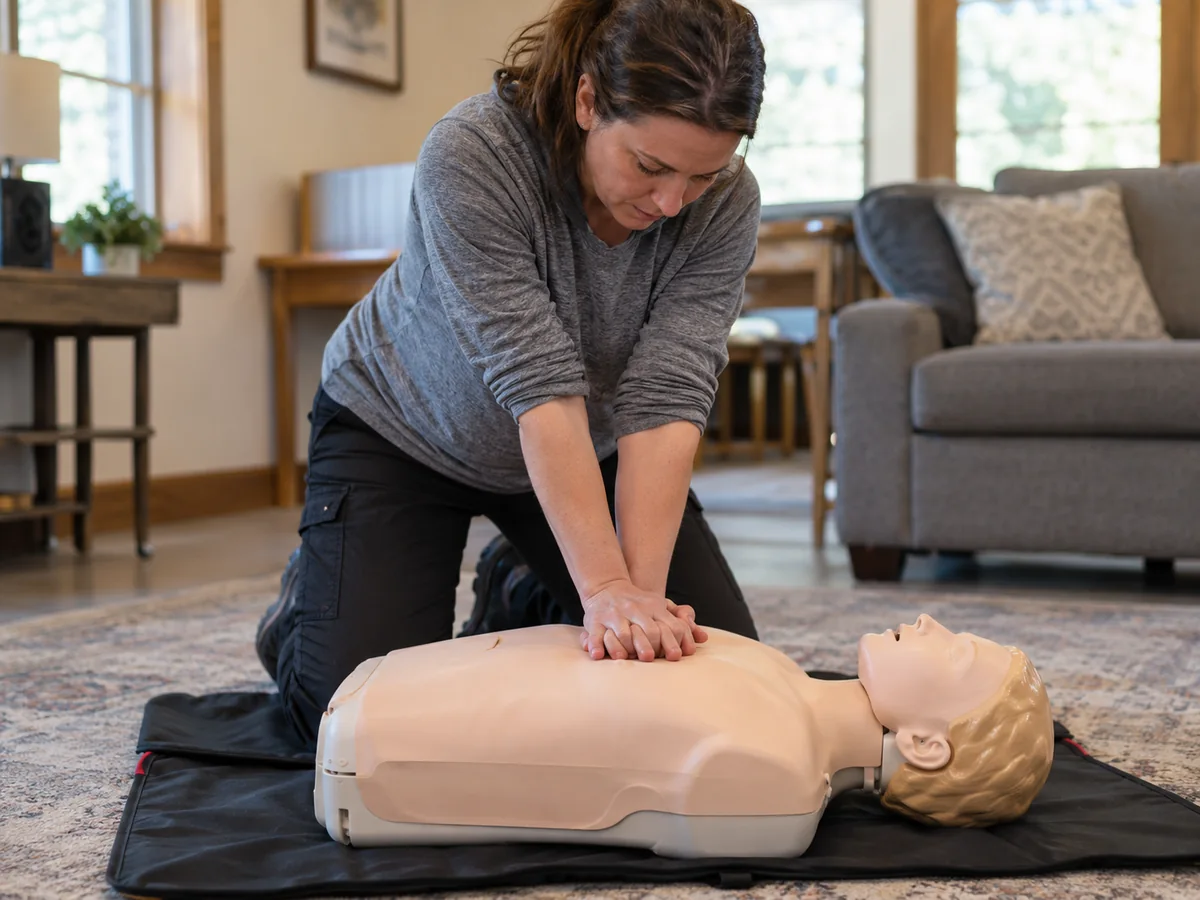
3. Learn high-quality CPR. For an adult, hands-only CPR is a useful response when you're not trained to give rescue breaths: press hard and fast in the center of the chest at about 100 to 120 compressions a minute, allowing the chest to rise between compressions. Trained rescuers may use compressions and breaths. Technique differs for children and infants, one reason an actual training mannequin matters. Reading a paragraph will not teach you what proper pressure feels like.
4. Use an AED without freezing. Turn it on and follow its voice prompts. AEDs are designed to coach bystanders. Expose the chest, attach pads as illustrated, and make sure nobody touches the person when the machine analyzes the rhythm or delivers a shock. Continue CPR when the AED tells you to. The machine decides whether a shock is advised; the rescuer doesn't.
Put the AED location, serious allergy details, and emergency contact information on your home emergency preparedness checklist. A well-stocked cabinet is only helpful if everyone knows who will call, where the equipment is, and what happens next.
Bleeding, wounds, and burns
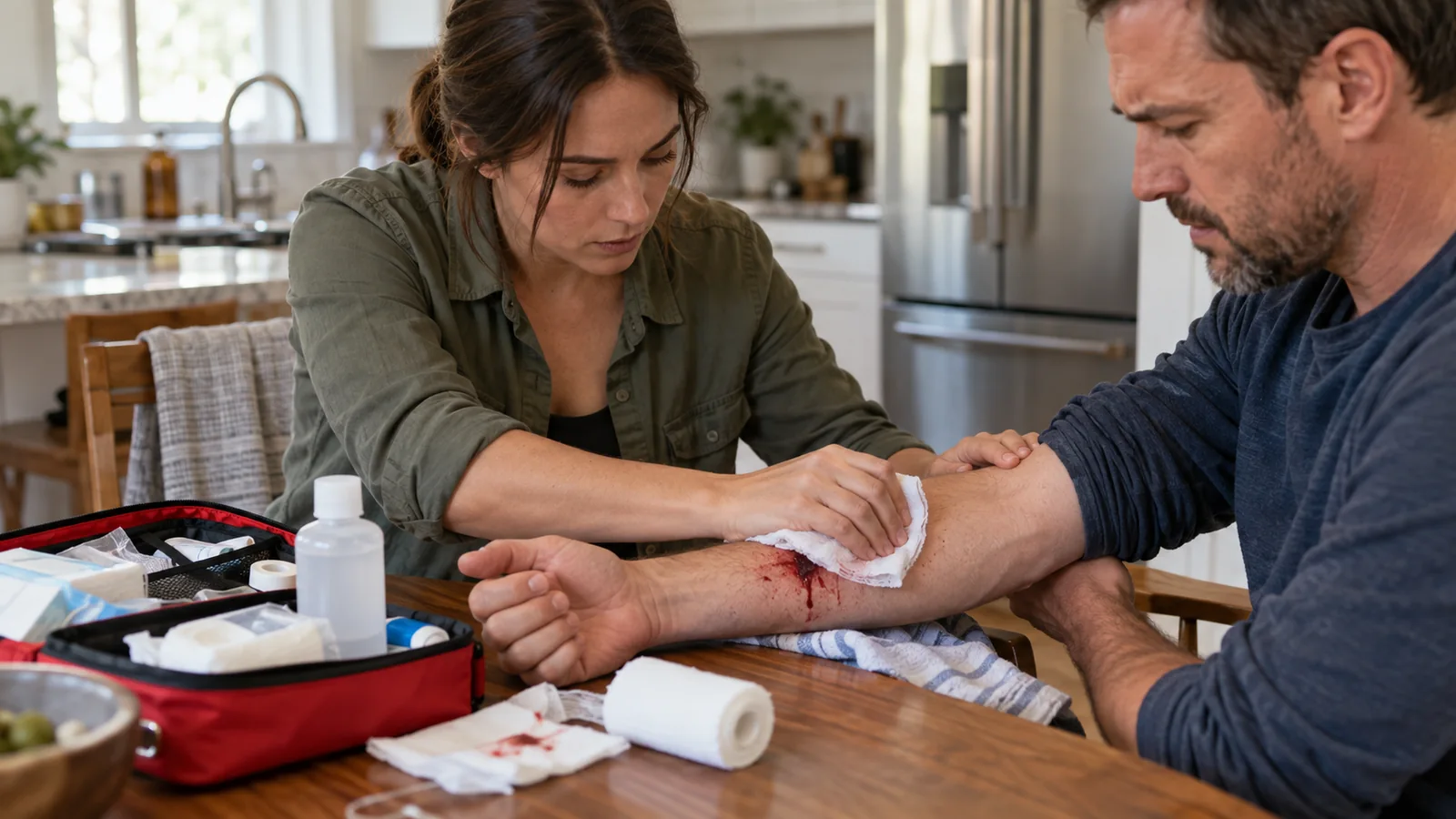
5. Stop life-threatening bleeding. Blood pouring or spurting from an injury can become critical quickly. Call 911. Put on gloves if they're available and apply firm, direct pressure with gauze or a clean cloth. For life-threatening bleeding from an arm or leg, a commercial tourniquet may be appropriate; learn when and how to use one in a hands-on bleeding-control class. Don't waste time repeatedly lifting a dressing to look at the wound.
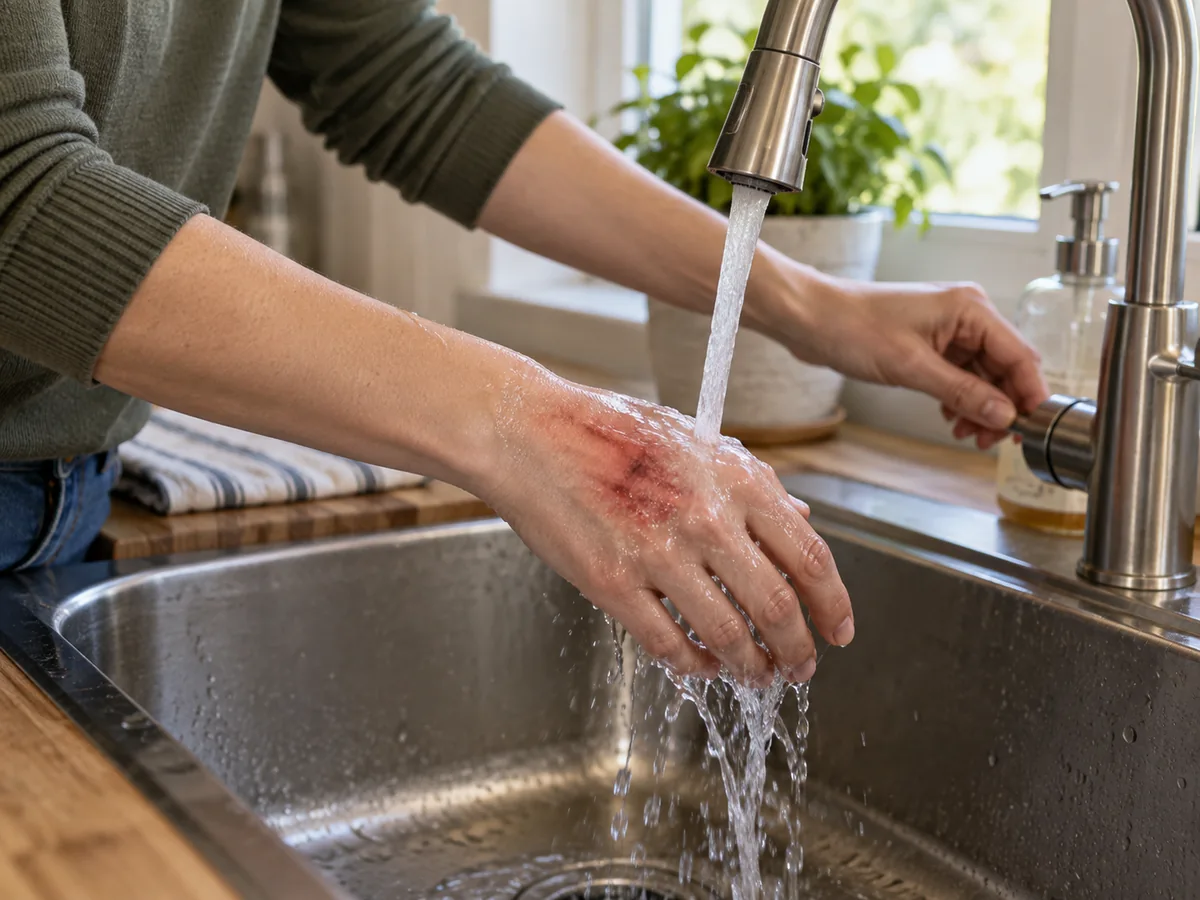
6. Clean a minor wound properly. For a small cut or scrape without severe bleeding, wash your hands, rinse the wound with clean running water, remove loose surface dirt gently, and cover it with a clean dressing. A wound that's deep, gaping, dirty, caused by an animal bite, or showing infection signs needs medical advice. Check whether tetanus protection is current.
7. Recognize when a burn needs emergency care. Cool a small thermal burn promptly under cool running water for 20 minutes when feasible, while preventing the person from getting chilled. Don't smear butter on it, apply ice directly, or pull away material stuck to the injury. Large or deep burns, burns involving the face, hands, genitals, major joints, electricity, or chemicals need urgent assessment. Serious burns can look less dramatic than they really are.
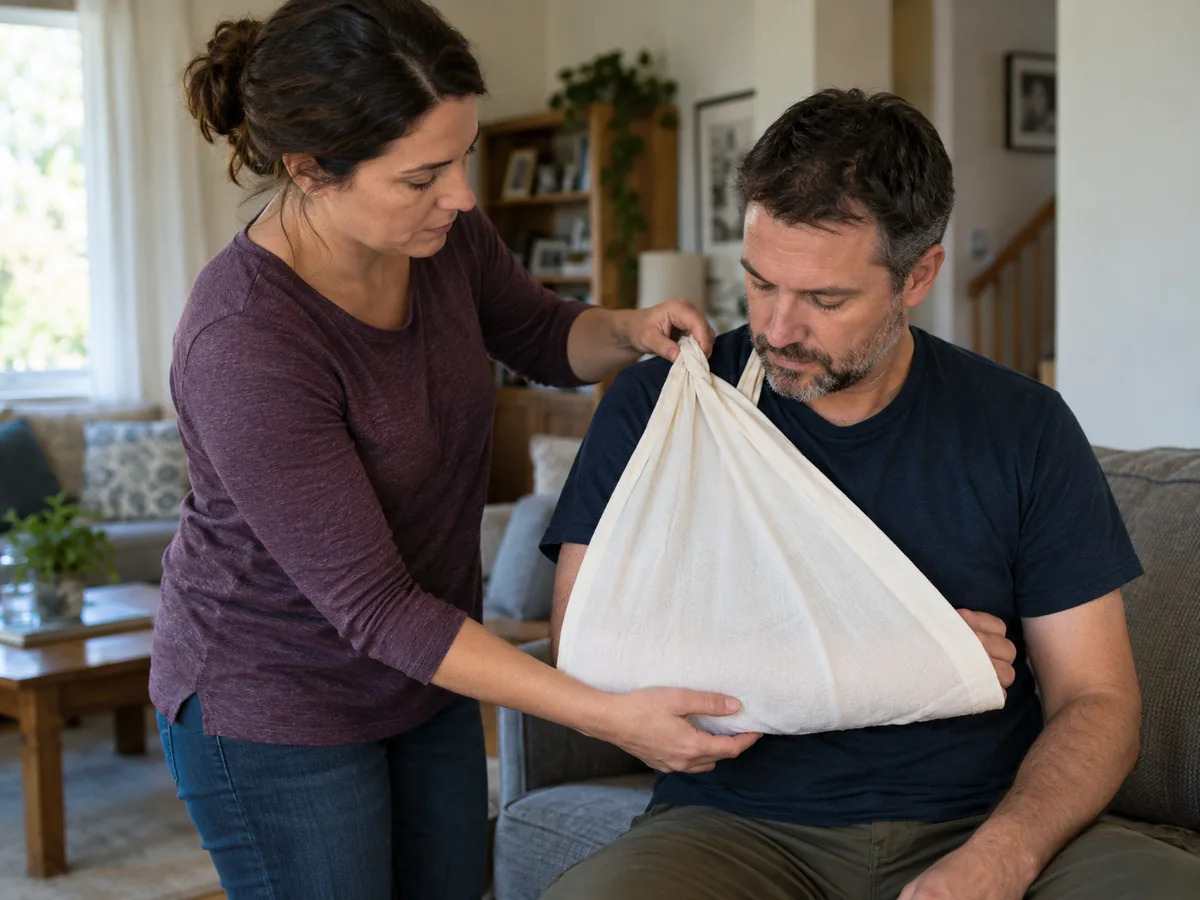
8. Protect an injured limb. If you suspect a fracture or serious sprain, stop the activity and avoid manipulating the limb back into place. Support it in the position found and seek appropriate evaluation. A visibly deformed limb, loss of circulation or sensation, or an open fracture warrants urgent medical help.
Breathing, allergies, and sudden illness
9. Recognize severe choking. Someone who cannot speak, breathe, or cough effectively needs immediate help. Call for emergency assistance and use the age-appropriate choking response you have practiced in training. Techniques differ for adults, children, and infants. If the person becomes unresponsive, begin CPR and follow the dispatcher's directions. Never make blind finger sweeps inside someone's mouth.
10. Recognize anaphylaxis. Trouble breathing, throat swelling, faintness, or rapidly progressing symptoms after exposure to an allergen may signal a life-threatening reaction. Call 911 immediately. If the person has a prescribed epinephrine auto-injector, help them use it according to its directions and your training. Improvement after epinephrine does not remove the need for emergency evaluation.
11. Spot a possible stroke. Remember face drooping, arm weakness, speech difficulty, and time to call 911. Sudden vision loss, severe balance trouble, or an unusual sudden severe headache may also matter. Note when the symptoms began or when the person was last known to be well. Do not wait to see whether the symptoms clear.
12. Respond to chest pain and possible heart attack. Chest pressure, pain radiating to the arm or jaw, shortness of breath, sweating, or nausea can signal a heart emergency. Call 911, help the person rest, and follow dispatcher guidance. Do not drive someone with concerning symptoms to the hospital yourself if an ambulance is available. Medication decisions, including aspirin, should follow individualized medical or dispatcher advice.
When the body can't regulate itself
13. Recognize heat emergencies. Dizziness, heavy sweating, weakness, headache, or nausea in hot conditions may indicate heat illness. Move the person to a cooler place and start cooling. Confusion, collapse, seizures, or altered consciousness in the heat are emergency warning signs: call 911 and cool the person rapidly while waiting for help. During a summer power outage, a dangerously hot room can become a medical emergency, not merely an uncomfortable place to wait.
14. Spot hypothermia. Shivering, clumsiness, unusual drowsiness, slurred speech, or confusion in cold conditions may mean the person is losing heat. Get them out of the cold, remove wet clothing when safe, insulate them with dry layers, and seek urgent medical help for concerning symptoms. Handle a severely hypothermic person gently. Do not use scalding heat or give drinks to someone who cannot swallow safely.
15. Protect someone during a seizure. Clear nearby hazards, cushion the head when possible, time the seizure, and remain nearby. Don't hold the person down or put anything into the mouth. When safe, turn the person onto their side and monitor breathing. Call 911 for a first seizure, one lasting longer than five minutes, repeated seizures without recovery, trouble breathing, injury, or other concerning circumstances.
Where preparation becomes real
The first-aid kit should make these decisions easier, not substitute for them. Include disposable gloves, sterile gauze, appropriate dressings, bandages, medical tape, a breathing barrier, a cold pack, a small first-aid reference, and any supplies specific to your household. Store prescription emergency medications as directed for the individuals who use them. Check expiration dates and replace items you've used.
But spend as much attention on people as on products. Does anybody in the household know CPR? Do you know where the nearest AED is located? Can you describe the location of your home clearly to a dispatcher? Is the address visible from the street at night? Does a caregiver understand the medications and serious allergies of the people in their care?
One Saturday afternoon is enough to inspect the kit and book a hands-on class. That is a better first step than buying an oversized trauma bag you don't know how to use. The objective isn't to do a medical professional's job. It's to keep a bad situation from becoming worse while qualified help is on the way.